












A simple strategy for preparation of sensor arrays: molecularly structured monolayers as recognition elements
Literature Information
Publication Date
2003-01-15
DOI
10.1039/B210554C
Impact Factor
6.222
Authors
Thomas Hirsch, Hubert Kettenberger, Otto S. Wolfbeis, Vladimir M. Mirsky
View Original
Abstract
The spreader-bar approach is a simple method for producing a huge variety of receptors with different selectivities. A sensor-array consisting of five such receptors is presented. A pattern recognition provides selective detection of different purines and pyrimidines.
Recommended Journals
Related Literature
Self-consistent field modeling of mesomorphic phase changes of monoolein and phospholipids in response to additives
N. de Lange, J. M. Kleijn, F. A. M. Leermakers
2021-06-17
Paper
DOI: 10.1039/D1CP00697E
The impact of insufficient time resolution on dye regeneration lifetime determined using transient absorption spectroscopy
Inseong Cho, Pawel Wagner, Peter C. Innis, Attila J. Mozer
2021-05-29
Paper
DOI: 10.1039/D1CP01217G
Photophysical properties of N-methyl and N-acetyl substituted alloxazines: a theoretical investigation
Huimin Guo, Xiaolin Ma, Zhiwen Lei, Yang Qiu, Jianzhang Zhao, Bernhard Dick
2021-05-25
Paper
DOI: 10.1039/D1CP01201K
Mass spectrometric and theoretical study on the formation of uranyl hydride from uranyl carboxylate
Xiuting Chen, Yu Gong
2021-08-16
Paper
DOI: 10.1039/D1CP03092B
Raman and ROA analyses of twisted anthracenes: connecting vibrational and electronic/photonic structures
Luis Palomo, Fernando Gordillo Gámez, Ori Gidron, Juan Casado, Francisco J. Ramírez
2021-05-31
Paper
DOI: 10.1039/D1CP01505B
Effect of curing reaction types on the structures and properties of acetylene-containing thermosets: towards optimization of curing procedure
Junli Zhu, Liquan Wang, Jiaping Lin, Lei Du, Qixin Zhuang
2021-06-01
Paper
DOI: 10.1039/D0CP05580H
Origin of asynchronicity in Diels–Alder reactions
Pascal Vermeeren, Trevor A. Hamlin
2021-09-03
Paper
DOI: 10.1039/D1CP02456F
Salt bridge dynamics in protein/DNA recognition: a comparative analysis of Elk1 and ETV6
Tam D. Vo, Amelia L. Schneider
2021-06-07
Paper
DOI: 10.1039/D1CP01568K
The structure of isolated thalidomide as reference for its chirality-dependent biological activity: a laser-ablation rotational study
Susana Blanco, Alberto Macario, Juan Carlos López
2021-06-07
Paper
DOI: 10.1039/D1CP01691A
You might also like
Compound Q&A
What is the market or research trend for N-(4-Methoxybenzyl)-2-pyridinamine (CAS: 52818-63-0)?
N-(4-Methoxybenzyl)-2-pyridinamine (CAS: 52818-63-0) is increasingly being used ...
52818-63-0N-(4-Methoxybenzyl)-...
Compound Q&A
What precautions should be taken when handling Ethyl 4-(2-chlorophenyl)-1,3-thiazole-2-carboxylate (CAS: 1050507-06-6)?
When handling Ethyl 4-(2-chlorophenyl)-1,3-thiazole-2-carboxylate, appropriate p...
1050507-06-6Ethyl 4-(2-chlorophe...
Compound Q&A
What regulatory guidelines apply to diethyldiselane (CAS: 628-39-7)?
Diethyldiselane (CAS: 628-39-7) is classified under the Globally Harmonized Syst...
628-39-7Diethyldiselane
Compound Q&A
What is the market or research trend for oxocopper (CAS: 12053-18-8)?
The market for oxocopper (CAS: 12053-18-8) is primarily driven by its use in cat...
12053-18-8oxocopper; oxo-(oxoc...
Compound Q&A
What is the market or research trend for 5-{[(2-Methyl-2-propanyl)oxy]carbonyl}-5-azaspiro[2.4]heptane-7-carboxylic acid?
The market for 5-{[(2-Methyl-2-propanyl)oxy]carbonyl}-5-azaspiro[2.4]heptane-7-c...
1268519-54-55-{[(2-Methyl-2-prop...
Compound Q&A
What is 2-(1-Pyrrolidinyl)-4-pyridinamine (CAS: 35981-63-6)?
2-(1-Pyrrolidinyl)-4-pyridinamine is a chemical compound with the CAS number 359...
35981-63-62-(1-Pyrrolidinyl)-4...
Compound Q&A
What are the physical and chemical properties of 2-(3-Pyridinyl)-1-azabicyclo[2.2.2]octane (CAS: 91556-75-1)?
2-(3-Pyridinyl)-1-azabicyclo[2.2.2]octane (CAS: 91556-75-1) is a crystalline sol...
91556-75-12-(3-Pyridinyl)-1-az...
Compound Q&A
How is (S)-Alpha-allyl-proline hydrochloride (CAS: 129704-91-2) typically synthesized?
(S)-Alpha-allyl-proline hydrochloride is usually synthesized via a Wittig reacti...
129704-91-2(S)-Alpha-allyl-prol...
Compound Q&A
What is 3-Methyl-1,2-oxazole-5-carboxylic acid (CAS: 4857-42-5)?
3-Methyl-1,2-oxazole-5-carboxylic acid (CAS: 4857-42-5) is an organic compound w...
4857-42-53-Methyl-1,2-oxazole...
Compound Q&A
How is Lys-SMCC-DM1 (CAS: 1281816-04-3) typically synthesized?
Lys-SMCC-DM1 is synthesized via a multi-step process involving the coupling of S...
1281816-04-3Lys-SMCC-DM1
Source Journal
Chemical Communications

CiteScore:
8.6
Self-citation Rate:
4.7%
Articles per Year:
2458
ChemComm publishes urgent research which is of outstanding significance and interest to experts in the field, while also appealing to the journal’s broad chemistry readership. Our communication format is ideally suited to short, urgent studies that are of such importance that they require accelerated publication. Our scope covers all topics in chemistry, and research at the interface of chemistry and other disciplines (such as materials science, nanoscience, physics, engineering and biology) where there is a significant novelty in the chemistry aspects. Major topic areas covered include: Analytical Chemistry Catalysis Chemical Biology and medicinal chemistry Computational Chemistry and Machine Learning Energy and sustainable chemistry Environmental Chemistry Green Chemistry Inorganic Chemistry Materials Chemistry Nanoscience Organic Chemistry Physical Chemistry Polymer Chemistry Supramolecular Chemistry
Recommended Compounds
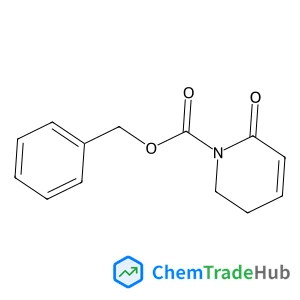
Benzyl 6-oxo-3,6-dihydro-1(2H)-pyridinecarboxylate
CAS Number:
725746-35-0
Molecular Formula:
C13H13NO3
Recommended Suppliers




Disclaimer
This page provides academic journal information for reference and research purposes only. We are not affiliated with any journal publishers and do not handle publication submissions. For publication-related inquiries, please contact the respective journal publishers directly.
If you notice any inaccuracies in the information displayed, please contact us at support@chemtradehub.com. We will promptly review and address your concerns.