













Equilibrium potentials and charge transport of an I−/I3− redox couple in an ionic liquid
Literature Information
Publication Date
2003-01-10
DOI
10.1039/B208388B
Impact Factor
6.222
Authors
Ryuji Kawano, Masayoshi Watanabe
View Original
Abstract
Equilibrium potentials and charge transport of an I−/I3− redox couple in an ionic liquid, 1-ethyl-3-methylimidazolium bis(trifluoromethanesulfonyl)imide, are revealed by using a microelectrode technique, where the anomaly of the charge transport at high concentrations of the redox couple with comparable [I−] and [I3−] can be attributed to the exchange reaction of I− + I3− → I3− + I−.
Related Literature
First-principles-based kinetic Monte Carlo simulations of CO oxidation on catalytic Au(110) and Ag(110) surfaces
Jose L. C. Fajín, Ana S. Moura, M. Natália D. S. Cordeiro
2021-06-01
Paper
DOI: 10.1039/D1CP00729G
Accounting for the instantaneous disorder in the enzyme–substrate Michaelis complex to calculate the Gibbs free energy barrier of an enzyme reaction
Alejandro Cruz
2021-05-13
Paper
DOI: 10.1039/D1CP01338F
Computational discovery of PtS2/GaSe van der Waals heterostructure for solar energy applications
Rui Xiong, Rong Hu, Yinggan Zhang, Xuhui Yang, Peng Lin, Cuilian Wen, Baisheng Sa, Zhimei Sun
2021-08-12
Paper
DOI: 10.1039/D1CP02436A
Imaging intramolecular hydrogen migration with time- and momentum-resolved photoelectron diffraction
Fukiko Ota, Shigeru Abe, Keisuke Hatada, Kiyoshi Ueda
2021-07-30
Paper
DOI: 10.1039/D1CP02055B
Fabrication of high quality electrochemical SERS (EC-SERS) substrates using physical vapour deposition
Carolyn G. Farling, Mary C. Stackaruk, Cory C. Pye, Christa L. Brosseau
2021-07-14
Paper
DOI: 10.1039/D1CP02416G
The origin of the faster mechanism of partial enthalpy recovery deep in the glassy state of polymers
2021-05-24
Paper
DOI: 10.1039/D1CP01445E
Controlled 2H/1T phase transition in MoS2 monolayers by a strong interface with M2C MXenes: a computational study
Zhongxu Wang, Yu Liu, FengYu Li, Jingxiang Zhao
2021-08-25
Paper
DOI: 10.1039/D1CP02648H
Raman and ROA analyses of twisted anthracenes: connecting vibrational and electronic/photonic structures
Luis Palomo, Fernando Gordillo Gámez, Ori Gidron, Juan Casado, Francisco J. Ramírez
2021-05-31
Paper
DOI: 10.1039/D1CP01505B
C9N4 and C2N6S3 monolayers as promising anchoring materials for lithium–sulfur batteries: weakening the shuttle effect via optimizing lithium bonds
Yinan Dong, Bai Xu, Haiyu Hu, Jiashu Yang, Fengyu Li, Jian Gong, Zhongfang Chen
2021-05-06
Paper
DOI: 10.1039/D1CP01022K
You might also like
Compound Q&A
What is the market or research trend for N-(4-Methoxybenzyl)-2-pyridinamine (CAS: 52818-63-0)?
N-(4-Methoxybenzyl)-2-pyridinamine (CAS: 52818-63-0) is increasingly being used ...
52818-63-0N-(4-Methoxybenzyl)-...
Compound Q&A
What precautions should be taken when handling Ethyl 4-(2-chlorophenyl)-1,3-thiazole-2-carboxylate (CAS: 1050507-06-6)?
When handling Ethyl 4-(2-chlorophenyl)-1,3-thiazole-2-carboxylate, appropriate p...
1050507-06-6Ethyl 4-(2-chlorophe...
Compound Q&A
What regulatory guidelines apply to diethyldiselane (CAS: 628-39-7)?
Diethyldiselane (CAS: 628-39-7) is classified under the Globally Harmonized Syst...
628-39-7Diethyldiselane
Compound Q&A
What is the market or research trend for oxocopper (CAS: 12053-18-8)?
The market for oxocopper (CAS: 12053-18-8) is primarily driven by its use in cat...
12053-18-8oxocopper; oxo-(oxoc...
Compound Q&A
What is the market or research trend for 5-{[(2-Methyl-2-propanyl)oxy]carbonyl}-5-azaspiro[2.4]heptane-7-carboxylic acid?
The market for 5-{[(2-Methyl-2-propanyl)oxy]carbonyl}-5-azaspiro[2.4]heptane-7-c...
1268519-54-55-{[(2-Methyl-2-prop...
Compound Q&A
What is 2-(1-Pyrrolidinyl)-4-pyridinamine (CAS: 35981-63-6)?
2-(1-Pyrrolidinyl)-4-pyridinamine is a chemical compound with the CAS number 359...
35981-63-62-(1-Pyrrolidinyl)-4...
Compound Q&A
What are the physical and chemical properties of 2-(3-Pyridinyl)-1-azabicyclo[2.2.2]octane (CAS: 91556-75-1)?
2-(3-Pyridinyl)-1-azabicyclo[2.2.2]octane (CAS: 91556-75-1) is a crystalline sol...
91556-75-12-(3-Pyridinyl)-1-az...
Compound Q&A
How is (S)-Alpha-allyl-proline hydrochloride (CAS: 129704-91-2) typically synthesized?
(S)-Alpha-allyl-proline hydrochloride is usually synthesized via a Wittig reacti...
129704-91-2(S)-Alpha-allyl-prol...
Compound Q&A
What is 3-Methyl-1,2-oxazole-5-carboxylic acid (CAS: 4857-42-5)?
3-Methyl-1,2-oxazole-5-carboxylic acid (CAS: 4857-42-5) is an organic compound w...
4857-42-53-Methyl-1,2-oxazole...
Compound Q&A
How is Lys-SMCC-DM1 (CAS: 1281816-04-3) typically synthesized?
Lys-SMCC-DM1 is synthesized via a multi-step process involving the coupling of S...
1281816-04-3Lys-SMCC-DM1
Source Journal
Chemical Communications

CiteScore:
8.6
Self-citation Rate:
4.7%
Articles per Year:
2458
ChemComm publishes urgent research which is of outstanding significance and interest to experts in the field, while also appealing to the journal’s broad chemistry readership. Our communication format is ideally suited to short, urgent studies that are of such importance that they require accelerated publication. Our scope covers all topics in chemistry, and research at the interface of chemistry and other disciplines (such as materials science, nanoscience, physics, engineering and biology) where there is a significant novelty in the chemistry aspects. Major topic areas covered include: Analytical Chemistry Catalysis Chemical Biology and medicinal chemistry Computational Chemistry and Machine Learning Energy and sustainable chemistry Environmental Chemistry Green Chemistry Inorganic Chemistry Materials Chemistry Nanoscience Organic Chemistry Physical Chemistry Polymer Chemistry Supramolecular Chemistry
Recommended Compounds
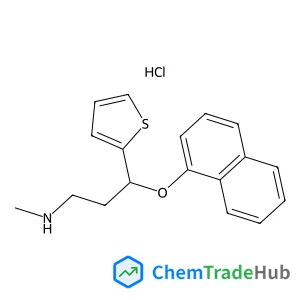
N-Methyl-3-(1-naphthyloxy)-3-(2-thienyl)-1-propanamine hydrochloride (1:1)
CAS Number:
1188266-11-6
Molecular Formula:
C18H20ClNOS

Recommended Suppliers






Disclaimer
This page provides academic journal information for reference and research purposes only. We are not affiliated with any journal publishers and do not handle publication submissions. For publication-related inquiries, please contact the respective journal publishers directly.
If you notice any inaccuracies in the information displayed, please contact us at support@chemtradehub.com. We will promptly review and address your concerns.