


Ultrafast energy relaxation in bacteriorhodopsin studied by time-integrated fluorescence
Literature Information
Publication Date
2002-09-19
DOI
10.1039/B205453A
Impact Factor
3.676
Authors
S. Schenkl, E. Portuondo, G. Zgrablić, M. Chergui, S. Haacke, N. Friedman, M. Sheves
View Original
Abstract
Time-integrated fluorescence experiments on native bacteriorhodopsin and on its non-isomerizing form bR5.12 are reported. The experimental set-up was designed such as to observe emission exclusively from the excited state intermediate I-460. We obtain the first systematic investigation of the fluorescence spectra as a function of the excitation wavelength tuned throughout the entire absorption band of bR. An important finding is that the position of the fluorescence maximum does not show a systematic shift when the excitation wavelength is shortened. For excitation with high excess energy, we observe a broadening of the blue wing of the bR fluorescence, indicating incomplete vibrational energy relaxation on the time scale of the lifetime of I-460. Due to a much longer excited state lifetime, vibrational energy relaxation is more effective in bR5.12 and the fluorescence spectra are much less dependent on excitation wavelength. The results are placed in the general framework of thermalization between the retinal chromophore and the protein environment, and are compared with information obtained by femtosecond experiments.
Recommended Journals

Pharmacological Reviews

European Journal of Wood and Wood Products

Helvetica Chimica Acta

Organic Preparations and Procedures International

Israel Journal of Chemistry

Journal of Medicinal Chemistry

Proceedings of the National Academy of Sciences of the United States of America

Planta Medica

Kinetics and Catalysis

Pure and Applied Chemistry
Related Literature
Preparation of chiral triarylphosphines by Pd-catalysed asymmetric P–C cross-coupling
Christian Korff, Günter Helmchen
2004-02-03
Communication
DOI: 10.1039/B315009G
Controlled functionalization of gold nanoparticles through a solid phase synthesis approach
James G. Worden, Andrew W. Shaffer, Qun Huo
2004-02-04
Communication
DOI: 10.1039/B312819A
Dehydropolymerization of arylsilanes catalyzed by a novel silylmolybdenum complex
Makoto Minato, Takaomi Matsumoto, Miyuki Ichikawa, Takashi Ito
2003-11-03
Communication
DOI: 10.1039/B310663M
Self-indicating amine scavenger resins
Jin Ku Cho, Peter D. White, Wolfgang Klute, Tony W. Dean, Mark Bradley
2004-01-27
Communication
DOI: 10.1039/B315426B
Mixed halo/hydroxy carborane anions: thermally stable platforms for hydronium ion isolation
Daniel J. Stasko, Kevin J. Perzynski, Mark A. Wasil
2004-02-16
Communication
DOI: 10.1039/B314475E
Peroxides in ordered nanoporous silicas: clean alternatives to transition metal oxidants for the removal of toxic gases
Michael J. Hudson, Dominic B. Jackson, Jessica L. Ward, Matt J. Chinn
2003-11-07
Communication
DOI: 10.1039/B310872D
Stabilization of D5h and C2v valence tautomers of the croconate dianion
Chi-Keung Lam, Mei-Fun Cheng, Chi-Lun Li, Jie-Peng Zhang, Xiao-Ming Chen, Wai-Kee Li, Thomas C. W. Mak
2003-12-18
Communication
DOI: 10.1039/B312545A
Carbon nanotube conducting arrays by consecutive amidation reactions
Dae-Hwan Jung, Young Koan Ko, Seung Joo Seo, Hee-Tae Jung
2004-02-05
Communication
DOI: 10.1039/B315348G
Relative importance of hydrogen bonding and coordinating groups in modulating the zinc–water acidity
Juan C. Mareque-Rivas, Ravi Prabaharan, Rafael Torres Martín de Rosales
2003-11-04
Communication
DOI: 10.1039/B310956A
Noncontact two-color luminescence thermometry based on intramolecular luminophore cyclization within an ionic liquid
Gary A. Baker, Sheila N. Baker, T. Mark McCleskey
2003-10-30
Communication
DOI: 10.1039/B310459C
You might also like
Compound Q&A
How should waste containing 2-Ethyl-4-Methyl-1H-Imidazole-5-Carbaldehyde (CAS: 88634-80-4) be handled?
Waste containing 2-Ethyl-4-Methyl-1H-Imidazole-5-Carbaldehyde (CAS: 88634-80-4) ...
88634-80-42-Ethyl-4-Methyl-1H-...
Compound Q&A
What industries use Triethoxy(octyl)silane (CAS: 1385031-14-0)?
Triethoxy(octyl)silane (CAS: 1385031-14-0) is widely used in the pharmaceuticals...
1385031-14-0Triethoxy(octyl)sila...
Compound Q&A
Are there alternatives to 3-iodo-7-nitro-1H-indazole (CAS: 864724-64-1) in synthesis?
Several alternatives to 3-iodo-7-nitro-1H-indazole (CAS: 864724-64-1) exist in t...
864724-64-13-iodo-7-nitro-1H-in...
Compound Q&A
Are there alternatives to Benzene, bis[(trimethoxysilyl)ethyl] (CAS: 266317-71-9) in synthesis?
Yes, there are alternatives to Benzene, bis[(trimethoxysilyl)ethyl] (CAS: 266317...
266317-71-9Benzene, bis[(trimet...
Compound Q&A
Is Isothiazole-3-carbonitrile (CAS: 1452-17-1) safe?
Isothiazole-3-carbonitrile (CAS: 1452-17-1) is generally considered safe when us...
1452-17-1Isothiazole-3-carbon...
Compound Q&A
Is (3-Chlorophenyl)methanol (CAS: 873-63-2) safe?
(3-Chlorophenyl)methanol (CAS: 873-63-2) is considered low to moderately toxic. ...
873-63-2(3-Chlorophenyl)meth...
Compound Q&A
How is (2S,3S)-2-Hydroxy-3-({[(2-methyl-2-propanyl)oxy]carbonyl}amino)-3-(2-naphthyl)propanoic acid (CAS: 959583-98-3) typically synthesized?
(2S,3S)-2-Hydroxy-3-({[(2-methyl-2-propanyl)oxy]carbonyl}amino)-3-(2-naphthyl)pr...
959583-98-3(2S,3S)-2-Hydroxy-3-...
Compound Q&A
What precautions should be taken when handling Methyl 2-(bromomethyl)-5-methoxybenzoate (CAS: 788081-99-2)?
Proper handling of methyl 2-(bromomethyl)-5-methoxybenzoate requires the use of ...
788081-99-2Methyl 2-(bromomethy...
Compound Q&A
What is 6,8-Dibromoimidazo[1,2-a]pyridine-2-carboxylic acid (CAS: 904805-36-3)?
6,8-Dibromoimidazo[1,2-a]pyridine-2-carboxylic acid (CAS: 904805-36-3) is an aro...
904805-36-36,8-Dibromoimidazo[1...
Compound Q&A
Is 3-Amino-5-bromo-2-pyridinecarbonitrile (CAS: 573675-27-1) safe?
3-Amino-5-bromo-2-pyridinecarbonitrile is considered safe when handled under pro...
573675-27-13-Amino-5-bromo-2-py...
Source Journal
Physical Chemistry Chemical Physics

CiteScore:
5.5
Self-citation Rate:
10.3%
Articles per Year:
3036
Physical Chemistry Chemical Physics (PCCP) is an international journal co-owned by 19 physical chemistry and physics societies from around the world. This journal publishes original, cutting-edge research in physical chemistry, chemical physics and biophysical chemistry. To be suitable for publication in PCCP, articles must include significant innovation and/or insight into physical chemistry; this is the most important criterion that reviewers and Editors will judge against when evaluating submissions. The journal has a broad scope and welcomes contributions spanning experiment, theory, computation and data science. Topical coverage includes spectroscopy, dynamics, kinetics, statistical mechanics, thermodynamics, electrochemistry, catalysis, surface science, quantum mechanics, quantum computing and machine learning. Interdisciplinary research areas such as polymers and soft matter, materials, nanoscience, energy, surfaces/interfaces, and biophysical chemistry are welcomed if they demonstrate significant innovation and/or insight into physical chemistry. Joined experimental/theoretical studies are particularly appreciated when complementary and based on up-to-date approaches.
Recommended Compounds
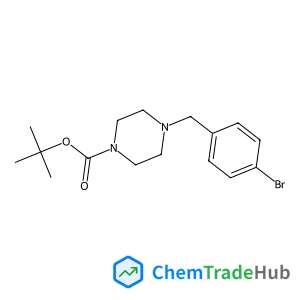
2-Methyl-2-propanyl 4-(4-bromobenzyl)-1-piperazinecarboxylate
CAS Number:
844891-10-7
Molecular Formula:
C16H23BrN2O2
Recommended Suppliers





Disclaimer
This page provides academic journal information for reference and research purposes only. We are not affiliated with any journal publishers and do not handle publication submissions. For publication-related inquiries, please contact the respective journal publishers directly.
If you notice any inaccuracies in the information displayed, please contact us at support@chemtradehub.com. We will promptly review and address your concerns.