












![4,4'-[2,5-Biphenyldiylbis(oxy)]dianiline structure](https://static.chemtradehub.com/structs/941/94148-67-1-24c6.webp "4,4'-[2,5-Biphenyldiylbis(oxy)]dianiline structure")
Kirkwood–Buff integrals for polymer–solvent mixtures. Preferential solvation and volumetric analysis in aqueous PEG solutions
Literature Information
Publication Date
2002-09-03
DOI
10.1039/B204795K
Impact Factor
3.676
Authors
View Original
Abstract
The effect of the molecular size of components on preferential solvation analysis has been investigated by studying aqueous solutions of the poly(ethylene glycol) (PEG) homologous chemical series. Precise density data are analyzed for some PEG–water systems, for polymers of molecular weight up to 3400 at 25 °C, at the highest practicable concentrations. The combination of density, activity, and compressibility data allows the evaluation of Kirkwood–Buff integrals for these systems. Data were discussed in terms of preferential solvation, showing that co-operativity takes part to some extent in the PEG–PEG interaction, depending on PEG concentration and molecular weight. The size mismatch between solvent and solute requires a proper reference state, the Matteoli–Shulgin–Ruckenstein state, which takes into account the excluded volume effect. This correction must be applied when considering macromolecular systems, otherwise physically meaningless analyses are developed. Density data at high concentration have been analyzed in order to evaluate progressive aggregation up to network formation, recently proposed for PEG–water systems. The study provides a new picture of aqueous PEG solutions useful for the interpretation of protein precipitation induced by this uncharged polymer. Comparisons with a preferential solvation analysis of the PEG oligomers and with a recent velocity-correlation analysis of PEG polymers have been also made. This paper provides a new picture of PEG–water media, useful to interpret the colloidal stability in the presence of PEG.
Related Literature
The kinetics of propene and hexenepolymerisation with [(SBI)ZrR]+X−: evidence for monomer-dependent early or late transition states
Fuquan Song, Roderick D. Cannon, Manfred Bochmann
2004-02-05
Communication
DOI: 10.1039/B314845A
Electrochemical wiring of α,ω-alkanedithiol molecules into an electrical circuit
Renata Bilewicz, Krzysztof Slowinski
2004-01-23
Communication
DOI: 10.1039/B314815G
Room-temperature one-step immobilization of rod-like helical polymer onto hydrophilic substrates
Guangqing Guo, Masanobu Naito, Michiya Fujiki, Anubhav Saxena, Kento Okoshi, Yonggang Yang, Masaaki Ishikawa, Takahiro Hagihara
2004-01-07
Communication
DOI: 10.1039/B310985B
Large macroscopic size changes in chemomechanical polymers with binding sites for metal ions
Hans-Jörg Schneider, Tianjun Liu
2003-11-13
Communication
DOI: 10.1039/B310939A
Prediction of formation constants of metal–ammonia complexes in aqueous solution using density functional theory calculations
Robert D. Hancock, Libero J. Bartolotti
2004-01-27
Communication
DOI: 10.1039/B312518C
A powerful route to C-functionalised tetraazamacrocycles
Frédéric Boschetti, Franck Denat, Enrique Espinosa, Jean-Marie Lagrange, Roger Guilard
2004-02-03
Communication
DOI: 10.1039/B315285E
Relative importance of hydrogen bonding and coordinating groups in modulating the zinc–water acidity
Juan C. Mareque-Rivas, Ravi Prabaharan, Rafael Torres Martín de Rosales
2003-11-04
Communication
DOI: 10.1039/B310956A
Mixed halo/hydroxy carborane anions: thermally stable platforms for hydronium ion isolation
Daniel J. Stasko, Kevin J. Perzynski, Mark A. Wasil
2004-02-16
Communication
DOI: 10.1039/B314475E
Facile fabrication of composites of platinum nanoparticles and amorphous carbon films by catalyzed carbonization of cellulose fibers
Junhui He, Toyoki Kunitake, Aiko Nakao
2004-01-20
Communication
DOI: 10.1039/B314407K
Mesoporous silica with Ia3d cubic structure and good thermal stability
Jiebin Pang, J. Eric Hampsey, Qingyuan Hu, Zhiwang Wu, Vijay T. John, Yunfeng Lu
2004-02-12
Communication
DOI: 10.1039/B316501A
You might also like
Compound Q&A
How should waste containing 2-Ethyl-4-Methyl-1H-Imidazole-5-Carbaldehyde (CAS: 88634-80-4) be handled?
Waste containing 2-Ethyl-4-Methyl-1H-Imidazole-5-Carbaldehyde (CAS: 88634-80-4) ...
88634-80-42-Ethyl-4-Methyl-1H-...
Compound Q&A
What industries use Triethoxy(octyl)silane (CAS: 1385031-14-0)?
Triethoxy(octyl)silane (CAS: 1385031-14-0) is widely used in the pharmaceuticals...
1385031-14-0Triethoxy(octyl)sila...
Compound Q&A
Are there alternatives to 3-iodo-7-nitro-1H-indazole (CAS: 864724-64-1) in synthesis?
Several alternatives to 3-iodo-7-nitro-1H-indazole (CAS: 864724-64-1) exist in t...
864724-64-13-iodo-7-nitro-1H-in...
Compound Q&A
Are there alternatives to Benzene, bis[(trimethoxysilyl)ethyl] (CAS: 266317-71-9) in synthesis?
Yes, there are alternatives to Benzene, bis[(trimethoxysilyl)ethyl] (CAS: 266317...
266317-71-9Benzene, bis[(trimet...
Compound Q&A
Is Isothiazole-3-carbonitrile (CAS: 1452-17-1) safe?
Isothiazole-3-carbonitrile (CAS: 1452-17-1) is generally considered safe when us...
1452-17-1Isothiazole-3-carbon...
Compound Q&A
Is (3-Chlorophenyl)methanol (CAS: 873-63-2) safe?
(3-Chlorophenyl)methanol (CAS: 873-63-2) is considered low to moderately toxic. ...
873-63-2(3-Chlorophenyl)meth...
Compound Q&A
How is (2S,3S)-2-Hydroxy-3-({[(2-methyl-2-propanyl)oxy]carbonyl}amino)-3-(2-naphthyl)propanoic acid (CAS: 959583-98-3) typically synthesized?
(2S,3S)-2-Hydroxy-3-({[(2-methyl-2-propanyl)oxy]carbonyl}amino)-3-(2-naphthyl)pr...
959583-98-3(2S,3S)-2-Hydroxy-3-...
Compound Q&A
What precautions should be taken when handling Methyl 2-(bromomethyl)-5-methoxybenzoate (CAS: 788081-99-2)?
Proper handling of methyl 2-(bromomethyl)-5-methoxybenzoate requires the use of ...
788081-99-2Methyl 2-(bromomethy...
Compound Q&A
What is 6,8-Dibromoimidazo[1,2-a]pyridine-2-carboxylic acid (CAS: 904805-36-3)?
6,8-Dibromoimidazo[1,2-a]pyridine-2-carboxylic acid (CAS: 904805-36-3) is an aro...
904805-36-36,8-Dibromoimidazo[1...
Compound Q&A
Is 3-Amino-5-bromo-2-pyridinecarbonitrile (CAS: 573675-27-1) safe?
3-Amino-5-bromo-2-pyridinecarbonitrile is considered safe when handled under pro...
573675-27-13-Amino-5-bromo-2-py...
Source Journal
Physical Chemistry Chemical Physics

CiteScore:
5.5
Self-citation Rate:
10.3%
Articles per Year:
3036
Physical Chemistry Chemical Physics (PCCP) is an international journal co-owned by 19 physical chemistry and physics societies from around the world. This journal publishes original, cutting-edge research in physical chemistry, chemical physics and biophysical chemistry. To be suitable for publication in PCCP, articles must include significant innovation and/or insight into physical chemistry; this is the most important criterion that reviewers and Editors will judge against when evaluating submissions. The journal has a broad scope and welcomes contributions spanning experiment, theory, computation and data science. Topical coverage includes spectroscopy, dynamics, kinetics, statistical mechanics, thermodynamics, electrochemistry, catalysis, surface science, quantum mechanics, quantum computing and machine learning. Interdisciplinary research areas such as polymers and soft matter, materials, nanoscience, energy, surfaces/interfaces, and biophysical chemistry are welcomed if they demonstrate significant innovation and/or insight into physical chemistry. Joined experimental/theoretical studies are particularly appreciated when complementary and based on up-to-date approaches.
Recommended Compounds

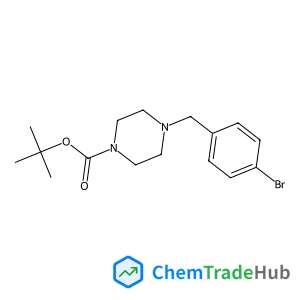
2-Methyl-2-propanyl 4-(4-bromobenzyl)-1-piperazinecarboxylate
CAS Number:
844891-10-7
Molecular Formula:
C16H23BrN2O2
![4-Nitrophenyl N-{[(2-methyl-2-propanyl)oxy]carbonyl}-L-isoleucinate structure](https://static.chemtradehub.com/structs/169/16948-38-2-c88f.webp "4-Nitrophenyl N-{[(2-methyl-2-propanyl)oxy]carbonyl}-L-isoleucinate structure")
4-Nitrophenyl N-{[(2-methyl-2-propanyl)oxy]carbonyl}-L-isoleucinate
CAS Number:
16948-38-2
Molecular Formula:
C17H24N2O6
Recommended Suppliers





Disclaimer
This page provides academic journal information for reference and research purposes only. We are not affiliated with any journal publishers and do not handle publication submissions. For publication-related inquiries, please contact the respective journal publishers directly.
If you notice any inaccuracies in the information displayed, please contact us at support@chemtradehub.com. We will promptly review and address your concerns.