













Periodic ab initio calculations of the spontaneous polarisation in ferroelectric NaNO2
Literature Information
Publication Date
DOI
10.1039/B204526P
Impact Factor
3.676
Authors
Roberto Dovesi
View Original
Abstract
We present periodic ab initio calculations for ferroelectric NaNO2. The spontaneous polarisation (Ps) has been calculated with three different models based on: (i) point charges; (ii) a multipolar expansion of the charge distribution; and (iii) the Berry phase approach. Both the Hartree–Fock and LDA Hamiltonians were employed. Within the Hartree–Fock scheme, at the optimised geometry, we obtain Ps values of 20.3, 13.0 and 16.4 µC cm−2 with the three models, compared to the experimental value of ∼11.9 µCcm−2. The Berry-phase approach at the Hartree–Fock level gives a value very close to experiment (namely 12 µCcm−2) when the experimental structure is used. At the optimised LDA structure, the LDA Ps values are 16.8, 10.0 and 16.9 µC cm−2 with models (i)–(iii). The optimised lattice parameters at the Hartree–Fock level are slightly shorter (between 0 and 4%) than those determined experimentally from X-ray-diffraction, while the lattice parameters of the LDA-optimised structure are up to 10% smaller than the experiment. The calculated lattice energies are 679 and 964 kJ mol−1 at the HF and LDA levels, compared with 729 kJ mol−1 from the experiment. Charge densities, Mulliken charges and dipole moments are discussed. Finally, we have studied the mechanism for the phase transformation in-between the ferroelectric and paraelectric crystal structures; a rotation of the NO2 group around the c-axis gives the lowest energy barrier.
Related Literature
Thioglycosynthases: double mutant glycosidases that serve as scaffolds for thioglycoside synthesis
Jennifer Marles, R. Antony J. Warren
2004-01-05
Communication
DOI: 10.1039/B313155F
The kinetics of propene and hexenepolymerisation with [(SBI)ZrR]+X−: evidence for monomer-dependent early or late transition states
Fuquan Song, Roderick D. Cannon, Manfred Bochmann
2004-02-05
Communication
DOI: 10.1039/B314845A
Modelling catalytic turnover frequencies in ionic liquids: the determination of the bimolecular rate constant for solvent displacement from [(C6H6)Cr(CO)2Solv] in 1-n-butyl-3-methylimidazolium hexafluorophosphate
Konrad Swiderski, Andrew McLean, Charles M. Gordon, D. H. Vaughan
2004-02-03
Communication
DOI: 10.1039/B315781D
A powerful route to C-functionalised tetraazamacrocycles
Frédéric Boschetti, Franck Denat, Enrique Espinosa, Jean-Marie Lagrange, Roger Guilard
2004-02-03
Communication
DOI: 10.1039/B315285E
First three examples of taxane-derived di-propellanes in Taxus canadensis needles
Qing Wen Shi, Françoise Sauriol, Alain Lesimple, Lolita O. Zamir
2004-02-04
Communication
DOI: 10.1039/B316051C
Highly diastereoselective formation of C2-symmetric bis-thioglycoside Pd(ii) complexes: the role of the exo anomeric effect
Noureddine Khiar, Cristina S. Araújo, Bélen Suárez, Eleuterio Alvarez, Inmaculada Fernández
2004-02-16
Communication
DOI: 10.1039/B313798H
Insights into the reactivity and structure of silylene phosphonium ions
Rudolf Pietschnig
2004-01-30
Communication
DOI: 10.1039/B315001A
Living cationic ring-opening polymerization by water-stable initiator: synthesis of a well-defined optically active polythiourethane
Atsushi Nagai, Bungo Ochiai, Takeshi Endo
2003-11-07
Communication
DOI: 10.1039/B310735C
Dichloro(dodeca-2,6,10-triene-1,12-diyl)ruthenium(iv): a highly efficient catalyst for the isomerization of allylic alcohols into carbonyl compounds in organic and aqueous media
Victorio Cadierno, Sergio E. García-Garrido, José Gimeno
2003-12-05
Communication
DOI: 10.1039/B313069J
Preparation and structure of 2-iodoxybenzoate esters: soluble and stable periodinane oxidizing reagents
Viktor V. Zhdankin, Dmitry N. Litvinov, Alexey Y. Koposov, Thanh Luu, Michael J. Ferguson, Robert McDonald, Rik R. Tykwinski
2003-11-18
Communication
DOI: 10.1039/B312961F
You might also like
Compound Q&A
How should waste containing 2-Ethyl-4-Methyl-1H-Imidazole-5-Carbaldehyde (CAS: 88634-80-4) be handled?
Waste containing 2-Ethyl-4-Methyl-1H-Imidazole-5-Carbaldehyde (CAS: 88634-80-4) ...
88634-80-42-Ethyl-4-Methyl-1H-...
Compound Q&A
What industries use Triethoxy(octyl)silane (CAS: 1385031-14-0)?
Triethoxy(octyl)silane (CAS: 1385031-14-0) is widely used in the pharmaceuticals...
1385031-14-0Triethoxy(octyl)sila...
Compound Q&A
Are there alternatives to 3-iodo-7-nitro-1H-indazole (CAS: 864724-64-1) in synthesis?
Several alternatives to 3-iodo-7-nitro-1H-indazole (CAS: 864724-64-1) exist in t...
864724-64-13-iodo-7-nitro-1H-in...
Compound Q&A
Are there alternatives to Benzene, bis[(trimethoxysilyl)ethyl] (CAS: 266317-71-9) in synthesis?
Yes, there are alternatives to Benzene, bis[(trimethoxysilyl)ethyl] (CAS: 266317...
266317-71-9Benzene, bis[(trimet...
Compound Q&A
Is Isothiazole-3-carbonitrile (CAS: 1452-17-1) safe?
Isothiazole-3-carbonitrile (CAS: 1452-17-1) is generally considered safe when us...
1452-17-1Isothiazole-3-carbon...
Compound Q&A
Is (3-Chlorophenyl)methanol (CAS: 873-63-2) safe?
(3-Chlorophenyl)methanol (CAS: 873-63-2) is considered low to moderately toxic. ...
873-63-2(3-Chlorophenyl)meth...
Compound Q&A
How is (2S,3S)-2-Hydroxy-3-({[(2-methyl-2-propanyl)oxy]carbonyl}amino)-3-(2-naphthyl)propanoic acid (CAS: 959583-98-3) typically synthesized?
(2S,3S)-2-Hydroxy-3-({[(2-methyl-2-propanyl)oxy]carbonyl}amino)-3-(2-naphthyl)pr...
959583-98-3(2S,3S)-2-Hydroxy-3-...
Compound Q&A
What precautions should be taken when handling Methyl 2-(bromomethyl)-5-methoxybenzoate (CAS: 788081-99-2)?
Proper handling of methyl 2-(bromomethyl)-5-methoxybenzoate requires the use of ...
788081-99-2Methyl 2-(bromomethy...
Compound Q&A
What is 6,8-Dibromoimidazo[1,2-a]pyridine-2-carboxylic acid (CAS: 904805-36-3)?
6,8-Dibromoimidazo[1,2-a]pyridine-2-carboxylic acid (CAS: 904805-36-3) is an aro...
904805-36-36,8-Dibromoimidazo[1...
Compound Q&A
Is 3-Amino-5-bromo-2-pyridinecarbonitrile (CAS: 573675-27-1) safe?
3-Amino-5-bromo-2-pyridinecarbonitrile is considered safe when handled under pro...
573675-27-13-Amino-5-bromo-2-py...
Source Journal
Physical Chemistry Chemical Physics

CiteScore:
5.5
Self-citation Rate:
10.3%
Articles per Year:
3036
Physical Chemistry Chemical Physics (PCCP) is an international journal co-owned by 19 physical chemistry and physics societies from around the world. This journal publishes original, cutting-edge research in physical chemistry, chemical physics and biophysical chemistry. To be suitable for publication in PCCP, articles must include significant innovation and/or insight into physical chemistry; this is the most important criterion that reviewers and Editors will judge against when evaluating submissions. The journal has a broad scope and welcomes contributions spanning experiment, theory, computation and data science. Topical coverage includes spectroscopy, dynamics, kinetics, statistical mechanics, thermodynamics, electrochemistry, catalysis, surface science, quantum mechanics, quantum computing and machine learning. Interdisciplinary research areas such as polymers and soft matter, materials, nanoscience, energy, surfaces/interfaces, and biophysical chemistry are welcomed if they demonstrate significant innovation and/or insight into physical chemistry. Joined experimental/theoretical studies are particularly appreciated when complementary and based on up-to-date approaches.
Recommended Compounds
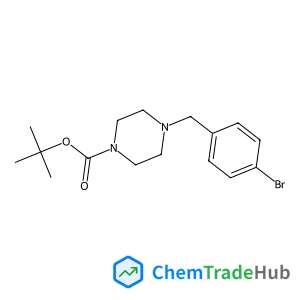
2-Methyl-2-propanyl 4-(4-bromobenzyl)-1-piperazinecarboxylate
CAS Number:
844891-10-7
Molecular Formula:
C16H23BrN2O2
Recommended Suppliers



Disclaimer
This page provides academic journal information for reference and research purposes only. We are not affiliated with any journal publishers and do not handle publication submissions. For publication-related inquiries, please contact the respective journal publishers directly.
If you notice any inaccuracies in the information displayed, please contact us at support@chemtradehub.com. We will promptly review and address your concerns.