


DFT study of inner-sphere electron transfer in a gas-phase SN2 reaction at the saturated carbon
Literature Information
Publication Date
2002-09-02
DOI
10.1039/B202613A
Impact Factor
3.676
Authors
Yu-Mei Xing, Xiu-Fang Xu, Lan Chen, Zun-Sheng Cai, Xue-Zhuang Zhao, Jin-Pei Cheng
View Original
Abstract
The SN2 reaction is investigated from the point of view of an inner-sphere electron transfer reaction. Density functional theory (DFT) calculations are applied to investigate the intrinsic reaction pathway (IRP) of the symmetrical SN2 (inner-sphere electron transfer) reactions, Xa− + CH3Xb → XaCH3 + Xb− (X = F, Cl, Br, I). The geometries of the stationary points in the potential energy surface are compared with available experimental data and with calculations at the MP2 level. The changes in the geometrical parameters, the projected frequencies, charge distribution and dipole moment along the reaction coordinate are discussed. Some relationships between the amount of transferred electron density and the changes in geometrical parameters, vibrational frequencies and energies are given: the greater the amount of transferred electron density, the smaller the decrease in the frequency of the C–Xb stretching mode (from reactant to TS), and the lower the activation energy and the complexation energy. Moreover, the amount of transferred electron density is related to the electronegativity of the halogen atom. Two parameters in the electron transfer theory, the coupling interaction and the reorganization energy, which affect the reactivity are discussed. We conclude that the stronger the CH3–Xb bond, the worse the acceptor.
Recommended Journals

Planta Medica

Journal of Medicinal Chemistry

Organic Preparations and Procedures International

European Journal of Wood and Wood Products

Pharmacological Reviews

Israel Journal of Chemistry

Journal of Organometallic Chemistry

Kinetics and Catalysis

Science

Proceedings of the National Academy of Sciences of the United States of America
Related Literature
Theoretical study on thermal curing mechanism of arylethynyl-containing resins
Zuowei Chen, Liquan Wang, Jiaping Lin, Lei Du
2020-03-02
Paper
DOI: 10.1039/C9CP06892A
DNP NMR spectroscopy of cross-linked organic polymers: rational guidelines towards optimal sample preparation
Wei-Chih Liao, Atsuko Ogawa, Kazuhiko Sato, Christophe Copéret
2019-12-12
Paper
DOI: 10.1039/C9CP05208A
Mirror symmetry origin of Dirac cone formation in rectangular two-dimensional materials
Xuming Qin, Yi Liu, Gui Yang, Dongqiu Zhao
2020-03-02
Paper
DOI: 10.1039/D0CP00244E
Growth and auto-oxidation of Pd on single-layer AgOx/Ag(111)
Vikram Mehar, Christopher R. O’Connor, Mustafa Karatok, Robert J. Madix, Jason F. Weaver
2020-02-25
Paper
DOI: 10.1039/C9CP06973A
First principles study on hydrogen doping induced metal-to-insulator transition in rare earth nickelates RNiO3 (R = Pr, Nd, Sm, Eu, Gd, Tb, Dy, Yb)
Pilsun Yoo, Peilin Liao
2020-03-10
Paper
DOI: 10.1039/C9CP06522A
Influence of the interfacial interaction strength on the viscoelasticity of hard–soft block copolymer based nanocomposites: a molecular dynamics simulation study
Ruiqi Zhao, Yu Wang, Xinglong Gong
2020-01-27
Paper
DOI: 10.1039/C9CP06314E
Modelling the bulk properties of ambient pressure polymorphs of zirconia
2020-02-25
Paper
DOI: 10.1039/D0CP00032A
Role of ring-enlargement reactions in the formation of aromatic hydrocarbons
Martina Baroncelli, Qian Mao, Simon Galle, Nils Hansen, Heinz Pitsch
2020-02-05
Paper
DOI: 10.1039/C9CP05854K
Triplet fusion upconversion using sterically protected 9,10-diphenylanthracene as the emitter
Can Gao, Bolong Zhang, Christopher R. Hall, Li Li, Yeqin Chen, Yi Zeng, Trevor A. Smith, Wallace W. H. Wong
2020-02-26
Paper
DOI: 10.1039/C9CP06311K
Electronic structure, ion diffusion and cation doping in the Na4VO(PO4)2 compound as a cathode material for Na-ion batteries
Pablo A. Aparicio
2020-03-03
Paper
DOI: 10.1039/C9CP05559B
You might also like
Compound Q&A
How should waste containing 2-Ethyl-4-Methyl-1H-Imidazole-5-Carbaldehyde (CAS: 88634-80-4) be handled?
Waste containing 2-Ethyl-4-Methyl-1H-Imidazole-5-Carbaldehyde (CAS: 88634-80-4) ...
88634-80-42-Ethyl-4-Methyl-1H-...
Compound Q&A
What industries use Triethoxy(octyl)silane (CAS: 1385031-14-0)?
Triethoxy(octyl)silane (CAS: 1385031-14-0) is widely used in the pharmaceuticals...
1385031-14-0Triethoxy(octyl)sila...
Compound Q&A
Are there alternatives to 3-iodo-7-nitro-1H-indazole (CAS: 864724-64-1) in synthesis?
Several alternatives to 3-iodo-7-nitro-1H-indazole (CAS: 864724-64-1) exist in t...
864724-64-13-iodo-7-nitro-1H-in...
Compound Q&A
Are there alternatives to Benzene, bis[(trimethoxysilyl)ethyl] (CAS: 266317-71-9) in synthesis?
Yes, there are alternatives to Benzene, bis[(trimethoxysilyl)ethyl] (CAS: 266317...
266317-71-9Benzene, bis[(trimet...
Compound Q&A
Is Isothiazole-3-carbonitrile (CAS: 1452-17-1) safe?
Isothiazole-3-carbonitrile (CAS: 1452-17-1) is generally considered safe when us...
1452-17-1Isothiazole-3-carbon...
Compound Q&A
Is (3-Chlorophenyl)methanol (CAS: 873-63-2) safe?
(3-Chlorophenyl)methanol (CAS: 873-63-2) is considered low to moderately toxic. ...
873-63-2(3-Chlorophenyl)meth...
Compound Q&A
How is (2S,3S)-2-Hydroxy-3-({[(2-methyl-2-propanyl)oxy]carbonyl}amino)-3-(2-naphthyl)propanoic acid (CAS: 959583-98-3) typically synthesized?
(2S,3S)-2-Hydroxy-3-({[(2-methyl-2-propanyl)oxy]carbonyl}amino)-3-(2-naphthyl)pr...
959583-98-3(2S,3S)-2-Hydroxy-3-...
Compound Q&A
What precautions should be taken when handling Methyl 2-(bromomethyl)-5-methoxybenzoate (CAS: 788081-99-2)?
Proper handling of methyl 2-(bromomethyl)-5-methoxybenzoate requires the use of ...
788081-99-2Methyl 2-(bromomethy...
Compound Q&A
What is 6,8-Dibromoimidazo[1,2-a]pyridine-2-carboxylic acid (CAS: 904805-36-3)?
6,8-Dibromoimidazo[1,2-a]pyridine-2-carboxylic acid (CAS: 904805-36-3) is an aro...
904805-36-36,8-Dibromoimidazo[1...
Compound Q&A
Is 3-Amino-5-bromo-2-pyridinecarbonitrile (CAS: 573675-27-1) safe?
3-Amino-5-bromo-2-pyridinecarbonitrile is considered safe when handled under pro...
573675-27-13-Amino-5-bromo-2-py...
Source Journal
Physical Chemistry Chemical Physics

CiteScore:
5.5
Self-citation Rate:
10.3%
Articles per Year:
3036
Physical Chemistry Chemical Physics (PCCP) is an international journal co-owned by 19 physical chemistry and physics societies from around the world. This journal publishes original, cutting-edge research in physical chemistry, chemical physics and biophysical chemistry. To be suitable for publication in PCCP, articles must include significant innovation and/or insight into physical chemistry; this is the most important criterion that reviewers and Editors will judge against when evaluating submissions. The journal has a broad scope and welcomes contributions spanning experiment, theory, computation and data science. Topical coverage includes spectroscopy, dynamics, kinetics, statistical mechanics, thermodynamics, electrochemistry, catalysis, surface science, quantum mechanics, quantum computing and machine learning. Interdisciplinary research areas such as polymers and soft matter, materials, nanoscience, energy, surfaces/interfaces, and biophysical chemistry are welcomed if they demonstrate significant innovation and/or insight into physical chemistry. Joined experimental/theoretical studies are particularly appreciated when complementary and based on up-to-date approaches.
Recommended Compounds
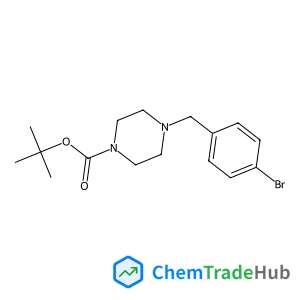
2-Methyl-2-propanyl 4-(4-bromobenzyl)-1-piperazinecarboxylate
CAS Number:
844891-10-7
Molecular Formula:
C16H23BrN2O2
![Methyl 8-azabicyclo[3.2.1]octane-3-carboxylate hydrochloride structure](https://static.chemtradehub.com/structs/179/179022-43-6-77f5.webp "Methyl 8-azabicyclo[3.2.1]octane-3-carboxylate hydrochloride structure")
Methyl 8-azabicyclo[3.2.1]octane-3-carboxylate hydrochloride
CAS Number:
179022-43-6
Molecular Formula:
C9H16ClNO2
Recommended Suppliers




Disclaimer
This page provides academic journal information for reference and research purposes only. We are not affiliated with any journal publishers and do not handle publication submissions. For publication-related inquiries, please contact the respective journal publishers directly.
If you notice any inaccuracies in the information displayed, please contact us at support@chemtradehub.com. We will promptly review and address your concerns.