












Modelling the bulk properties of ambient pressure polymorphs of zirconia
Literature Information
Publication Date
2020-02-25
DOI
10.1039/D0CP00032A
Impact Factor
3.676
Authors
View Original
Abstract
We report a detailed survey of the calculated bulk properties of zirconia using GGA and meta-GGA functionals (PBE, PBEsol, RPBE, and TPSS), dispersion (Grimme's D2 and D3 approach), and on-site Coulomb repulsion correction (U = 2–8 eV). Structural, elastic, mechanical, and dielectric properties, as well as energetics, electronic structure, and phonon dispersion curves were computed and compared to previous investigations to identify the best DFT approach for a consistent in silico description of zirconia polymorphs. In general, inclusion of dispersion corrections led to only small changes in the calculated properties, whereas DFT+U (U = 2 or 4 eV) reduced the deviations of calculated properties from the experimental results, although deterioration of the structure and relative stabilities may be observed in some cases. Standard PBEsol, RPBE+U, and PBE+U were the best methodologies for a simultaneous description of the three polymorphs of ZrO2. RPBE+U, however, was the only functional to conserve the distinct structures and stabilities of c-, t-, and m-ZrO2 when U = 4 eV was used, resulting in the best in silico replication of the band gaps of ZrO2, whilst outperforming the other methodologies in the description of elastic, mechanical, and dielectric properties of this material. Overall, these results provide insight into the most appropriate DFT methodology for in silico investigations of ZrO2, and show that simultaneous description of all three ambient pressure zirconia polymorphs by DFT techniques with acceptable levels of accuracy can be achieved only when the correct choice of methodology is applied.
Recommended Journals
Related Literature
Ferrocenes with two carbohydrate appendages at the upper and lower rings are useful for investigating carbohydrate–carbohydrate interactions
2009-07-30
Communication
DOI: 10.1039/B910534D
Cylindrical sheet formation of oligo-meta-aniline foldamers
Victor Maurizot, Stéphane Massip, Jean-Michel Léger, Gérard Déléris
2009-09-04
Communication
DOI: 10.1039/B909446F
Renewable resource-based poly(dodecyloate) by carbonylation polymerization
Dorothee Quinzler, Stefan Mecking
2009-08-14
Communication
DOI: 10.1039/B912294J
Control and modulation of chirality for azobenzene-substituted polydiacetylene LB films with circularly polarized light
Gang Zou, Hao Jiang, Hideki Kohn, Takaaki Manaka, Mitsumasa Iwamoto
2009-08-03
Communication
DOI: 10.1039/B909085A
Copper-catalyzed enantioselectivecarbenoidinsertion into S–H bonds‡
Yong-Zhen Zhang, Shou-Fei Zhu, Yan Cai, Hong-Xiang Mao, Qi-Lin Zhou
2009-08-11
Communication
DOI: 10.1039/B911670B
Charge photogeneration in polythiophene–perylene diimide blend films
Safa Shoaee, Zesheng An, Xuan Zhang, Stephen Barlow, Seth R. Marder, Warren Duffy, James R. Durrant
2009-07-29
Communication
DOI: 10.1039/B909071A
Probe for i-motif structure and G-rich strands using end-stacking ability
Il Joon Lee, Jeong Wu Yi, Byeang Hyean Kim
2009-08-05
Communication
DOI: 10.1039/B908624B
Luminescent N-arylphthalimidino derivatives 2- and 4-(1-oxo-1H-2,3-dihydroisoindol-2-yl)benzoic acid: examples of a new class of reaction induced crystallization for an organic compound
Yun Chen, Hui Li, Shuanglian Cai
2009-07-21
Communication
DOI: 10.1039/B908853A
Metal-catalyzed rearrangement of enantiomerically pure alkylidenecyclopropane derivatives as a new access to cyclobutenes possessing quaternary stereocenters‡
Ahmad Masarwa, Alois Fürstner, Ilan Marek
2009-09-02
Communication
DOI: 10.1039/B910465H
You might also like
Compound Q&A
What precautions should be taken when handling lithium chloride hydrate (1:1:1) (CAS: 16712-20-2)?
When handling lithium chloride hydrate (1:1:1) (CAS: 16712-20-2), it is importan...
16712-20-2Lithium chloride hyd...
Compound Q&A
Is 4-(4H-1,2,4-Triazol-4-yl)piperidine (CAS: 690261-92-8) safe?
4-(4H-1,2,4-Triazol-4-yl)piperidine is generally considered safe for use in phar...
690261-92-84-(4H-1,2,4-Triazol-...
Compound Q&A
How should waste containing 1,3-Thiazole-2-carboxamide (CAS: 16733-85-0) be handled?
Waste containing 1,3-Thiazole-2-carboxamide (CAS: 16733-85-0) should be collecte...
16733-85-01,3-Thiazole-2-carbo...
Compound Q&A
What regulatory guidelines apply to 5-(Difluoromethyl)-2-fluorobenzonitrile (CAS: 934175-58-3)?
5-(Difluoromethyl)-2-fluorobenzonitrile (CAS: 934175-58-3) is subject to regulat...
934175-58-35-(Difluoromethyl)-2...
Compound Q&A
How is Methyl 3-acetamido-2-thiophenecarboxylate (CAS: 22288-79-5) typically synthesized?
Methyl 3-acetamido-2-thiophenecarboxylate can be synthesized by the reaction of ...
22288-79-5Methyl 3-acetamido-2...
Compound Q&A
What is 4-Isoquinolinecarbonitrile (CAS: 34846-65-6)?
4-Isoquinolinecarbonitrile is a chemical compound with the CAS number 34846-65-6...
34846-65-64-Isoquinolinecarbon...
Compound Q&A
How should Methyl 1H-1,2,3-triazole-4-carboxylate (CAS: 877309-59-6) be stored?
Store Methyl 1H-1,2,3-triazole-4-carboxylate (CAS: 877309-59-6) in a cool, dry p...
877309-59-6Methyl 1H-1,2,3-tria...
Compound Q&A
What regulatory guidelines apply to 6-Bromo[1,3]thiazolo[5,4-b]pyridin-2-amine (CAS: 1160791-13-8)?
6-Bromo[1,3]thiazolo[5,4-b]pyridin-2-amine (CAS: 1160791-13-8) is subject to the...
1160791-13-86-Bromo[1,3]thiazolo...
Compound Q&A
Is (2S,3S)-2-Ammonio-3-(3,4-dihydroxyphenyl)-3-hydroxypropanoate (CAS: 23651-95-8) safe?
(2S,3S)-2-Ammonio-3-(3,4-dihydroxyphenyl)-3-hydroxypropanoate (CAS: 23651-95-8) ...
23651-95-8(2S,3S)-2-Ammonio-3-...
Compound Q&A
What are the physical and chemical properties of 7-bromo-3-methyl-3,4-dihydroquinazolin-4-one (CAS: 1293987-84-4)?
7-Bromo-3-methyl-3,4-dihydroquinazolin-4-one is a solid with a crystalline form....
1293987-84-47-bromo-3-methyl-3,4...
Source Journal
Physical Chemistry Chemical Physics

CiteScore:
5.5
Self-citation Rate:
10.3%
Articles per Year:
3036
Physical Chemistry Chemical Physics (PCCP) is an international journal co-owned by 19 physical chemistry and physics societies from around the world. This journal publishes original, cutting-edge research in physical chemistry, chemical physics and biophysical chemistry. To be suitable for publication in PCCP, articles must include significant innovation and/or insight into physical chemistry; this is the most important criterion that reviewers and Editors will judge against when evaluating submissions. The journal has a broad scope and welcomes contributions spanning experiment, theory, computation and data science. Topical coverage includes spectroscopy, dynamics, kinetics, statistical mechanics, thermodynamics, electrochemistry, catalysis, surface science, quantum mechanics, quantum computing and machine learning. Interdisciplinary research areas such as polymers and soft matter, materials, nanoscience, energy, surfaces/interfaces, and biophysical chemistry are welcomed if they demonstrate significant innovation and/or insight into physical chemistry. Joined experimental/theoretical studies are particularly appreciated when complementary and based on up-to-date approaches.
Recommended Compounds

![1-[4-(4-Methyl-1H-imidazol-1-yl)phenyl]ethanone structure](https://static.chemtradehub.com/structs/142/142161-53-3-7f55.webp "1-[4-(4-Methyl-1H-imidazol-1-yl)phenyl]ethanone structure")
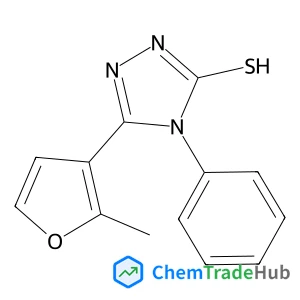
5-(2-Methyl-3-furyl)-4-phenyl-2,4-dihydro-3H-1,2,4-triazole-3-thione
CAS Number:
346464-59-3
Molecular Formula:
C13H11N3OS

4-Methyl-2-oxo-2H-chromen-7-yl 2-acetamido-2-deoxy-3-O-(6-deoxy-alpha-L-galactopyranosyl)-beta-D-glucopyranoside
CAS Number:
383160-12-1
Molecular Formula:
C24H31NO12
Recommended Suppliers






Disclaimer
This page provides academic journal information for reference and research purposes only. We are not affiliated with any journal publishers and do not handle publication submissions. For publication-related inquiries, please contact the respective journal publishers directly.
If you notice any inaccuracies in the information displayed, please contact us at support@chemtradehub.com. We will promptly review and address your concerns.