


Molar volume of 6Li, 7Li and natural Li in the liquid state
Literature Information
Publication Date
2002-08-13
DOI
10.1039/B201956F
Impact Factor
3.676
Authors
Yuta Shimizu, Akitoshi Mizuno, Tadahiko Masaki
View Original
Abstract
The densities of natural Li, concentrated 6Li and concentrated 7Li in the liquid state were each measured by the two-sphere-Archimedes method. The measured density of natural Li in the liquid state was in good agreement with previous data. From these data the molar volumes of natural Li, concentrated 6Li and concentrated 7Li in the liquid state were calculated. Among those three kinds of liquid Li, the molar volume changes in an almost common straight line with the variation of the temperature. This indicates that no isotope effect can be seen between the molar volume in the liquid state of 6Li and that of 7Li within the present experimental error. The simple model calculation of the molar volume of liquid Li was performed based on the hard sphere model immersed in the uniform electron gas. Calculated molar volumes agree with experimental ones.
Recommended Journals

European Journal of Wood and Wood Products

Journal of Physics and Chemistry of Solids

Pharmacological Reviews

Journal of Medicinal Chemistry

Organic Preparations and Procedures International

Kinetics and Catalysis

Helvetica Chimica Acta

Russian Chemical Reviews

Science

Proceedings of the National Academy of Sciences of the United States of America
Related Literature
Terpenoids: shape and non-covalent interactions. The rotational spectrum of cis-verbenol and its 1 : 1 water complex
Susana Blanco, Juan Carlos López, Assimo Maris
2020-02-18
Paper
DOI: 10.1039/D0CP00086H
Mirror symmetry origin of Dirac cone formation in rectangular two-dimensional materials
Xuming Qin, Yi Liu, Gui Yang, Dongqiu Zhao
2020-03-02
Paper
DOI: 10.1039/D0CP00244E
Theoretical study of the reaction mechanism and kinetics of the phenyl + propargyl association
Alexander N. Morozov, Alexander M. Mebel
2020-03-09
Paper
DOI: 10.1039/D0CP00306A
Electronic structure, ion diffusion and cation doping in the Na4VO(PO4)2 compound as a cathode material for Na-ion batteries
Pablo A. Aparicio
2020-03-03
Paper
DOI: 10.1039/C9CP05559B
Correction: Calculation of vibrationally resolved absorption and fluorescence spectra of the rylenes
Jonas Greiner, Dage Sundholm
2020-02-07
Correction
DOI: 10.1039/D0CP90033H
Steady semiconducting properties of monolayer PtSe2 with non-metal atom and transition metal atom doping
Ranzhuo Huang, Tianxing Wang, Xianqi Dai, Shuyi Wei, Yaqiang Ma
2020-02-13
Paper
DOI: 10.1039/C9CP06249A
Ethylene carbonate adsorption on the major surfaces of lithium manganese oxide Li1−xMn2O4 spinel (0.000 < x < 0.375): a DFT+U-D3 study
Brian Ramogayana, Pablo A. Aparicio, Matthew G. Quesne, Khomotso P. Maenetja, Phuti E. Ngoepe
2020-02-28
Paper
DOI: 10.1039/C9CP05658K
Effects of electrospray mechanisms and structural relaxation on polylactide ion conformations in the gas phase: insights from ion mobility spectrometry and molecular dynamics simulations
Haidy Metwally, Vincent Lemaur, Jérôme Cornil, Julien De Winter, Lars Konermann, Pascal Gerbaux
2020-02-04
Paper
DOI: 10.1039/C9CP06391A
You might also like
Compound Q&A
How should waste containing 2-Ethyl-4-Methyl-1H-Imidazole-5-Carbaldehyde (CAS: 88634-80-4) be handled?
Waste containing 2-Ethyl-4-Methyl-1H-Imidazole-5-Carbaldehyde (CAS: 88634-80-4) ...
88634-80-42-Ethyl-4-Methyl-1H-...
Compound Q&A
What industries use Triethoxy(octyl)silane (CAS: 1385031-14-0)?
Triethoxy(octyl)silane (CAS: 1385031-14-0) is widely used in the pharmaceuticals...
1385031-14-0Triethoxy(octyl)sila...
Compound Q&A
Are there alternatives to 3-iodo-7-nitro-1H-indazole (CAS: 864724-64-1) in synthesis?
Several alternatives to 3-iodo-7-nitro-1H-indazole (CAS: 864724-64-1) exist in t...
864724-64-13-iodo-7-nitro-1H-in...
Compound Q&A
Are there alternatives to Benzene, bis[(trimethoxysilyl)ethyl] (CAS: 266317-71-9) in synthesis?
Yes, there are alternatives to Benzene, bis[(trimethoxysilyl)ethyl] (CAS: 266317...
266317-71-9Benzene, bis[(trimet...
Compound Q&A
Is Isothiazole-3-carbonitrile (CAS: 1452-17-1) safe?
Isothiazole-3-carbonitrile (CAS: 1452-17-1) is generally considered safe when us...
1452-17-1Isothiazole-3-carbon...
Compound Q&A
Is (3-Chlorophenyl)methanol (CAS: 873-63-2) safe?
(3-Chlorophenyl)methanol (CAS: 873-63-2) is considered low to moderately toxic. ...
873-63-2(3-Chlorophenyl)meth...
Compound Q&A
How is (2S,3S)-2-Hydroxy-3-({[(2-methyl-2-propanyl)oxy]carbonyl}amino)-3-(2-naphthyl)propanoic acid (CAS: 959583-98-3) typically synthesized?
(2S,3S)-2-Hydroxy-3-({[(2-methyl-2-propanyl)oxy]carbonyl}amino)-3-(2-naphthyl)pr...
959583-98-3(2S,3S)-2-Hydroxy-3-...
Compound Q&A
What precautions should be taken when handling Methyl 2-(bromomethyl)-5-methoxybenzoate (CAS: 788081-99-2)?
Proper handling of methyl 2-(bromomethyl)-5-methoxybenzoate requires the use of ...
788081-99-2Methyl 2-(bromomethy...
Compound Q&A
What is 6,8-Dibromoimidazo[1,2-a]pyridine-2-carboxylic acid (CAS: 904805-36-3)?
6,8-Dibromoimidazo[1,2-a]pyridine-2-carboxylic acid (CAS: 904805-36-3) is an aro...
904805-36-36,8-Dibromoimidazo[1...
Compound Q&A
Is 3-Amino-5-bromo-2-pyridinecarbonitrile (CAS: 573675-27-1) safe?
3-Amino-5-bromo-2-pyridinecarbonitrile is considered safe when handled under pro...
573675-27-13-Amino-5-bromo-2-py...
Source Journal
Physical Chemistry Chemical Physics

CiteScore:
5.5
Self-citation Rate:
10.3%
Articles per Year:
3036
Physical Chemistry Chemical Physics (PCCP) is an international journal co-owned by 19 physical chemistry and physics societies from around the world. This journal publishes original, cutting-edge research in physical chemistry, chemical physics and biophysical chemistry. To be suitable for publication in PCCP, articles must include significant innovation and/or insight into physical chemistry; this is the most important criterion that reviewers and Editors will judge against when evaluating submissions. The journal has a broad scope and welcomes contributions spanning experiment, theory, computation and data science. Topical coverage includes spectroscopy, dynamics, kinetics, statistical mechanics, thermodynamics, electrochemistry, catalysis, surface science, quantum mechanics, quantum computing and machine learning. Interdisciplinary research areas such as polymers and soft matter, materials, nanoscience, energy, surfaces/interfaces, and biophysical chemistry are welcomed if they demonstrate significant innovation and/or insight into physical chemistry. Joined experimental/theoretical studies are particularly appreciated when complementary and based on up-to-date approaches.
Recommended Compounds
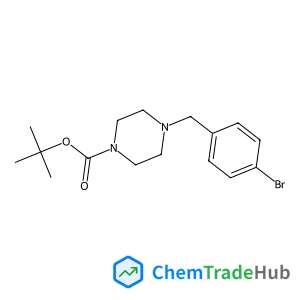
2-Methyl-2-propanyl 4-(4-bromobenzyl)-1-piperazinecarboxylate
CAS Number:
844891-10-7
Molecular Formula:
C16H23BrN2O2
![4-Nitrophenyl N-{[(2-methyl-2-propanyl)oxy]carbonyl}-L-isoleucinate structure](https://static.chemtradehub.com/structs/169/16948-38-2-c88f.webp "4-Nitrophenyl N-{[(2-methyl-2-propanyl)oxy]carbonyl}-L-isoleucinate structure")
4-Nitrophenyl N-{[(2-methyl-2-propanyl)oxy]carbonyl}-L-isoleucinate
CAS Number:
16948-38-2
Molecular Formula:
C17H24N2O6
Recommended Suppliers






Disclaimer
This page provides academic journal information for reference and research purposes only. We are not affiliated with any journal publishers and do not handle publication submissions. For publication-related inquiries, please contact the respective journal publishers directly.
If you notice any inaccuracies in the information displayed, please contact us at support@chemtradehub.com. We will promptly review and address your concerns.