












![(R)-N-[(S)-1-[2-(Diphenylphosphino)phenyl]ethyl]-2-methylpropane-2-sulfinamide structure](https://static.chemtradehub.com/structs/159/1595319-98-4-33e7.webp "(R)-N-[(S)-1-[2-(Diphenylphosphino)phenyl]ethyl]-2-methylpropane-2-sulfinamide structure")
(R)-N-[(S)-1-[2-(Diphenylphosphino)phenyl]ethyl]-2-methylpropane-2-sulfinamide
CAS Number:
1595319-98-4
Molecular Formula:
C24H28NOPS
Alexander N. Morozov, Alexander M. Mebel
Potential energy surface for the phenyl + propargyl radical recombination reaction has been studied at the CCSD(T)-F12/cc-pVTZ-f12//B3LYP/6-311G** level of theory for the closed-shell singlet species and at the triplet–singlet gap CASPT2/cc-pVTZ-CCSD(T)-F12/cc-pVTZ-f12//CASSCF/cc-pVTZ level of theory for the diradical species. High-pressure limit rate constants for the barrierless channels were evaluated with variable reaction coordinate transition state theory (VRC-TST). Rice–Ramsperger–Kassel–Marcus Master Equation (RRKM-ME) calculations have been performed to assess temperature- and pressure-dependent phenomenological rate constants and product branching ratios. The entrance channels of the radical association reaction produce 3-phenyl-1-propyne and phenylallene which can further dissociate/isomerize into a variety of unimolecular and bimolecular products. Theoretical evidence is presented that, at combustion relevant conditions, the phenyl + propargyl recombination provides a feasible mechanism for the addition of a second five-member ring to the first six-member aromatic ring producing the prototype two-ring species indene and indenyl. Rate expressions for all important reaction channels in a broad range of temperatures and pressures have been generated for kinetic modeling.
Xuanhe Li, Wei-Hung Chiang, Kuan Chang, Hujun Xu
DOI: 10.1039/D1RE00446H
Guowei Weng, Kun Ouyang, Xuanhe Lin, Jian Xue, Haihui Wang
DOI: 10.1039/D1RE00207D
Yongrong Li
DOI: 10.1039/B9PY00238C
Roel J. T. Kleijwegt, Vera C. Henricks, Wyatt Winkenwerder, Wim Baan, John van der Schaaf
DOI: 10.1039/D1RE00191D
Yan Zhang, Bi-Cong Wang, Po Wang, Mao-Jie Zhang
DOI: 10.1039/D1RE00257K
Yueyue He, Huaigang Cheng, Zihe Pan, Fangqin Cheng
DOI: 10.1039/D1RE00219H
Zifei Yan, Chencan Du, Guangsheng Luo, Jian Deng
DOI: 10.1039/D1RE00277E
Raquel Viveiros, Teresa Casimiro
DOI: 10.1039/D1RE00194A
Pedro S. F. Mendes, Sébastien Siradze, Laura Pirro, Joris W. Thybaut
DOI: 10.1039/D1RE00215E
When handling lithium chloride hydrate (1:1:1) (CAS: 16712-20-2), it is importan...
4-(4H-1,2,4-Triazol-4-yl)piperidine is generally considered safe for use in phar...
Waste containing 1,3-Thiazole-2-carboxamide (CAS: 16733-85-0) should be collecte...
5-(Difluoromethyl)-2-fluorobenzonitrile (CAS: 934175-58-3) is subject to regulat...
Methyl 3-acetamido-2-thiophenecarboxylate can be synthesized by the reaction of ...
4-Isoquinolinecarbonitrile is a chemical compound with the CAS number 34846-65-6...
Store Methyl 1H-1,2,3-triazole-4-carboxylate (CAS: 877309-59-6) in a cool, dry p...
6-Bromo[1,3]thiazolo[5,4-b]pyridin-2-amine (CAS: 1160791-13-8) is subject to the...
(2S,3S)-2-Ammonio-3-(3,4-dihydroxyphenyl)-3-hydroxypropanoate (CAS: 23651-95-8) ...
7-Bromo-3-methyl-3,4-dihydroquinazolin-4-one is a solid with a crystalline form....

Physical Chemistry Chemical Physics (PCCP) is an international journal co-owned by 19 physical chemistry and physics societies from around the world. This journal publishes original, cutting-edge research in physical chemistry, chemical physics and biophysical chemistry. To be suitable for publication in PCCP, articles must include significant innovation and/or insight into physical chemistry; this is the most important criterion that reviewers and Editors will judge against when evaluating submissions. The journal has a broad scope and welcomes contributions spanning experiment, theory, computation and data science. Topical coverage includes spectroscopy, dynamics, kinetics, statistical mechanics, thermodynamics, electrochemistry, catalysis, surface science, quantum mechanics, quantum computing and machine learning. Interdisciplinary research areas such as polymers and soft matter, materials, nanoscience, energy, surfaces/interfaces, and biophysical chemistry are welcomed if they demonstrate significant innovation and/or insight into physical chemistry. Joined experimental/theoretical studies are particularly appreciated when complementary and based on up-to-date approaches.
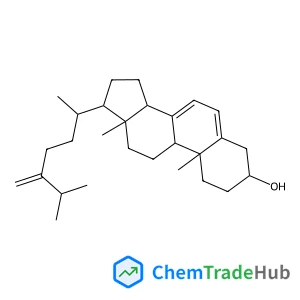
![6,6-Dimethylbicyclo[3.1.1]hept-2-ene-2-carbaldehyde structure](https://static.chemtradehub.com/structs/564/564-94-3-e746.webp "6,6-Dimethylbicyclo[3.1.1]hept-2-ene-2-carbaldehyde structure")
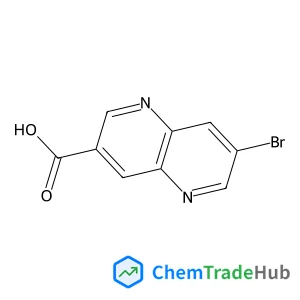
![1-[4-(4-Methyl-1H-imidazol-1-yl)phenyl]ethanone structure](https://static.chemtradehub.com/structs/142/142161-53-3-7f55.webp "1-[4-(4-Methyl-1H-imidazol-1-yl)phenyl]ethanone structure")





