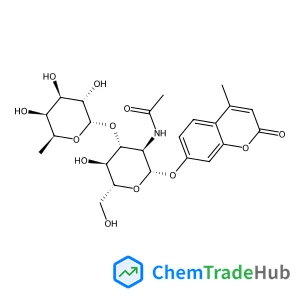
4-Methyl-2-oxo-2H-chromen-7-yl 2-acetamido-2-deoxy-3-O-(6-deoxy-alpha-L-galactopyranosyl)-beta-D-glucopyranoside
CAS Number:
383160-12-1
Molecular Formula:
C24H31NO12
Brian Ramogayana, Pablo A. Aparicio, Matthew G. Quesne, Khomotso P. Maenetja, Phuti E. Ngoepe
Understanding the surface reactivity of the commercial cathode material LiMn2O4 towards the electrolyte is important to improve the cycling performance of secondary lithium-ion batteries and to prevent manganese dissolution. In this work, we have employed spin-polarized density functional theory calculations with on-site Coulomb interactions and long-range dispersion corrections [DFT+U-D3-(BJ)] to investigate the adsorption of the electrolyte component ethylene carbonate (EC) onto the (001), (011) and (111) surfaces of the fully lithiated and partially delithiated Li1−xMn2O4 spinel (0.000 < x < 0.375). The surface interactions were investigated by evaluating the adsorption energies of the EC molecule and the surface free energies. Furthermore, we analyzed the impact of EC adsorption on the Wulff crystal morphologies, the molecular vibrational frequencies and the adsorbate/surface charge transfers. The adsorption energies indicate that the EC molecule strongly adsorbs on the (111) facet, which is attributed to a bidentate binding configuration. We found that EC adsorption enhances the stability of the (111) facet, as shown by the Wulff crystal morphologies. Although a negligible charge transfer was calculated between the spinel surfaces and the EC molecule, a large charge rearrangement takes place within the surfactant upon adsorption. The wavenumbers of the CO stretching mode for the interacting EC molecule are red-shifted with respect to the isolated adsorbate, suggesting that this bond becomes weaker. The surface free energies show that both the fully lithiated and partially delithiated forms of the LiMn2O4 surfaces are stabilized by the EC molecule.
Ignacio Pérez-Victoria, Sebastian Kemper, Mitul K. Patel, John M. Edwards, James C. Errey, Lucia F. Primavesi, Matthew J. Paul, Timothy D. W. Claridge, Benjamin G. Davis
DOI: 10.1039/B913489A
Lei Zhang, Christian Chmelik, Adri N. C. van Laak, Jörg Kärger, Petra E. de Jongh, Krijn P. de Jong
DOI: 10.1039/B914391B
Shengqing Ye, Ke Gao, Haibo Zhou, Xiaodi Yang
DOI: 10.1039/B909178E
Nicolas A. Uhlich, Peter Sommer, Claudia Bühr, Stefan Schürch, Jean-Louis Reymond, Tamis Darbre
DOI: 10.1039/B912291E
Peter D. Abram, David Ellis, Georgina M. Rosair, Alan J. Welch
DOI: 10.1039/B911350A
Xing-Cai Wu, You-Rong Tao, Qi-Xiu Gao
DOI: 10.1039/B913935D
Albert Dato, Zonghoon Lee, Ki-Joon Jeon, Rolf Erni, Velimir Radmilovic, Thomas J. Richardson, Michael Frenklach
DOI: 10.1039/B911395A
Carl W. Liskey, Carolyn S. Wei, Dale R. Pahls, John F. Hartwig
DOI: 10.1039/B913949D
Ming-Jhe Li, Chien-Chen Lai, Yi-Hung Liu, Shie-Ming Peng, Sheng-Hsien Chiu
DOI: 10.1039/B906075H
When handling lithium chloride hydrate (1:1:1) (CAS: 16712-20-2), it is importan...
4-(4H-1,2,4-Triazol-4-yl)piperidine is generally considered safe for use in phar...
Waste containing 1,3-Thiazole-2-carboxamide (CAS: 16733-85-0) should be collecte...
5-(Difluoromethyl)-2-fluorobenzonitrile (CAS: 934175-58-3) is subject to regulat...
Methyl 3-acetamido-2-thiophenecarboxylate can be synthesized by the reaction of ...
4-Isoquinolinecarbonitrile is a chemical compound with the CAS number 34846-65-6...
Store Methyl 1H-1,2,3-triazole-4-carboxylate (CAS: 877309-59-6) in a cool, dry p...
6-Bromo[1,3]thiazolo[5,4-b]pyridin-2-amine (CAS: 1160791-13-8) is subject to the...
(2S,3S)-2-Ammonio-3-(3,4-dihydroxyphenyl)-3-hydroxypropanoate (CAS: 23651-95-8) ...
7-Bromo-3-methyl-3,4-dihydroquinazolin-4-one is a solid with a crystalline form....

Physical Chemistry Chemical Physics (PCCP) is an international journal co-owned by 19 physical chemistry and physics societies from around the world. This journal publishes original, cutting-edge research in physical chemistry, chemical physics and biophysical chemistry. To be suitable for publication in PCCP, articles must include significant innovation and/or insight into physical chemistry; this is the most important criterion that reviewers and Editors will judge against when evaluating submissions. The journal has a broad scope and welcomes contributions spanning experiment, theory, computation and data science. Topical coverage includes spectroscopy, dynamics, kinetics, statistical mechanics, thermodynamics, electrochemistry, catalysis, surface science, quantum mechanics, quantum computing and machine learning. Interdisciplinary research areas such as polymers and soft matter, materials, nanoscience, energy, surfaces/interfaces, and biophysical chemistry are welcomed if they demonstrate significant innovation and/or insight into physical chemistry. Joined experimental/theoretical studies are particularly appreciated when complementary and based on up-to-date approaches.
![1-[4-(4-Methyl-1H-imidazol-1-yl)phenyl]ethanone structure](https://static.chemtradehub.com/structs/142/142161-53-3-7f55.webp "1-[4-(4-Methyl-1H-imidazol-1-yl)phenyl]ethanone structure")
![(R)-N-[(S)-1-[2-(Diphenylphosphino)phenyl]ethyl]-2-methylpropane-2-sulfinamide structure](https://static.chemtradehub.com/structs/159/1595319-98-4-33e7.webp "(R)-N-[(S)-1-[2-(Diphenylphosphino)phenyl]ethyl]-2-methylpropane-2-sulfinamide structure")