












![N-[(9H-Fluoren-9-ylmethoxy)carbonyl]serine structure](https://static.chemtradehub.com/structs/737/73724-45-5-b0dc.webp "N-[(9H-Fluoren-9-ylmethoxy)carbonyl]serine structure")
Fast dimerisation of the triparaquat radical dication
Literature Information
Publication Date
2001-09-11
DOI
10.1039/B103926C
Impact Factor
3.676
Authors
M. Vuckovic, S. V. Mentus, E. Janata, B. H. Milosavljevic
View Original
Abstract
The one-electron reduction of 2,4,6-tris(N-methylpyridinium-4-yl)pyridine trication, triparaquat, TPQ3+, synthesized in the form of the perchlorate salt, was studied by cyclic voltammetry on a platinum disc electrode. It was found that the reduction peak is centered at − 880 mV (s. SCE) at 500 mV s−1 scanning rate. The subsequent oxidation takes place at + 75 mV, indicating an irreversible process, but no changes in the solution content were found after the oxidation. The blue colored reduction product reacts anomalistically slowly with oxygen with a second-order rate constant of (0.65 ± 0.01) mol−1 dm3 s−1. EPR experiments showed that the reduction product in ethanol solution does not possess an unpaired electron. A low temperature gamma radiolysis experiment revealed that the spectral peak maximum of the reduction product of TPQ3+ solubilized in PVA film is shifted ∽200 nm with respect to that obtained in aqueous solution at room temperature. Pulse radiolysis experiments proved that this seemingly inconsistent set of data was a consequence of the very fast dimerisation process 2TPQ2+•(TPQ)24+ (kdim = 1.4 × 10⁹ mol−1 dm3 s−1). Cyclic voltammetry experiments on a mercury electrode revealed that the second reduction step corresponds to the dimer reduction. The third and fourth reduction steps were irreversible and initiated further chemical reactions of triparaquat, which was consistent with the data obtained by the prolonged steady state gamma radiolysis.
Related Literature
Encapsulation of chiral Fe(salan) in nanocages with different microenvironments for asymmetric sulfide oxidation
Bo Li, Shiyang Bai, Peng Wang, Hengquan Yang, Qihua Yang, Can Li
2010-12-09
Paper
DOI: 10.1039/C0CP01828G
Size and morphology of assemblies formed by DNA and lysozyme in dilute aqueous mixtures
Anna M. Carnerup, John Janiak, Karin Schillén, Maria da Graça Miguel
2010-11-03
Paper
DOI: 10.1039/C0CP01220C
Synthesis of silica supported AuCu nanoparticlecatalysts and the effects of pretreatment conditions for the CO oxidation reaction
J. Chris Bauer, David Mullins, Meijun Li, E. Andrew Payzant
2011-01-18
Paper
DOI: 10.1039/C0CP01859G
Unfolding and refolding details of lysozyme in the presence of β-casein micelles
Fu-Gen Wu, Jun-Jie Luo, Zhi-Wu Yu
2011-01-24
Paper
DOI: 10.1039/C0CP01184C
Two-mode dynamics in dispersed systems: the case of particle-stabilized foams studied by diffusing wave spectroscopy
Antonio Stocco, Jérôme Crassous, Anniina Salonen, Arnaud Saint-Jalmes, Dominique Langevin
2010-11-25
Paper
DOI: 10.1039/C0CP01152E
Electrochemical control of adsorption dynamics of surface layer proteins on gold
Christian Zafiu, Günter Trettenhahn, Dietmar Pum, Uwe Bernd Sleytr, Wolfgang Kautek
2010-12-22
Paper
DOI: 10.1039/C0CP01099E
Design of optimally switchable molecules by genetic algorithms
Niss Ole Carstensen, Johannes M. Dieterich, Bernd Hartke
2010-12-15
Paper
DOI: 10.1039/C0CP01065K
Photoionization-induced large-amplitude pendular motion in phenol+–Kr
Mitsuhiko Miyazaki, Akihiro Takeda, Shun-ichi Ishiuchi, Makoto Sakai, Otto Dopfer, Masaaki Fujii
2010-12-10
Paper
DOI: 10.1039/C0CP01961E
Enhanced photocatalytic activity of mesoporous TiO2 aggregates by embedding carbon nanotubes as electron-transfer channel
Jiaguo Yu, Tingting Ma, Shengwei Liu
2010-12-21
Paper
DOI: 10.1039/C0CP01139H
You might also like
Compound Q&A
What are the main uses of 1H-Indazole-6-carbonitrile (CAS: 141290-59-7)?
1H-Indazole-6-carbonitrile finds applications in pharmaceuticals, where it serve...
141290-59-71H-Indazole-6-carbon...
Compound Q&A
How should waste containing Dioctyl (2E)-2-butenedioate (CAS: 2997-85-5) be handled?
Waste containing Dioctyl (2E)-2-butenedioate (CAS: 2997-85-5) should be collecte...
2997-85-5Dioctyl (2E)-2-buten...
Compound Q&A
What industries use Sodium [(1,2-benzoxazol-3-ylmethyl)sulfonyl]azanide (CAS: 68291-98-5)?
Sodium [(1,2-benzoxazol-3-ylmethyl)sulfonyl]azanide is primarily used in pharmac...
68291-98-5Sodium [(1,2-benzoxa...
Compound Q&A
Are there alternatives to Dimethyl 4-(4,4,5,5-tetramethyl-1,3,2-dioxaborolan-2-yl)-2,6-pyridinedicarboxylate (CAS: 741709-66-0) in synthesis?
Dimethyl 4-(4,4,5,5-tetramethyl-1,3,2-dioxaborolan-2-yl)-2,6-pyridinedicarboxyla...
741709-66-0Dimethyl 4-(4,4,5,5-...
Compound Q&A
How should waste containing 2-Fluoro-6-hydrazinopyridine (CAS: 80714-39-2) be handled?
Waste containing 2-Fluoro-6-hydrazinopyridine (CAS: 80714-39-2) should be manage...
80714-39-22-Fluoro-6-hydrazino...
Compound Q&A
What is 6-Formyl-2-pyridinecarboxylic acid (CAS: 499214-11-8)?
6-Formyl-2-pyridinecarboxylic acid is an organic compound with the molecular for...
499214-11-86-Formyl-2-pyridinec...
Compound Q&A
What is the market or research trend for 3-(3,4-dimethoxyphenyl)-2,5-dimethyl-N-(2-morpholin-4-ylethyl)pyrazolo[1,5-a]pyrimidin-7-amine (CAS: 900874-91-1)?
Research trends for this compound indicate a focus on its potential applications...
900874-91-13-(3,4-dimethoxyphen...
Compound Q&A
How is 9H-Tribenzo[b,d,f]azepine (CAS: 29875-73-8) typically synthesized?
9H-Tribenzo[b,d,f]azepine is typically synthesized via a multi-step process invo...
29875-73-89H-Tribenzo[b,d,f]az...
Compound Q&A
How is 1-Cyclopropyl-7-ethoxy-6-fluoro-8-methoxy-4-oxo-1,4-dihydro-3-quinolinecarboxylic acid (CAS: 1797982-51-4) typically synthesized?
1-Cyclopropyl-7-ethoxy-6-fluoro-8-methoxy-4-oxo-1,4-dihydro-3-quinolinecarboxyli...
1797982-51-41-Cyclopropyl-7-etho...
Compound Q&A
How should waste containing Methyl 3-oxo-1,2,3,4-tetrahydro-6-quinoxalinecarboxylate (CAS: 671820-52-3) be handled?
Waste containing Methyl 3-oxo-1,2,3,4-tetrahydro-6-quinoxalinecarboxylate (CAS: ...
671820-52-3Methyl 3-oxo-1,2,3,4...
Source Journal
Physical Chemistry Chemical Physics

CiteScore:
5.5
Self-citation Rate:
10.3%
Articles per Year:
3036
Physical Chemistry Chemical Physics (PCCP) is an international journal co-owned by 19 physical chemistry and physics societies from around the world. This journal publishes original, cutting-edge research in physical chemistry, chemical physics and biophysical chemistry. To be suitable for publication in PCCP, articles must include significant innovation and/or insight into physical chemistry; this is the most important criterion that reviewers and Editors will judge against when evaluating submissions. The journal has a broad scope and welcomes contributions spanning experiment, theory, computation and data science. Topical coverage includes spectroscopy, dynamics, kinetics, statistical mechanics, thermodynamics, electrochemistry, catalysis, surface science, quantum mechanics, quantum computing and machine learning. Interdisciplinary research areas such as polymers and soft matter, materials, nanoscience, energy, surfaces/interfaces, and biophysical chemistry are welcomed if they demonstrate significant innovation and/or insight into physical chemistry. Joined experimental/theoretical studies are particularly appreciated when complementary and based on up-to-date approaches.
Recommended Compounds

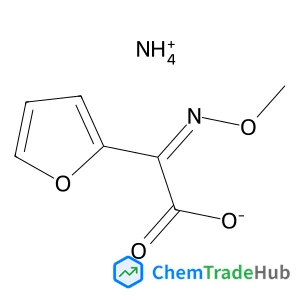
Ammonium (Z)-2-(furan-2-yl)-2-(methoxyimino)acetate
CAS Number:
97148-39-5
Molecular Formula:
C7H10N2O4
Recommended Suppliers






Disclaimer
This page provides academic journal information for reference and research purposes only. We are not affiliated with any journal publishers and do not handle publication submissions. For publication-related inquiries, please contact the respective journal publishers directly.
If you notice any inaccuracies in the information displayed, please contact us at support@chemtradehub.com. We will promptly review and address your concerns.