


Unfolding and refolding details of lysozyme in the presence of β-casein micelles
Literature Information
Publication Date
2011-01-24
DOI
10.1039/C0CP01184C
Impact Factor
3.676
Authors
Fu-Gen Wu, Jun-Jie Luo, Zhi-Wu Yu
View Original
Abstract
In this work, we selected a small globular protein, lysozyme, to study how it unfolds and refolds in the presence of micelles composed of the unstructured β-casein proteins by using microcalorimetry and circular dichroism spectroscopy. It was found that a partially unfolded structure of lysozyme starts to form when the β-casein/lysozyme molar ratio is above 0.7, and the structure forms exclusively when the β-casein/lysozyme molar ratio is above 1.6. This partially unfolded state of lysozyme loses most of its tertiary structure and after heating, the denatured lysozyme molecules are trapped in the charged coatings of β-casein micelles and cannot refold upon cooling. The thus obtained protein complex can be viewed as a kind of special polyelectrolyte complex micelle. The net charge ratios of the two proteins and the ionic strength of the dispersions can significantly modulate the electrostatic and hydrophobic interactions between the two proteins. Our present work may have implications for the nanoparticle protein engineering therapy in the biomedicine field and may provide a better understanding of the principles governing the protein–protein interactions. Besides, the heating–cooling–reheating procedure employed in this work can also be used to study the unfolding and refolding details of the target protein in other protein–protein, protein–polymer and protein–small solute systems.
Recommended Journals

Journal of Saudi Chemical Society

Saudi Pharmaceutical Journal

Russian Journal of General Chemistry

Organic Process Research & Development

Russian Journal of Organic Chemistry

Nature Medicine

Crystallography Reports

Current Opinion in Colloid & Interface Science

Chemical Communications

Russian Journal of Bioorganic Chemistry
Related Literature
Kinetics of competing exchange of oxygen and water at the surface of functional oxides
Vincent Thoréton, Mathew Niania, John Kilner
2021-01-14
Paper
DOI: 10.1039/D0CP04953K
An unbiased confirmation of the participating isomers of C2B5− in the formation of its photo-detachment spectra: a theoretical study
Abhishek Kumar, T. Rajagopala Rao, Rudraditya Sarkar
2020-12-08
Paper
DOI: 10.1039/D0CP04619A
The low energy phonon modes of the hydrogenated and deuterated π-conjugated system 7,7,8,8-tetracyanoquinodimethane: an inelastic neutron scattering study
Hamish Cavaye
2021-01-12
Paper
DOI: 10.1039/D0CP06253G
Thermal decomposition and isomerization of furfural and 2-pyrone: a theoretical kinetic study
Saddam Al-Hammadi, Gabriel da Silva
2020-12-17
Paper
DOI: 10.1039/D0CP05523A
Machine learning approaches to understand and predict rate constants for organic processes in mixtures containing ionic liquids
Tamar L. Greaves, Karin S. Schaffarczyk McHale, Raphael F. Burkart-Radke, Jason B. Harper, Tu C. Le
2021-01-14
Paper
DOI: 10.1039/D0CP04227G
A physico-chemical investigation of highly concentrated potassium acetate solutions towards applications in electrochemistry
Pierre L. Stigliano, Nicolò Pianta, Simone Bonizzoni, Michele Mauri, Roberto Simonutti, Roberto Lorenzi, Barbara Vigani, Vittorio Berbenni, Silvia Rossi
2020-12-08
Paper
DOI: 10.1039/D0CP04151C
Evaluation of the Pr + O → PrO+ + e− chemi-ionization reaction enthalpy and praseodymium oxide, carbide, dioxide, and carbonyl cation bond energies
Maryam Ghiassee, Brandon C. Stevenson, P. B. Armentrout
2021-01-18
Paper
DOI: 10.1039/D0CP06252A
Deep eutectic solvents as non-traditionally multifunctional media for the desulfurization process of fuel oil
Zhiguo Zhu, Hongying Lü, Ming Zhang, Hengquan Yang
2020-12-08
Perspective
DOI: 10.1039/D0CP05153E
Photoinduced electron transfer in nano-Saturn complexes of fullerene
O. A. Stasyuk, A. J. Stasyuk, M. Solà
2020-12-21
Paper
DOI: 10.1039/D0CP05919F
The Brønsted–Evans–Polanyi relationship in oxygen exchange of fuel cell cathode material SrCo0.9Ta0.1O3−δ with the gas phase
Sergey F. Bychkov, Mikhail P. Popov, Alexander P. Nemudry
2020-12-08
Paper
DOI: 10.1039/D0CP04856A
You might also like
Compound Q&A
How is Ethyl 4-chlorothieno[2,3-b]pyridine-5-carboxylate (CAS: 59713-58-5) typically synthesized?
Ethyl 4-chlorothieno[2,3-b]pyridine-5-carboxylate (CAS: 59713-58-5) can be synth...
59713-58-5Ethyl 4-chlorothieno...
Compound Q&A
What regulatory guidelines apply to 5-Methyl-1H-indole-3-carbaldehyde (CAS: 52562-50-2)?
5-Methyl-1H-indole-3-carbaldehyde (CAS: 52562-50-2) is subject to various regula...
52562-50-25-Methyl-1H-indole-3...
Compound Q&A
What are the physical and chemical properties of (1,3-Dimethyl-2,4-dioxo-1,2,3,4-tetrahydro-5-pyrimidinyl)boronic acid (CAS: 223418-73-3)?
(1,3-Dimethyl-2,4-dioxo-1,2,3,4-tetrahydro-5-pyrimidinyl)boronic acid is a white...
223418-73-3(1,3-Dimethyl-2,4-di...
Compound Q&A
How should waste containing Sulfocostunolide A (CAS: 1016983-51-9) be handled?
Waste containing Sulfocostunolide A (CAS: 1016983-51-9) should be handled with c...
1016983-51-9Sulfocostunolide A
Compound Q&A
What precautions should be taken when handling Murraxocin (CAS: 88478-44-8)?
When handling Murraxocin (CAS: 88478-44-8), ensure proper personal protective eq...
88478-44-8Murraxocin
Compound Q&A
What are the physical and chemical properties of Formvar (CAS: 63148-64-1)?
Formvar (CAS: 63148-64-1) is an alkyd resin characterized by a high molecular we...
63148-64-1Formvar(R)
Compound Q&A
Is (S)-4-benzyl-2-((benzyloxy)methyl)morpholine (CAS: 205242-66-6) safe?
(S)-4-benzyl-2-((benzyloxy)methyl)morpholine is generally safe when handled with...
205242-66-6(S)-4-benzyl-2-((ben...
Compound Q&A
What industries use Methyl 1-(5-bromo-2-pyrimidinyl)cyclopropanecarboxylate (CAS: 1447607-69-3)?
Methyl 1-(5-bromo-2-pyrimidinyl)cyclopropanecarboxylate (CAS: 1447607-69-3) is p...
1447607-69-3Methyl 1-(5-bromo-2-...
Compound Q&A
Is 2-Methyl-1-phenyl-1-propanamine hydrochloride (CAS: 24290-47-9) safe?
2-Methyl-1-phenyl-1-propanamine hydrochloride (CAS: 24290-47-9) is generally con...
24290-47-92-Methyl-1-phenyl-1-...
Compound Q&A
How is 3-(4-Bromophenyl)-2-methylpropanoic acid (CAS: 66735-01-1) typically synthesized?
3-(4-Bromophenyl)-2-methylpropanoic acid is synthesized through a multi-step pro...
66735-01-13-(4-Bromophenyl)-2-...
Source Journal
Physical Chemistry Chemical Physics

CiteScore:
5.5
Self-citation Rate:
10.3%
Articles per Year:
3036
Physical Chemistry Chemical Physics (PCCP) is an international journal co-owned by 19 physical chemistry and physics societies from around the world. This journal publishes original, cutting-edge research in physical chemistry, chemical physics and biophysical chemistry. To be suitable for publication in PCCP, articles must include significant innovation and/or insight into physical chemistry; this is the most important criterion that reviewers and Editors will judge against when evaluating submissions. The journal has a broad scope and welcomes contributions spanning experiment, theory, computation and data science. Topical coverage includes spectroscopy, dynamics, kinetics, statistical mechanics, thermodynamics, electrochemistry, catalysis, surface science, quantum mechanics, quantum computing and machine learning. Interdisciplinary research areas such as polymers and soft matter, materials, nanoscience, energy, surfaces/interfaces, and biophysical chemistry are welcomed if they demonstrate significant innovation and/or insight into physical chemistry. Joined experimental/theoretical studies are particularly appreciated when complementary and based on up-to-date approaches.
Recommended Compounds
![9,9'-Spirobi[fluoren]-2-amine structure](https://static.chemtradehub.com/structs/118/118951-68-1-0d14.webp "9,9'-Spirobi[fluoren]-2-amine structure")
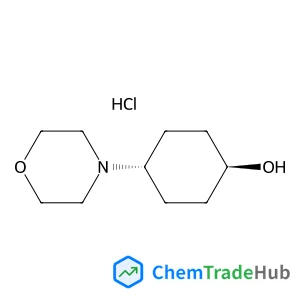
trans-4-(4-Morpholinyl)cyclohexanol hydrochloride (1:1)
CAS Number:
1588441-09-1
Molecular Formula:
C10H20ClNO2
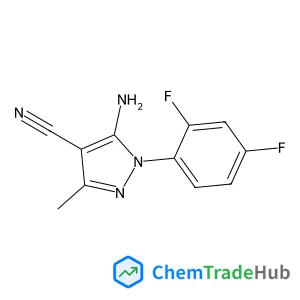
5-Amino-1-(2,4-difluorophenyl)-3-methyl-1H-pyrazole-4-carbonitrile
CAS Number:
1020057-92-4
Molecular Formula:
C11H8F2N4
Recommended Suppliers





Disclaimer
This page provides academic journal information for reference and research purposes only. We are not affiliated with any journal publishers and do not handle publication submissions. For publication-related inquiries, please contact the respective journal publishers directly.
If you notice any inaccuracies in the information displayed, please contact us at support@chemtradehub.com. We will promptly review and address your concerns.