


![Sodium 6-amino-3-[(E)-{4-[(E)-(4-aminophenyl)diazenyl]-2-methoxy-5-methylphenyl}diazenyl]-4-hydroxy-2-naphthalenesulfonate structure](https://static.chemtradehub.com/structs/294/2945-96-2-092f.webp "Sodium 6-amino-3-[(E)-{4-[(E)-(4-aminophenyl)diazenyl]-2-methoxy-5-methylphenyl}diazenyl]-4-hydroxy-2-naphthalenesulfonate structure")
Sodium 6-amino-3-[(E)-{4-[(E)-(4-aminophenyl)diazenyl]-2-methoxy-5-methylphenyl}diazenyl]-4-hydroxy-2-naphthalenesulfonate
CAS Number:
2945-96-2
Molecular Formula:
C24H21N6NaO5S
J. Chris Bauer, David Mullins, Meijun Li, E. Andrew Payzant
Supported gold nanoparticles have generated an immense interest in the field of catalysis due to their extremely high reactivity and selectivity. Recently, alloy nanoparticles of gold have received a lot of attention due to their enhanced catalytic properties. Here we report the synthesis of silica supported AuCu nanoparticles through the conversion of supported Au nanoparticles in a solution of Cu(C2H3O2)2 at 300 °C. The AuCu alloy structure was confirmed through powder XRD (which indicated a weakly ordered alloy phase), XANES, and EXAFS. It was also shown that heating the AuCu/SiO2 in an O2 atmosphere segregated the catalyst into a Au–CuOx heterostructure between 150 °C to 240 °C. Heating the catalyst in H2 at 300 °C reduced the CuOx back to Cu0 to reform the AuCu alloy phase. It was found that the AuCu/SiO2 catalysts were inactive for CO oxidation. However, various pretreatment conditions were required to form a highly active and stable Au–CuOx/SiO2 catalyst to achieve 100% CO conversion below room-temperature. This is explained by the in situFTIR result, which shows that CO molecules can be chemisorbed and activated only on the Au–CuOx/SiO2 catalyst but not on the AuCu/SiO2 catalyst.

Russian Chemical Bulletin

Journal of Saudi Chemical Society

Russian Journal of Applied Chemistry

Journal of Peptide Science

Russian Journal of Bioorganic Chemistry

New Journal of Chemistry

Current Opinion in Colloid & Interface Science

Saudi Pharmaceutical Journal

Crystallography Reports

Current Opinion in Solid State & Materials Science
Miao Yan, Si-Dian Li
DOI: 10.1039/D0CP05385F
Kyoungmin Min, Young-Han Shin
DOI: 10.1039/D0CP04974C
Ignacio R. Sola
DOI: 10.1039/D0CP05692H
DOI: 10.1039/D0CP05852A
Jie Liu, Bing Bu, Michael Crowe, Dechang Li, Jiajie Diao, Baohua Ji
DOI: 10.1039/D0CP03546G
Wolfgang Stahl
DOI: 10.1039/D0CP06057G
Hamish Cavaye
DOI: 10.1039/D0CP06253G
Jian Zeng, Bojun Peng, Zongle Ma, Ling-Ling Wang, Youwen Yang
DOI: 10.1039/D0CP05238H
Ethyl 4-chlorothieno[2,3-b]pyridine-5-carboxylate (CAS: 59713-58-5) can be synth...
5-Methyl-1H-indole-3-carbaldehyde (CAS: 52562-50-2) is subject to various regula...
(1,3-Dimethyl-2,4-dioxo-1,2,3,4-tetrahydro-5-pyrimidinyl)boronic acid is a white...
Waste containing Sulfocostunolide A (CAS: 1016983-51-9) should be handled with c...
When handling Murraxocin (CAS: 88478-44-8), ensure proper personal protective eq...
Formvar (CAS: 63148-64-1) is an alkyd resin characterized by a high molecular we...
(S)-4-benzyl-2-((benzyloxy)methyl)morpholine is generally safe when handled with...
Methyl 1-(5-bromo-2-pyrimidinyl)cyclopropanecarboxylate (CAS: 1447607-69-3) is p...
2-Methyl-1-phenyl-1-propanamine hydrochloride (CAS: 24290-47-9) is generally con...
3-(4-Bromophenyl)-2-methylpropanoic acid is synthesized through a multi-step pro...

Physical Chemistry Chemical Physics (PCCP) is an international journal co-owned by 19 physical chemistry and physics societies from around the world. This journal publishes original, cutting-edge research in physical chemistry, chemical physics and biophysical chemistry. To be suitable for publication in PCCP, articles must include significant innovation and/or insight into physical chemistry; this is the most important criterion that reviewers and Editors will judge against when evaluating submissions. The journal has a broad scope and welcomes contributions spanning experiment, theory, computation and data science. Topical coverage includes spectroscopy, dynamics, kinetics, statistical mechanics, thermodynamics, electrochemistry, catalysis, surface science, quantum mechanics, quantum computing and machine learning. Interdisciplinary research areas such as polymers and soft matter, materials, nanoscience, energy, surfaces/interfaces, and biophysical chemistry are welcomed if they demonstrate significant innovation and/or insight into physical chemistry. Joined experimental/theoretical studies are particularly appreciated when complementary and based on up-to-date approaches.
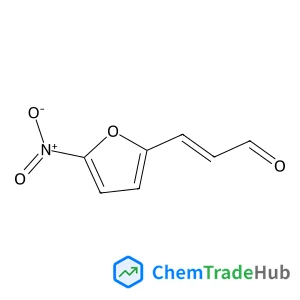
![4-{1-[4-(4,4,5,5-Tetramethyl-1,3,2-dioxaborolan-2-yl)phenyl]cyclopropyl}morpholine structure](https://static.chemtradehub.com/structs/120/1206594-08-2-7afb.webp "4-{1-[4-(4,4,5,5-Tetramethyl-1,3,2-dioxaborolan-2-yl)phenyl]cyclopropyl}morpholine structure")
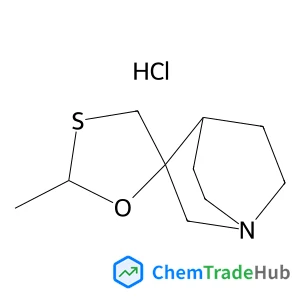
![9,9'-Spirobi[fluoren]-2-amine structure](https://static.chemtradehub.com/structs/118/118951-68-1-0d14.webp "9,9'-Spirobi[fluoren]-2-amine structure")





