


Size and morphology of assemblies formed by DNA and lysozyme in dilute aqueous mixtures
Literature Information
Publication Date
2010-11-03
DOI
10.1039/C0CP01220C
Impact Factor
3.676
Authors
Anna M. Carnerup, John Janiak, Karin Schillén, Maria da Graça Miguel
View Original
Abstract
Assemblies formed by a well-defined quality of DNA (4331 bp T7 DNA) and the small net-cationic protein lysozyme in dilute aqueous solutions have been characterized using cryo-transmission electron microscopy (cryo-TEM) and dynamic light scattering (DLS) as the main techniques. In a wide range of different DNA to lysozyme ratios in solutions of low ionic strength, dispersions of aggregates with the same general morphology and a practically constant hydrodynamic size are formed. The basic structure formed in the dispersions is that of rather flexible worm-like assemblies with a diameter of 10–20 nm, which are suggested to be made up by bundles of on the order of 10 DNA chains with an intervening matrix of lysozyme. With increased ionic strength, the worm-like appearance of the assemblies is lost and they adopt a less well-defined shape. The results suggest that the formation of the DNA–lysozyme aggregates is strongly influenced by cooperative assembly of the components and that, in addition to the electrostatic attraction between DNA and lysozyme, attractive interactions between the protein units are important in governing the behavior of the system.
Recommended Journals

Journal of Natural Medicines

Organic Process Research & Development

Current Opinion in Colloid & Interface Science

Chemical Communications

Saudi Pharmaceutical Journal

Russian Chemical Bulletin

Journal of Saudi Chemical Society

Crystallography Reports

Russian Journal of Coordination Chemistry

Russian Journal of Applied Chemistry
Related Literature
Effects of single and double active sites of Cu oxide clusters over the MFI zeolite for direct conversion of methane to methanol: DFT calculations
Watinee Nunthakitgoson, Anawat Thivasasith, Thana Maihom, Chularat Wattanakit
2021-01-05
Paper
DOI: 10.1039/D0CP05435F
Accelerating atomistic simulations with piecewise machine-learned ab Initio potentials at a classical force field-like cost
Yaolong Zhang, Ce Hu, Bin Jiang
2020-11-16
Paper
DOI: 10.1039/D0CP05089J
Gauging van der Waals interactions in aqueous solutions of 2D MOFs: when water likes organic linkers more than open-metal sites
Mohammad R. Momeni, Zeyu Zhang, David Dell'Angelo, Farnaz A. Shakib
2021-01-20
Paper
DOI: 10.1039/D0CP05923D
Predicting second virial coefficients of organic and inorganic compounds using Gaussian process regression
Jesús Pérez-Ríos
2021-01-11
Paper
DOI: 10.1039/D0CP05509C
Collaboration between a Pt-dimer and neighboring Co–Pd atoms triggers efficient pathways for oxygen reduction reaction
Sheng Dai, Dinesh Bhalothia, Jyh-Pin Chou
2020-12-09
Paper
DOI: 10.1039/D0CP05205A
The spin-dependent transport properties of defected zigzag graphene nanoribbons with graphene nanobubbles
Yun Ni, Jia Li, Wei Tao, Hao Ding, Rui-Xue Li
2021-01-07
Paper
DOI: 10.1039/D0CP05640E
DFT studies of selective oxidation of propene on the MoO3(010) surface
Min Yan
2021-01-07
Paper
DOI: 10.1039/D0CP03732J
Ultrafast channel I and channel II charge generation processes at a nonfullerene donor–acceptor PTB7:PDI interface is crucial for its excellent photovoltaic performance
Kai Li, Dong-Hui Xu, Xin Wang, Xiang-Yang Liu
2021-01-05
Paper
DOI: 10.1039/D0CP05362G
The transition from salt-in-water to water-in-salt nanostructures in water solutions of organic ionic liquids relevant for biological applications
D. Gobbo
2020-12-09
Paper
DOI: 10.1039/D0CP04959J
New atomic-scale insights into the I/Ni(100) system: phase transitions and growth of an atomically thin NiI2 film
T. V. Pavlova, B. V. Andryushechkin
2021-01-11
Paper
DOI: 10.1039/D0CP06171A
You might also like
Compound Q&A
How is Ethyl 4-chlorothieno[2,3-b]pyridine-5-carboxylate (CAS: 59713-58-5) typically synthesized?
Ethyl 4-chlorothieno[2,3-b]pyridine-5-carboxylate (CAS: 59713-58-5) can be synth...
59713-58-5Ethyl 4-chlorothieno...
Compound Q&A
What regulatory guidelines apply to 5-Methyl-1H-indole-3-carbaldehyde (CAS: 52562-50-2)?
5-Methyl-1H-indole-3-carbaldehyde (CAS: 52562-50-2) is subject to various regula...
52562-50-25-Methyl-1H-indole-3...
Compound Q&A
What are the physical and chemical properties of (1,3-Dimethyl-2,4-dioxo-1,2,3,4-tetrahydro-5-pyrimidinyl)boronic acid (CAS: 223418-73-3)?
(1,3-Dimethyl-2,4-dioxo-1,2,3,4-tetrahydro-5-pyrimidinyl)boronic acid is a white...
223418-73-3(1,3-Dimethyl-2,4-di...
Compound Q&A
How should waste containing Sulfocostunolide A (CAS: 1016983-51-9) be handled?
Waste containing Sulfocostunolide A (CAS: 1016983-51-9) should be handled with c...
1016983-51-9Sulfocostunolide A
Compound Q&A
What precautions should be taken when handling Murraxocin (CAS: 88478-44-8)?
When handling Murraxocin (CAS: 88478-44-8), ensure proper personal protective eq...
88478-44-8Murraxocin
Compound Q&A
What are the physical and chemical properties of Formvar (CAS: 63148-64-1)?
Formvar (CAS: 63148-64-1) is an alkyd resin characterized by a high molecular we...
63148-64-1Formvar(R)
Compound Q&A
Is (S)-4-benzyl-2-((benzyloxy)methyl)morpholine (CAS: 205242-66-6) safe?
(S)-4-benzyl-2-((benzyloxy)methyl)morpholine is generally safe when handled with...
205242-66-6(S)-4-benzyl-2-((ben...
Compound Q&A
What industries use Methyl 1-(5-bromo-2-pyrimidinyl)cyclopropanecarboxylate (CAS: 1447607-69-3)?
Methyl 1-(5-bromo-2-pyrimidinyl)cyclopropanecarboxylate (CAS: 1447607-69-3) is p...
1447607-69-3Methyl 1-(5-bromo-2-...
Compound Q&A
Is 2-Methyl-1-phenyl-1-propanamine hydrochloride (CAS: 24290-47-9) safe?
2-Methyl-1-phenyl-1-propanamine hydrochloride (CAS: 24290-47-9) is generally con...
24290-47-92-Methyl-1-phenyl-1-...
Compound Q&A
How is 3-(4-Bromophenyl)-2-methylpropanoic acid (CAS: 66735-01-1) typically synthesized?
3-(4-Bromophenyl)-2-methylpropanoic acid is synthesized through a multi-step pro...
66735-01-13-(4-Bromophenyl)-2-...
Source Journal
Physical Chemistry Chemical Physics

CiteScore:
5.5
Self-citation Rate:
10.3%
Articles per Year:
3036
Physical Chemistry Chemical Physics (PCCP) is an international journal co-owned by 19 physical chemistry and physics societies from around the world. This journal publishes original, cutting-edge research in physical chemistry, chemical physics and biophysical chemistry. To be suitable for publication in PCCP, articles must include significant innovation and/or insight into physical chemistry; this is the most important criterion that reviewers and Editors will judge against when evaluating submissions. The journal has a broad scope and welcomes contributions spanning experiment, theory, computation and data science. Topical coverage includes spectroscopy, dynamics, kinetics, statistical mechanics, thermodynamics, electrochemistry, catalysis, surface science, quantum mechanics, quantum computing and machine learning. Interdisciplinary research areas such as polymers and soft matter, materials, nanoscience, energy, surfaces/interfaces, and biophysical chemistry are welcomed if they demonstrate significant innovation and/or insight into physical chemistry. Joined experimental/theoretical studies are particularly appreciated when complementary and based on up-to-date approaches.
Recommended Compounds
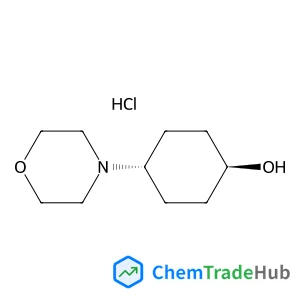
trans-4-(4-Morpholinyl)cyclohexanol hydrochloride (1:1)
CAS Number:
1588441-09-1
Molecular Formula:
C10H20ClNO2

Recommended Suppliers





Disclaimer
This page provides academic journal information for reference and research purposes only. We are not affiliated with any journal publishers and do not handle publication submissions. For publication-related inquiries, please contact the respective journal publishers directly.
If you notice any inaccuracies in the information displayed, please contact us at support@chemtradehub.com. We will promptly review and address your concerns.