












![(3R)-4-(4-Chlorophenyl)-3-({[(2-methyl-2-propanyl)oxy]carbonyl}amino)butanoic acid structure](https://static.chemtradehub.com/structs/218/218608-96-9-f871.webp "(3R)-4-(4-Chlorophenyl)-3-({[(2-methyl-2-propanyl)oxy]carbonyl}amino)butanoic acid structure")
(3R)-4-(4-Chlorophenyl)-3-({[(2-methyl-2-propanyl)oxy]carbonyl}amino)butanoic acid
CAS Number:
218608-96-9
Molecular Formula:
C15H20ClNO4
H. Bertagnolli, D. Leicht, R. Merkle, E. Vilaseca
The integrated intensities of the ν(CC) and ν(CN) stretching vibration bands of acetonitrile (CH3CN) molecules, the δ(OCN) bending vibration band of N,N-dimethylformamide (DMF) molecules, and the ν3 and ν4 bands of perchlorate anions (ClO4−) in ternary CH3CN–Mg(ClO4)2–DMF solutions were measured. The obtained experimental data show that DMF molecules have a greater ability to solvate cations than CH3CN molecules. The spectroscopic properties of CH3CN and DMF molecules located in the first coordination sphere of a cation depend on the composition of the solvate: the absolute intensities of the ν(CC) and ν(CN) bands of CH3CN molecules and of the δ(OCN) band of DMF molecules decrease when the number of DMF molecules in the first solvation shell of the cations increases. Electron transfer from the solvent molecules to the cations is discussed. The influence of the electrostatic field of the cations on the electro-optical parameters of the bonds of the solvated molecules decreases due to this effect.
Serena Margadonna, Yasuhiro Takabayashi, Martin T. McDonald, Karolina Kasperkiewicz, Yoshikazu Mizuguchi, Yoshihiko Takano, Andrew N. Fitch, Emmanuelle Suard, Kosmas Prassides
DOI: 10.1039/B813076K
Victor J. Sussman, John E. Ellis
DOI: 10.1039/B811320C
A. Gastón Orrillo, Andrea M. Escalante, Ricardo L. E. Furlan
DOI: 10.1039/B808565J
Manfred T. Reetz, Horst Höbenreich, Pankaj Soni, Layla Fernández
DOI: 10.1039/B814538E
Alina Botvinik, Abraham Rubinstein, Morris Srebnik
DOI: 10.1039/B811287H
Papapida Pornsuriyasak, Nigam P. Rath, Alexei V. Demchenko
DOI: 10.1039/B810569C
Wei Zhou, Ning Yao, Guoping Yao, Chunhui Deng, Xiangmin Zhang, Pengyuan Yang
DOI: 10.1039/B808800D
Zaida Rodriguez-Docampo
DOI: 10.1039/B808725C
Miguel A. G. Hevia, Sònia Abelló
DOI: 10.1039/B811703A
1H-Indazole-6-carbonitrile finds applications in pharmaceuticals, where it serve...
Waste containing Dioctyl (2E)-2-butenedioate (CAS: 2997-85-5) should be collecte...
Sodium [(1,2-benzoxazol-3-ylmethyl)sulfonyl]azanide is primarily used in pharmac...
Dimethyl 4-(4,4,5,5-tetramethyl-1,3,2-dioxaborolan-2-yl)-2,6-pyridinedicarboxyla...
Waste containing 2-Fluoro-6-hydrazinopyridine (CAS: 80714-39-2) should be manage...
6-Formyl-2-pyridinecarboxylic acid is an organic compound with the molecular for...
Research trends for this compound indicate a focus on its potential applications...
9H-Tribenzo[b,d,f]azepine is typically synthesized via a multi-step process invo...
1-Cyclopropyl-7-ethoxy-6-fluoro-8-methoxy-4-oxo-1,4-dihydro-3-quinolinecarboxyli...
Waste containing Methyl 3-oxo-1,2,3,4-tetrahydro-6-quinoxalinecarboxylate (CAS: ...

Physical Chemistry Chemical Physics (PCCP) is an international journal co-owned by 19 physical chemistry and physics societies from around the world. This journal publishes original, cutting-edge research in physical chemistry, chemical physics and biophysical chemistry. To be suitable for publication in PCCP, articles must include significant innovation and/or insight into physical chemistry; this is the most important criterion that reviewers and Editors will judge against when evaluating submissions. The journal has a broad scope and welcomes contributions spanning experiment, theory, computation and data science. Topical coverage includes spectroscopy, dynamics, kinetics, statistical mechanics, thermodynamics, electrochemistry, catalysis, surface science, quantum mechanics, quantum computing and machine learning. Interdisciplinary research areas such as polymers and soft matter, materials, nanoscience, energy, surfaces/interfaces, and biophysical chemistry are welcomed if they demonstrate significant innovation and/or insight into physical chemistry. Joined experimental/theoretical studies are particularly appreciated when complementary and based on up-to-date approaches.
![4-Penten-1-yl 2-[(2-furylmethyl)(1H-imidazol-1-ylcarbonyl)amino]butanoate structure](https://static.chemtradehub.com/structs/101/101903-30-4-ac34.webp "4-Penten-1-yl 2-[(2-furylmethyl)(1H-imidazol-1-ylcarbonyl)amino]butanoate structure")

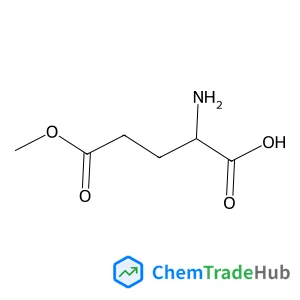
![(3aS,6aS)-1-Methyloctahydropyrrolo[3,4-b]pyrrole structure](https://static.chemtradehub.com/structs/877/877212-98-1-9157.webp "(3aS,6aS)-1-Methyloctahydropyrrolo[3,4-b]pyrrole structure")




