













Facile synthesis of aminophenylboronic acid-functionalized magnetic nanoparticles for selective separation of glycopeptides and glycoproteins
Literature Information
Publication Date
2008-09-25
DOI
10.1039/B808800D
Impact Factor
6.222
Authors
Wei Zhou, Ning Yao, Guoping Yao, Chunhui Deng, Xiangmin Zhang, Pengyuan Yang
View Original
Abstract
In this work, aminophenylboronic acid-functionalized magnetic nanoparticles were synthesized, and applied to selective separation of glycopeptides and glycoproteins.
Related Literature
Core cross-linked star (CCS) polymers with temperature and salt dual responsiveness: synthesis, formation of high internal phase emulsions (HIPEs) and triggered demulsification
Qijing Chen, Yuanyuan Xu, Xueteng Cao, Lianjie Qin, Zesheng An
2013-08-30
Paper
DOI: 10.1039/C3PY00942D
Polyacetylenes containing BODIPY pendants with different connectivities: synthesis, characterization and opto-electronic properties
Bin Liu, Lingfeng Li, Cuiling Lin, Jingdan Zhou, Zhexin Zhu, Hongyao Xu, Huayu Qiu, Shouchun Yin
2013-09-11
Paper
DOI: 10.1039/C3PY01021J
Precise evaluation of the block copolymer nanoparticle growth in polymerization-induced self-assembly under dispersion conditions
Yang Su, Xin Xiao, Shentong Li, Meihan Dan, Xiaohui Wang, Wangqing Zhang
2013-08-30
Paper
DOI: 10.1039/C3PY00995E
Direct synthesis of poly(p-phenyleneethynylene)s from calcium carbide
Nopparat Thavornsin, Mongkol Sukwattanasinitt, Sumrit Wacharasindhu
2013-08-12
Communication
DOI: 10.1039/C3PY01068F
Enzyme-mediated fast injectable hydrogels based on chitosan–glycolic acid/tyrosine: preparation, characterization, and chondrocyte culture
Rong Jin, Chao Lin, Aoneng Cao
2013-08-14
Paper
DOI: 10.1039/C3PY00864A
Click chemistry as a powerful and chemoselective tool for the attachment of targeting ligands to polymer drug carriers
Robert Pola, Alena Braunová, Richard Laga, Michal Pechar, Karel Ulbrich
2013-10-29
Paper
DOI: 10.1039/C3PY01376F
Microporous organic polymers with acetal linkages: synthesis, characterization, and gas sorption properties
Li-Min Zhang, Tao Wang, Bao-Hang Han
2013-08-22
Paper
DOI: 10.1039/C3PY00854A
Synthesis and photovoltaic properties of a low bandgap BODIPY–Pt conjugated polymer
Wenhan He, Yingbing Jiang, Yang Qin
2013-10-22
Paper
DOI: 10.1039/C3PY01396K
Binding and supramolecular organization of homo- and heterotelechelic oligomers in solutions
Jessalyn Cortese, Corinne Soulié-Ziakovic, Ludwik Leibler
2013-07-19
Paper
DOI: 10.1039/C3PY00638G
You might also like
Compound Q&A
What are the main uses of 1H-Indazole-6-carbonitrile (CAS: 141290-59-7)?
1H-Indazole-6-carbonitrile finds applications in pharmaceuticals, where it serve...
141290-59-71H-Indazole-6-carbon...
Compound Q&A
How should waste containing Dioctyl (2E)-2-butenedioate (CAS: 2997-85-5) be handled?
Waste containing Dioctyl (2E)-2-butenedioate (CAS: 2997-85-5) should be collecte...
2997-85-5Dioctyl (2E)-2-buten...
Compound Q&A
What industries use Sodium [(1,2-benzoxazol-3-ylmethyl)sulfonyl]azanide (CAS: 68291-98-5)?
Sodium [(1,2-benzoxazol-3-ylmethyl)sulfonyl]azanide is primarily used in pharmac...
68291-98-5Sodium [(1,2-benzoxa...
Compound Q&A
Are there alternatives to Dimethyl 4-(4,4,5,5-tetramethyl-1,3,2-dioxaborolan-2-yl)-2,6-pyridinedicarboxylate (CAS: 741709-66-0) in synthesis?
Dimethyl 4-(4,4,5,5-tetramethyl-1,3,2-dioxaborolan-2-yl)-2,6-pyridinedicarboxyla...
741709-66-0Dimethyl 4-(4,4,5,5-...
Compound Q&A
How should waste containing 2-Fluoro-6-hydrazinopyridine (CAS: 80714-39-2) be handled?
Waste containing 2-Fluoro-6-hydrazinopyridine (CAS: 80714-39-2) should be manage...
80714-39-22-Fluoro-6-hydrazino...
Compound Q&A
What is 6-Formyl-2-pyridinecarboxylic acid (CAS: 499214-11-8)?
6-Formyl-2-pyridinecarboxylic acid is an organic compound with the molecular for...
499214-11-86-Formyl-2-pyridinec...
Compound Q&A
What is the market or research trend for 3-(3,4-dimethoxyphenyl)-2,5-dimethyl-N-(2-morpholin-4-ylethyl)pyrazolo[1,5-a]pyrimidin-7-amine (CAS: 900874-91-1)?
Research trends for this compound indicate a focus on its potential applications...
900874-91-13-(3,4-dimethoxyphen...
Compound Q&A
How is 9H-Tribenzo[b,d,f]azepine (CAS: 29875-73-8) typically synthesized?
9H-Tribenzo[b,d,f]azepine is typically synthesized via a multi-step process invo...
29875-73-89H-Tribenzo[b,d,f]az...
Compound Q&A
How is 1-Cyclopropyl-7-ethoxy-6-fluoro-8-methoxy-4-oxo-1,4-dihydro-3-quinolinecarboxylic acid (CAS: 1797982-51-4) typically synthesized?
1-Cyclopropyl-7-ethoxy-6-fluoro-8-methoxy-4-oxo-1,4-dihydro-3-quinolinecarboxyli...
1797982-51-41-Cyclopropyl-7-etho...
Compound Q&A
How should waste containing Methyl 3-oxo-1,2,3,4-tetrahydro-6-quinoxalinecarboxylate (CAS: 671820-52-3) be handled?
Waste containing Methyl 3-oxo-1,2,3,4-tetrahydro-6-quinoxalinecarboxylate (CAS: ...
671820-52-3Methyl 3-oxo-1,2,3,4...
Source Journal
Chemical Communications

CiteScore:
8.6
Self-citation Rate:
4.7%
Articles per Year:
2458
ChemComm publishes urgent research which is of outstanding significance and interest to experts in the field, while also appealing to the journal’s broad chemistry readership. Our communication format is ideally suited to short, urgent studies that are of such importance that they require accelerated publication. Our scope covers all topics in chemistry, and research at the interface of chemistry and other disciplines (such as materials science, nanoscience, physics, engineering and biology) where there is a significant novelty in the chemistry aspects. Major topic areas covered include: Analytical Chemistry Catalysis Chemical Biology and medicinal chemistry Computational Chemistry and Machine Learning Energy and sustainable chemistry Environmental Chemistry Green Chemistry Inorganic Chemistry Materials Chemistry Nanoscience Organic Chemistry Physical Chemistry Polymer Chemistry Supramolecular Chemistry
Recommended Compounds
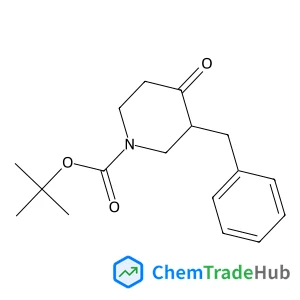
2-Methyl-2-propanyl 3-benzyl-4-oxo-1-piperidinecarboxylate
CAS Number:
193274-82-7
Molecular Formula:
C17H23NO3
Recommended Suppliers







Disclaimer
This page provides academic journal information for reference and research purposes only. We are not affiliated with any journal publishers and do not handle publication submissions. For publication-related inquiries, please contact the respective journal publishers directly.
If you notice any inaccuracies in the information displayed, please contact us at support@chemtradehub.com. We will promptly review and address your concerns.