












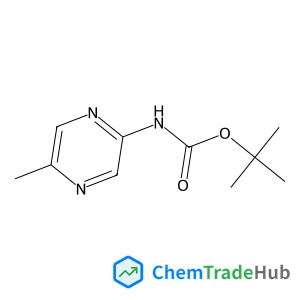
Probing temperature-dependent behaviour in self-assembled monolayers by ac-impedance spectroscopy
Literature Information
Publication Date
2001-05-03
DOI
10.1039/B100457N
Impact Factor
3.676
Authors
Samuel H. Gyepi-Garbrah, Roberta Šilerová
View Original
Abstract
Gold electrodes modified by monolayers of three different long-chain thiol derivatives were studied by electrochemical impedance spectroscopy with a [Fe(CN)6]4−/3− redox probe over a wide temperature range. The impedance characteristics of a bare gold electrode are compared to those of the same electrode modified with n-hexadecanethiol, n-octadecanethiol, and 11-mercaptoundecanoic acid, all between 15°C and 65°C. A strong temperature dependence of the films' electrical features was observed. All films show markedly different behaviour below and above a characteristic temperature specific to each film. It was possible to model bare gold and the thiol-modified electrodes with the Randles circuit over the whole temperature range examined, except for the 11-mercaptoundecanoic acid-modified electrode below its characteristic temperature, which required a different equivalent circuit. Cyclic voltammetry was used to verify the characteristic temperature of each film. The results are interpreted in terms of a two-dimensional phase transition in these monolayers. The possible nature of this phase transition is discussed.
Related Literature
In situ synthesis of Cu nanocatalysts on ZnO whiskers embedded in a microstructured paper composite for autothermal hydrogen production
Hirotaka Koga, Takuya Kitaoka, Hiroyuki Wariishi
2008-09-26
Communication
DOI: 10.1039/B812216D
Synthesis, characterization and oxidizing properties of a diorgano tellurone carrying bulky aromatic substituents
Makoto Oba, Yasunori Okada, Kozaburo Nishiyama, Shigeru Shimada, Wataru Ando
2008-09-17
Communication
DOI: 10.1039/B811112J
Developing DNA tiles for oligonucleotide hybridization assay with higher accuracy and efficiency
Yonggang Ke, Jeanette Nangreave, Hao Yan, Stuart Lindsay, Yan Liu
2008-09-29
Communication
DOI: 10.1039/B811332G
Snowman-like silver alkynyl cluster consolidated by templating chloride and peripheral trifluoroacetates
Shu-Dan Bian, Quan-Ming Wang
2008-09-25
Communication
DOI: 10.1039/B812451E
Design of chiral bifunctional secondary amine catalysts for asymmetric enamine catalysis
Taichi Kano, Keiji Maruoka
2008-09-10
Feature Article
DOI: 10.1039/B809301F
First synthesis of N-[(aziridin-2-yl)methyl]benzimidazolequinone and analysis of toxicity towards normal and Fanconi anemia cells
Liz O’Donovan, Michael P. Carty, Fawaz Aldabbagh
2008-09-29
Communication
DOI: 10.1039/B814706J
An unexpected ruthenium complex and its unique behavior as catalyst in dynamic kinetic resolution of secondary alcohols‡
Qihui Chen, Chengye Yuan
2008-09-17
Communication
DOI: 10.1039/B811627J
Enantioselective synthesis of cyclopropylcarboxamides using s-BuLi–sparteine-mediated metallation
Stephanie Lauru, Nigel S. Simpkins, David Gethin, Claire Wilson
2008-09-16
Communication
DOI: 10.1039/B810441G
Greatly reduced amino acid alphabets in directed evolution: making the right choice for saturation mutagenesis at homologous enzyme positions
Manfred T. Reetz, Sheng Wu
2008-10-02
Communication
DOI: 10.1039/B813388C
Cymantreneconjugation modulates the intracellular distribution and induces high cytotoxicity of a cell-penetrating peptide‡
Ines Neundorf, Jan Hoyer, Katrin Splith, Robert Rennert, Harmel W. Peindy N’Dongo, Ulrich Schatzschneider
2008-09-26
Communication
DOI: 10.1039/B812799A
You might also like
Compound Q&A
What are the main uses of 1H-Indazole-6-carbonitrile (CAS: 141290-59-7)?
1H-Indazole-6-carbonitrile finds applications in pharmaceuticals, where it serve...
141290-59-71H-Indazole-6-carbon...
Compound Q&A
How should waste containing Dioctyl (2E)-2-butenedioate (CAS: 2997-85-5) be handled?
Waste containing Dioctyl (2E)-2-butenedioate (CAS: 2997-85-5) should be collecte...
2997-85-5Dioctyl (2E)-2-buten...
Compound Q&A
What industries use Sodium [(1,2-benzoxazol-3-ylmethyl)sulfonyl]azanide (CAS: 68291-98-5)?
Sodium [(1,2-benzoxazol-3-ylmethyl)sulfonyl]azanide is primarily used in pharmac...
68291-98-5Sodium [(1,2-benzoxa...
Compound Q&A
Are there alternatives to Dimethyl 4-(4,4,5,5-tetramethyl-1,3,2-dioxaborolan-2-yl)-2,6-pyridinedicarboxylate (CAS: 741709-66-0) in synthesis?
Dimethyl 4-(4,4,5,5-tetramethyl-1,3,2-dioxaborolan-2-yl)-2,6-pyridinedicarboxyla...
741709-66-0Dimethyl 4-(4,4,5,5-...
Compound Q&A
How should waste containing 2-Fluoro-6-hydrazinopyridine (CAS: 80714-39-2) be handled?
Waste containing 2-Fluoro-6-hydrazinopyridine (CAS: 80714-39-2) should be manage...
80714-39-22-Fluoro-6-hydrazino...
Compound Q&A
What is 6-Formyl-2-pyridinecarboxylic acid (CAS: 499214-11-8)?
6-Formyl-2-pyridinecarboxylic acid is an organic compound with the molecular for...
499214-11-86-Formyl-2-pyridinec...
Compound Q&A
What is the market or research trend for 3-(3,4-dimethoxyphenyl)-2,5-dimethyl-N-(2-morpholin-4-ylethyl)pyrazolo[1,5-a]pyrimidin-7-amine (CAS: 900874-91-1)?
Research trends for this compound indicate a focus on its potential applications...
900874-91-13-(3,4-dimethoxyphen...
Compound Q&A
How is 9H-Tribenzo[b,d,f]azepine (CAS: 29875-73-8) typically synthesized?
9H-Tribenzo[b,d,f]azepine is typically synthesized via a multi-step process invo...
29875-73-89H-Tribenzo[b,d,f]az...
Compound Q&A
How is 1-Cyclopropyl-7-ethoxy-6-fluoro-8-methoxy-4-oxo-1,4-dihydro-3-quinolinecarboxylic acid (CAS: 1797982-51-4) typically synthesized?
1-Cyclopropyl-7-ethoxy-6-fluoro-8-methoxy-4-oxo-1,4-dihydro-3-quinolinecarboxyli...
1797982-51-41-Cyclopropyl-7-etho...
Compound Q&A
How should waste containing Methyl 3-oxo-1,2,3,4-tetrahydro-6-quinoxalinecarboxylate (CAS: 671820-52-3) be handled?
Waste containing Methyl 3-oxo-1,2,3,4-tetrahydro-6-quinoxalinecarboxylate (CAS: ...
671820-52-3Methyl 3-oxo-1,2,3,4...
Source Journal
Physical Chemistry Chemical Physics

CiteScore:
5.5
Self-citation Rate:
10.3%
Articles per Year:
3036
Physical Chemistry Chemical Physics (PCCP) is an international journal co-owned by 19 physical chemistry and physics societies from around the world. This journal publishes original, cutting-edge research in physical chemistry, chemical physics and biophysical chemistry. To be suitable for publication in PCCP, articles must include significant innovation and/or insight into physical chemistry; this is the most important criterion that reviewers and Editors will judge against when evaluating submissions. The journal has a broad scope and welcomes contributions spanning experiment, theory, computation and data science. Topical coverage includes spectroscopy, dynamics, kinetics, statistical mechanics, thermodynamics, electrochemistry, catalysis, surface science, quantum mechanics, quantum computing and machine learning. Interdisciplinary research areas such as polymers and soft matter, materials, nanoscience, energy, surfaces/interfaces, and biophysical chemistry are welcomed if they demonstrate significant innovation and/or insight into physical chemistry. Joined experimental/theoretical studies are particularly appreciated when complementary and based on up-to-date approaches.
Recommended Compounds

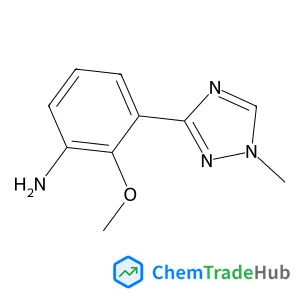
2-Methoxy-3-(1-methyl-1H-1,2,4-triazol-3-yl)aniline
CAS Number:
1609394-10-6
Molecular Formula:
C10H12N4O

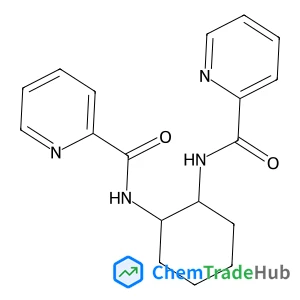
N,N'-(1R,2R)-1,2-Cyclohexanediyldi(2-pyridinecarboxamide)
CAS Number:
218290-24-5
Molecular Formula:
C18H20N4O2
Recommended Suppliers





Disclaimer
This page provides academic journal information for reference and research purposes only. We are not affiliated with any journal publishers and do not handle publication submissions. For publication-related inquiries, please contact the respective journal publishers directly.
If you notice any inaccuracies in the information displayed, please contact us at support@chemtradehub.com. We will promptly review and address your concerns.