












Cymantreneconjugation modulates the intracellular distribution and induces high cytotoxicity of a cell-penetrating peptide‡
Literature Information
Publication Date
2008-09-26
DOI
10.1039/B812799A
Impact Factor
6.222
Authors
Ines Neundorf, Jan Hoyer, Katrin Splith, Robert Rennert, Harmel W. Peindy N’Dongo, Ulrich Schatzschneider
View Original
Abstract
The conjugation of cymantreneCpMn(CO)3 to cell-penetrating peptide hCT(18-32)-k7 alters the intracellular distribution in MCF-7 cells compared to the unmodified peptide, as visualized by fluorescence microscopy, and leads to an increased nuclear accumulation; the peptide and cymantrene compound themselves are not toxic, but the bioconjugate shows a significant cytotoxicity with an IC50 value of 36 μmol l−1.
Related Literature
Polyferrocenes: metallopolymers with tunable and high refractive indices
Chantal Paquet, Paul W. Cyr, Eugenia Kumacheva, Ian Manners
2003-12-10
Communication
DOI: 10.1039/B311934C
Living cationic polymerisation of styrene in an ionic liquid
R. Vijayaraghavan, D. R. MacFarlane
2004-02-13
Communication
DOI: 10.1039/B315100J
Stabilization of D5h and C2v valence tautomers of the croconate dianion
Chi-Keung Lam, Mei-Fun Cheng, Chi-Lun Li, Jie-Peng Zhang, Xiao-Ming Chen, Wai-Kee Li, Thomas C. W. Mak
2003-12-18
Communication
DOI: 10.1039/B312545A
Preparation of chiral triarylphosphines by Pd-catalysed asymmetric P–C cross-coupling
Christian Korff, Günter Helmchen
2004-02-03
Communication
DOI: 10.1039/B315009G
A template-free aqueous route to ZnO nanorod arrays with high optical property
Qun Tang, Wenjia Zhou, Jianmin Shen, Wu Zhang, Lingfen Kong
2004-02-16
Communication
DOI: 10.1039/B313387G
Multiple active oxidants in competitive epoxidations catalyzed by porphyrins and corroles
James P. Collman, Li Zeng, Richard A. Decréau
2003-11-03
Communication
DOI: 10.1039/B310763A
Heterogeneous colorimetric sensor for mercuric salts
Emilio Palomares, Ramón Vilar, James R. Durrant
2004-01-19
Communication
DOI: 10.1039/B314138A
Fast, long-range electron-transfer reactions of a ‘blue’ copper protein coupled non-covalently to an electrode through a stilbenyl thiolate monolayer
Paul L. Burn, Graham R. Webster
2004-01-07
Communication
DOI: 10.1039/B312936E
Noncontact two-color luminescence thermometry based on intramolecular luminophore cyclization within an ionic liquid
Gary A. Baker, Sheila N. Baker, T. Mark McCleskey
2003-10-30
Communication
DOI: 10.1039/B310459C
Probing lipase/esterase libraries for lipid A hydrolases—discovery of biocatalysts for the detoxification of bacterially-expressed recombinant protein
Jung-Mo Ahn, Paul Wentworth, Jr., Kim D. Janda
2004-01-19
Communication
DOI: 10.1039/B312662E
You might also like
Compound Q&A
What are the main uses of 1H-Indazole-6-carbonitrile (CAS: 141290-59-7)?
1H-Indazole-6-carbonitrile finds applications in pharmaceuticals, where it serve...
141290-59-71H-Indazole-6-carbon...
Compound Q&A
How should waste containing Dioctyl (2E)-2-butenedioate (CAS: 2997-85-5) be handled?
Waste containing Dioctyl (2E)-2-butenedioate (CAS: 2997-85-5) should be collecte...
2997-85-5Dioctyl (2E)-2-buten...
Compound Q&A
What industries use Sodium [(1,2-benzoxazol-3-ylmethyl)sulfonyl]azanide (CAS: 68291-98-5)?
Sodium [(1,2-benzoxazol-3-ylmethyl)sulfonyl]azanide is primarily used in pharmac...
68291-98-5Sodium [(1,2-benzoxa...
Compound Q&A
Are there alternatives to Dimethyl 4-(4,4,5,5-tetramethyl-1,3,2-dioxaborolan-2-yl)-2,6-pyridinedicarboxylate (CAS: 741709-66-0) in synthesis?
Dimethyl 4-(4,4,5,5-tetramethyl-1,3,2-dioxaborolan-2-yl)-2,6-pyridinedicarboxyla...
741709-66-0Dimethyl 4-(4,4,5,5-...
Compound Q&A
How should waste containing 2-Fluoro-6-hydrazinopyridine (CAS: 80714-39-2) be handled?
Waste containing 2-Fluoro-6-hydrazinopyridine (CAS: 80714-39-2) should be manage...
80714-39-22-Fluoro-6-hydrazino...
Compound Q&A
What is 6-Formyl-2-pyridinecarboxylic acid (CAS: 499214-11-8)?
6-Formyl-2-pyridinecarboxylic acid is an organic compound with the molecular for...
499214-11-86-Formyl-2-pyridinec...
Compound Q&A
What is the market or research trend for 3-(3,4-dimethoxyphenyl)-2,5-dimethyl-N-(2-morpholin-4-ylethyl)pyrazolo[1,5-a]pyrimidin-7-amine (CAS: 900874-91-1)?
Research trends for this compound indicate a focus on its potential applications...
900874-91-13-(3,4-dimethoxyphen...
Compound Q&A
How is 9H-Tribenzo[b,d,f]azepine (CAS: 29875-73-8) typically synthesized?
9H-Tribenzo[b,d,f]azepine is typically synthesized via a multi-step process invo...
29875-73-89H-Tribenzo[b,d,f]az...
Compound Q&A
How is 1-Cyclopropyl-7-ethoxy-6-fluoro-8-methoxy-4-oxo-1,4-dihydro-3-quinolinecarboxylic acid (CAS: 1797982-51-4) typically synthesized?
1-Cyclopropyl-7-ethoxy-6-fluoro-8-methoxy-4-oxo-1,4-dihydro-3-quinolinecarboxyli...
1797982-51-41-Cyclopropyl-7-etho...
Compound Q&A
How should waste containing Methyl 3-oxo-1,2,3,4-tetrahydro-6-quinoxalinecarboxylate (CAS: 671820-52-3) be handled?
Waste containing Methyl 3-oxo-1,2,3,4-tetrahydro-6-quinoxalinecarboxylate (CAS: ...
671820-52-3Methyl 3-oxo-1,2,3,4...
Source Journal
Chemical Communications

CiteScore:
8.6
Self-citation Rate:
4.7%
Articles per Year:
2458
ChemComm publishes urgent research which is of outstanding significance and interest to experts in the field, while also appealing to the journal’s broad chemistry readership. Our communication format is ideally suited to short, urgent studies that are of such importance that they require accelerated publication. Our scope covers all topics in chemistry, and research at the interface of chemistry and other disciplines (such as materials science, nanoscience, physics, engineering and biology) where there is a significant novelty in the chemistry aspects. Major topic areas covered include: Analytical Chemistry Catalysis Chemical Biology and medicinal chemistry Computational Chemistry and Machine Learning Energy and sustainable chemistry Environmental Chemistry Green Chemistry Inorganic Chemistry Materials Chemistry Nanoscience Organic Chemistry Physical Chemistry Polymer Chemistry Supramolecular Chemistry
Recommended Compounds

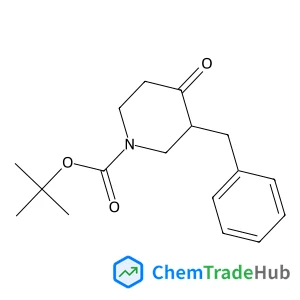
2-Methyl-2-propanyl 3-benzyl-4-oxo-1-piperidinecarboxylate
CAS Number:
193274-82-7
Molecular Formula:
C17H23NO3
Recommended Suppliers





Disclaimer
This page provides academic journal information for reference and research purposes only. We are not affiliated with any journal publishers and do not handle publication submissions. For publication-related inquiries, please contact the respective journal publishers directly.
If you notice any inaccuracies in the information displayed, please contact us at support@chemtradehub.com. We will promptly review and address your concerns.