


Polyenic/polymethinic relationships for donor–acceptor substituted stilbenoids: Structural, electronic and spectroscopic aspects
Literature Information
Publication Date
2001-04-05
DOI
10.1039/B010135O
Impact Factor
3.676
Authors
Marina Dekhtyar, Wolfgang Rettig
View Original
Abstract
A selection of donor–acceptor-substituted stilbenoids of strongly differing polarities was investigated by the AM1 method with full geometry optimization in the ground and the excited state. The results obtained including structural parameters, electronic density distribution, molecular orbital (MO) energies and localizations and S0–S1 energy gaps were rationalized using topological approaches, the Hückel MO (HMO) and the long chain approximation. In this context, a number of analytical expressions were deduced for the molecular characteristics of an arbitrarily terminated conjugated chain and they were employed to make a correlation between two series of model compounds with varied asymmetry, open-chain polyenes (ACH–(CHCH)5–CHD, I) and their ring-terminated analogues (AC5H4–CHCH–C5H4D, II), where A and D represent acceptor and donor moieties. As a result, the relationship of donor–acceptor-substituted stilbenes to polymethines and polyenes was elucidated, and the special role of the aromatic character in π-electron-based stilbenoid peculiarities was interpreted.
Recommended Journals

Herald of the Russian Academy of Sciences

Medicinal Chemistry Research

Colloid Journal

Journal of Asian Natural Products Research

Journal of Chemical Sciences

Polycyclic Aromatic Compounds

Cellulose

Bioorganic & Medicinal Chemistry Letters

Critical Reviews in Solid State and Materials Sciences

Bioorganic & Medicinal Chemistry
Related Literature
Enantioselective synthesis of cyclopropylcarboxamides using s-BuLi–sparteine-mediated metallation
Stephanie Lauru, Nigel S. Simpkins, David Gethin, Claire Wilson
2008-09-16
Communication
DOI: 10.1039/B810441G
Highly enantio- and diastereoselective organocatalytic cascade aza-Michael–Michael reactions: a direct method for the synthesis of trisubstituted chiral pyrrolidines
Hao Li, Liansuo Zu, Hexin Xie, Jian Wang, Wei Wang
2008-09-30
Communication
DOI: 10.1039/B812464G
Synthesis of 3-hydroxy-1-alkenylboronates viaphosphine stabilized borylzirconacyclopropenes‡
Alina Botvinik, Abraham Rubinstein, Morris Srebnik
2008-09-29
Communication
DOI: 10.1039/B811287H
Concomitant formation of two different solvates of a hexa-host from a binary mixture of solvents
Dinabandhu Das, Leonard J. Barbour
2008-09-26
Communication
DOI: 10.1039/B813891E
Amino-sugar modular ligands—useful cores for the formation of asymmetric copper 1,4-addition catalysts
Antonella De Roma, Francesco Ruffo, Simon Woodward
2008-09-17
Communication
DOI: 10.1039/B813137F
Fabrication of porous carbon nanotube network
Jun-Wei Su, Shu-Juan Fu, Shangjr Gwo, Kuna-Jiuh Lin
2008-10-08
Communication
DOI: 10.1039/B812868E
Highly enantioselective carbon–carbon bond formation by Cu-catalyzed asymmetric [2,3]-sigmatropic rearrangement: application to the syntheses of seven-membered oxacycles and six-membered carbocycles
Gullapalli Kumaraswamy, Kadivendi Sadaiah, Duggirala Subrahmanya Ramakrishna, Naresh Police, Balasubramanian Sridhar, Jagadeesh Bharatam
2008-09-17
Communication
DOI: 10.1039/B810770J
Click chemistry assembly of G-quadruplex ligands incorporating a diarylurea scaffold and triazole linkers
William C. Drewe, Stephen Neidle
2008-09-30
Communication
DOI: 10.1039/B814576H
Binding enhancement of antigen-functionalized PEGylated gold nanoparticles onto antibody-immobilized surface by increasing the functionalized antigen using α-sulfanyl-ω-amino-PEG
Yuki Hoshino, Takehiko Ishii
2008-09-16
Communication
DOI: 10.1039/B811818C
A two-step spin crossover mononuclear iron(ii) complex with a [HS–LS–LS] intermediate phase
Sylvestre Bonnet, Maxime A. Siegler, José Sánchez Costa, Gábor Molnár, Azzedine Bousseksou, Anthony L. Spek, Patrick Gamez, Jan Reedijk
2008-09-29
Communication
DOI: 10.1039/B811746B
You might also like
Compound Q&A
What are the main uses of 1H-Indazole-6-carbonitrile (CAS: 141290-59-7)?
1H-Indazole-6-carbonitrile finds applications in pharmaceuticals, where it serve...
141290-59-71H-Indazole-6-carbon...
Compound Q&A
How should waste containing Dioctyl (2E)-2-butenedioate (CAS: 2997-85-5) be handled?
Waste containing Dioctyl (2E)-2-butenedioate (CAS: 2997-85-5) should be collecte...
2997-85-5Dioctyl (2E)-2-buten...
Compound Q&A
What industries use Sodium [(1,2-benzoxazol-3-ylmethyl)sulfonyl]azanide (CAS: 68291-98-5)?
Sodium [(1,2-benzoxazol-3-ylmethyl)sulfonyl]azanide is primarily used in pharmac...
68291-98-5Sodium [(1,2-benzoxa...
Compound Q&A
Are there alternatives to Dimethyl 4-(4,4,5,5-tetramethyl-1,3,2-dioxaborolan-2-yl)-2,6-pyridinedicarboxylate (CAS: 741709-66-0) in synthesis?
Dimethyl 4-(4,4,5,5-tetramethyl-1,3,2-dioxaborolan-2-yl)-2,6-pyridinedicarboxyla...
741709-66-0Dimethyl 4-(4,4,5,5-...
Compound Q&A
How should waste containing 2-Fluoro-6-hydrazinopyridine (CAS: 80714-39-2) be handled?
Waste containing 2-Fluoro-6-hydrazinopyridine (CAS: 80714-39-2) should be manage...
80714-39-22-Fluoro-6-hydrazino...
Compound Q&A
What is 6-Formyl-2-pyridinecarboxylic acid (CAS: 499214-11-8)?
6-Formyl-2-pyridinecarboxylic acid is an organic compound with the molecular for...
499214-11-86-Formyl-2-pyridinec...
Compound Q&A
What is the market or research trend for 3-(3,4-dimethoxyphenyl)-2,5-dimethyl-N-(2-morpholin-4-ylethyl)pyrazolo[1,5-a]pyrimidin-7-amine (CAS: 900874-91-1)?
Research trends for this compound indicate a focus on its potential applications...
900874-91-13-(3,4-dimethoxyphen...
Compound Q&A
How is 9H-Tribenzo[b,d,f]azepine (CAS: 29875-73-8) typically synthesized?
9H-Tribenzo[b,d,f]azepine is typically synthesized via a multi-step process invo...
29875-73-89H-Tribenzo[b,d,f]az...
Compound Q&A
How is 1-Cyclopropyl-7-ethoxy-6-fluoro-8-methoxy-4-oxo-1,4-dihydro-3-quinolinecarboxylic acid (CAS: 1797982-51-4) typically synthesized?
1-Cyclopropyl-7-ethoxy-6-fluoro-8-methoxy-4-oxo-1,4-dihydro-3-quinolinecarboxyli...
1797982-51-41-Cyclopropyl-7-etho...
Compound Q&A
How should waste containing Methyl 3-oxo-1,2,3,4-tetrahydro-6-quinoxalinecarboxylate (CAS: 671820-52-3) be handled?
Waste containing Methyl 3-oxo-1,2,3,4-tetrahydro-6-quinoxalinecarboxylate (CAS: ...
671820-52-3Methyl 3-oxo-1,2,3,4...
Source Journal
Physical Chemistry Chemical Physics

CiteScore:
5.5
Self-citation Rate:
10.3%
Articles per Year:
3036
Physical Chemistry Chemical Physics (PCCP) is an international journal co-owned by 19 physical chemistry and physics societies from around the world. This journal publishes original, cutting-edge research in physical chemistry, chemical physics and biophysical chemistry. To be suitable for publication in PCCP, articles must include significant innovation and/or insight into physical chemistry; this is the most important criterion that reviewers and Editors will judge against when evaluating submissions. The journal has a broad scope and welcomes contributions spanning experiment, theory, computation and data science. Topical coverage includes spectroscopy, dynamics, kinetics, statistical mechanics, thermodynamics, electrochemistry, catalysis, surface science, quantum mechanics, quantum computing and machine learning. Interdisciplinary research areas such as polymers and soft matter, materials, nanoscience, energy, surfaces/interfaces, and biophysical chemistry are welcomed if they demonstrate significant innovation and/or insight into physical chemistry. Joined experimental/theoretical studies are particularly appreciated when complementary and based on up-to-date approaches.
Recommended Compounds
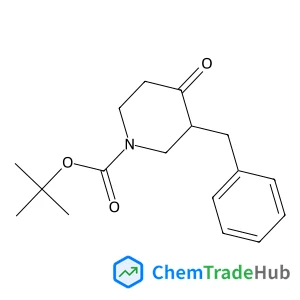
2-Methyl-2-propanyl 3-benzyl-4-oxo-1-piperidinecarboxylate
CAS Number:
193274-82-7
Molecular Formula:
C17H23NO3
Recommended Suppliers





Disclaimer
This page provides academic journal information for reference and research purposes only. We are not affiliated with any journal publishers and do not handle publication submissions. For publication-related inquiries, please contact the respective journal publishers directly.
If you notice any inaccuracies in the information displayed, please contact us at support@chemtradehub.com. We will promptly review and address your concerns.