












Entropic selectivity of microporous materials
Literature Information
Publication Date
2001-03-29
DOI
10.1039/B009434J
Impact Factor
3.676
Authors
View Original
Abstract
The absorption of hard spheres into narrow pores is examined in the framework of Rosenfeld's “fundamental measure” formulation of density functional theory (DFT) for inhomogeneous fluids. The influence of the dimensionality of the confining geometry is assessed by considering the cases of a spherical cavity, an infinite cylindrical channel and an infinite slit. The pores are assumed to be in chemical equilibrium with a reservoir which fixes the chemical potentials of the various species. The hard sphere mixture is considered as a highly simplified model of aqueous solutions, involving a majority component (solvent) and solutes competing for absorption into the pores. It is shown that excluded volume effects alone can lead to very strong selectivities of the pores, for certain ratios of the solute and solvent to pore diameters. The selectivity is strongest for spherical cavities, and is least pronounced in the slit geometry. More complex geometries, including pore edge effects, with dimensions typical of simple ion channels through membranes, are also examined within the same DFT framework. The DFT predictions for the density profiles inside the pores, and the resulting absorbances and selectivities, are tested by grand-canonical Monte Carlo (GCMC) simulations, and good agreement is found.
Related Literature
Selective 1,3-complexation of p-tBu-calix[4]arene by [TiCp2Me2]
Colin L. Raston
2003-11-25
Communication
DOI: 10.1039/B309455C
Large macroscopic size changes in chemomechanical polymers with binding sites for metal ions
Hans-Jörg Schneider, Tianjun Liu
2003-11-13
Communication
DOI: 10.1039/B310939A
Fabrication of two-dimensionally ordered macroporous silica materials with controllable dimensions
Mandakini Kanungo, Maryanne M. Collinson
2004-02-04
Communication
DOI: 10.1039/B311936J
A concise stereocontrolled formal total synthesis of (±)-podophyllotoxin using sulfoxide chemistry
Mike Casey, Claire M. Keaveney
2003-12-05
Communication
DOI: 10.1039/B312245J
Stabilization of D5h and C2v valence tautomers of the croconate dianion
Chi-Keung Lam, Mei-Fun Cheng, Chi-Lun Li, Jie-Peng Zhang, Xiao-Ming Chen, Wai-Kee Li, Thomas C. W. Mak
2003-12-18
Communication
DOI: 10.1039/B312545A
Prediction of formation constants of metal–ammonia complexes in aqueous solution using density functional theory calculations
Robert D. Hancock, Libero J. Bartolotti
2004-01-27
Communication
DOI: 10.1039/B312518C
Paired cell for the preparation of AgI nanowires using nanoporous alumina membrane templates
Yuanzhe Piao, Hasuck Kim
2003-10-17
Communication
DOI: 10.1039/B310212B
Controlled functionalization of gold nanoparticles through a solid phase synthesis approach
James G. Worden, Andrew W. Shaffer, Qun Huo
2004-02-04
Communication
DOI: 10.1039/B312819A
Cubane-like structure of a silanethiol – primary amineassembly – a novel, unusual hydrogen bond pattern
Barbara Becker, Katarzyna Baranowska, Jarosław Chojnacki, Wiesław Wojnowski
2004-01-28
Communication
DOI: 10.1039/B313576D
Mixed halo/hydroxy carborane anions: thermally stable platforms for hydronium ion isolation
Daniel J. Stasko, Kevin J. Perzynski, Mark A. Wasil
2004-02-16
Communication
DOI: 10.1039/B314475E
You might also like
Compound Q&A
What are the main uses of 1H-Indazole-6-carbonitrile (CAS: 141290-59-7)?
1H-Indazole-6-carbonitrile finds applications in pharmaceuticals, where it serve...
141290-59-71H-Indazole-6-carbon...
Compound Q&A
How should waste containing Dioctyl (2E)-2-butenedioate (CAS: 2997-85-5) be handled?
Waste containing Dioctyl (2E)-2-butenedioate (CAS: 2997-85-5) should be collecte...
2997-85-5Dioctyl (2E)-2-buten...
Compound Q&A
What industries use Sodium [(1,2-benzoxazol-3-ylmethyl)sulfonyl]azanide (CAS: 68291-98-5)?
Sodium [(1,2-benzoxazol-3-ylmethyl)sulfonyl]azanide is primarily used in pharmac...
68291-98-5Sodium [(1,2-benzoxa...
Compound Q&A
Are there alternatives to Dimethyl 4-(4,4,5,5-tetramethyl-1,3,2-dioxaborolan-2-yl)-2,6-pyridinedicarboxylate (CAS: 741709-66-0) in synthesis?
Dimethyl 4-(4,4,5,5-tetramethyl-1,3,2-dioxaborolan-2-yl)-2,6-pyridinedicarboxyla...
741709-66-0Dimethyl 4-(4,4,5,5-...
Compound Q&A
How should waste containing 2-Fluoro-6-hydrazinopyridine (CAS: 80714-39-2) be handled?
Waste containing 2-Fluoro-6-hydrazinopyridine (CAS: 80714-39-2) should be manage...
80714-39-22-Fluoro-6-hydrazino...
Compound Q&A
What is 6-Formyl-2-pyridinecarboxylic acid (CAS: 499214-11-8)?
6-Formyl-2-pyridinecarboxylic acid is an organic compound with the molecular for...
499214-11-86-Formyl-2-pyridinec...
Compound Q&A
What is the market or research trend for 3-(3,4-dimethoxyphenyl)-2,5-dimethyl-N-(2-morpholin-4-ylethyl)pyrazolo[1,5-a]pyrimidin-7-amine (CAS: 900874-91-1)?
Research trends for this compound indicate a focus on its potential applications...
900874-91-13-(3,4-dimethoxyphen...
Compound Q&A
How is 9H-Tribenzo[b,d,f]azepine (CAS: 29875-73-8) typically synthesized?
9H-Tribenzo[b,d,f]azepine is typically synthesized via a multi-step process invo...
29875-73-89H-Tribenzo[b,d,f]az...
Compound Q&A
How is 1-Cyclopropyl-7-ethoxy-6-fluoro-8-methoxy-4-oxo-1,4-dihydro-3-quinolinecarboxylic acid (CAS: 1797982-51-4) typically synthesized?
1-Cyclopropyl-7-ethoxy-6-fluoro-8-methoxy-4-oxo-1,4-dihydro-3-quinolinecarboxyli...
1797982-51-41-Cyclopropyl-7-etho...
Compound Q&A
How should waste containing Methyl 3-oxo-1,2,3,4-tetrahydro-6-quinoxalinecarboxylate (CAS: 671820-52-3) be handled?
Waste containing Methyl 3-oxo-1,2,3,4-tetrahydro-6-quinoxalinecarboxylate (CAS: ...
671820-52-3Methyl 3-oxo-1,2,3,4...
Source Journal
Physical Chemistry Chemical Physics

CiteScore:
5.5
Self-citation Rate:
10.3%
Articles per Year:
3036
Physical Chemistry Chemical Physics (PCCP) is an international journal co-owned by 19 physical chemistry and physics societies from around the world. This journal publishes original, cutting-edge research in physical chemistry, chemical physics and biophysical chemistry. To be suitable for publication in PCCP, articles must include significant innovation and/or insight into physical chemistry; this is the most important criterion that reviewers and Editors will judge against when evaluating submissions. The journal has a broad scope and welcomes contributions spanning experiment, theory, computation and data science. Topical coverage includes spectroscopy, dynamics, kinetics, statistical mechanics, thermodynamics, electrochemistry, catalysis, surface science, quantum mechanics, quantum computing and machine learning. Interdisciplinary research areas such as polymers and soft matter, materials, nanoscience, energy, surfaces/interfaces, and biophysical chemistry are welcomed if they demonstrate significant innovation and/or insight into physical chemistry. Joined experimental/theoretical studies are particularly appreciated when complementary and based on up-to-date approaches.
Recommended Compounds
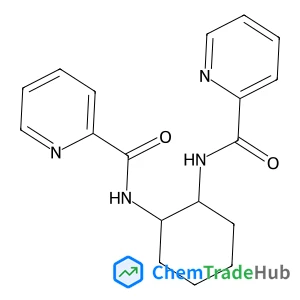
N,N'-(1R,2R)-1,2-Cyclohexanediyldi(2-pyridinecarboxamide)
CAS Number:
218290-24-5
Molecular Formula:
C18H20N4O2
![Benzeneacetic acid, 2-[(2,6-dichlorophenyl)amino]-, compd. with 1-pyrrolidineethanol (1:1) structure](https://static.chemtradehub.com/structs/119/119623-66-4-5301.webp "Benzeneacetic acid, 2-[(2,6-dichlorophenyl)amino]-, compd. with 1-pyrrolidineethanol (1:1) structure")
Benzeneacetic acid, 2-[(2,6-dichlorophenyl)amino]-, compd. with 1-pyrrolidineethanol (1:1)
CAS Number:
119623-66-4
Molecular Formula:
C20H24Cl2N2O3
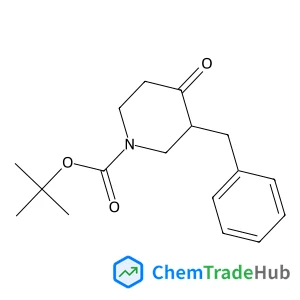
2-Methyl-2-propanyl 3-benzyl-4-oxo-1-piperidinecarboxylate
CAS Number:
193274-82-7
Molecular Formula:
C17H23NO3
Recommended Suppliers






Disclaimer
This page provides academic journal information for reference and research purposes only. We are not affiliated with any journal publishers and do not handle publication submissions. For publication-related inquiries, please contact the respective journal publishers directly.
If you notice any inaccuracies in the information displayed, please contact us at support@chemtradehub.com. We will promptly review and address your concerns.