












Structural investigations of celsian glass derived from Ba-LTA zeolite
Literature Information
Publication Date
2001-03-19
DOI
10.1039/B009384J
Impact Factor
3.676
Authors
Jovana Djordjevic, Vera Dondur, Radovan Dimitrijevic, Aleksandar Kremenovic
View Original
Abstract
The structure of stoichiometric celsian glass was investigated by 29Si MAS NMR and IR spectroscopies and reverse Monte Carlo (RMC) simulation of X-ray diffraction data. The glass was prepared by thermally induced phase transformation of Ba2+-exchanged LTA (Linde Type A) zeolite, under annealing conditions prior to hexacelsian crystallization. NMR and IR measurements have shown that the local silicon–aluminium ordering of the starting zeolite framework, as well as the framework fragments in the form of deformed tetrahedral rings, is retained in the glass structure. Interatomic distances and mean coordination numbers were calculated from the three-dimensional RMC derived structure model. The local Ba2+ environment in the glass was compared with the corresponding crystalline polymorphs. Ba–O distances in the glass are longer than the distances in hexacelsian but the coordination number 12.00 and the increase in the Ba–T distance, compared to zeolite, indicate the establishment of hexacelsian-like coordination. Inspection of the three-dimensional RMC model of the glass showed a layered structure, with Ba2+ cations between the layers.
Related Literature
Synthesis of spirocyclic orthoesters by ‘anomalous’ rhodium(ii)-catalysed intramolecular C–H insertions
Fanny J. Lombard, Romain J. Lepage, Brett D. Schwartz, Ryne C. Johnston, Peter C. Healy, Elizabeth H. Krenske
2017-12-05
Paper
DOI: 10.1039/C7OB02123B
Sc(OTf)3 catalyzed [3 + 2]-annulation reaction of donor–acceptor aziridines with methylene exo-glycals: synthesis of chiral carbohydrate-spiro-heterocycles
Jie-Hui Zhang, Cheng-Lin Pan, Huan-Huan Zhang
2021-03-10
Research Article
DOI: 10.1039/D1QO00228G
Synthesis of azulene-substituted benzofurans and isocoumarins via intramolecular cyclization of 1-ethynylazulenes, and their structural and optical properties
Taku Shoji, Miwa Tanaka, Sho Takagaki, Kota Miura, Akira Ohta, Ryuta Sekiguchi, Shunji Ito, Shigeki Mori, Tetsuo Okujima
2017-12-08
Paper
DOI: 10.1039/C7OB02861J
Palladium-catalyzed synthesis of fluoreones from bis(2-bromophenyl)methanols
Qian Gao, Senmiao Xu
2017-12-12
Communication
DOI: 10.1039/C7OB02895D
Differentiation of enantiomeric anions by NMR spectroscopy with chiral bisurea receptors
Suguru Ito, Manami Okuno, Masatoshi Asami
2017-11-06
Paper
DOI: 10.1039/C7OB02318A
PLP-independent racemization: mechanistic and mutational studies of O-ureidoserine racemase (DcsC)
Yeong-Chan Ahn, Conrad Fischer, Marco J. van Belkum, John C. Vederas
2018-01-24
Paper
DOI: 10.1039/C7OB03013D
Formal total synthesis of salvianolic acid N
Kong Wu, Zhong Pao Xie, Dong-Mei Cui, Chen Zhang
2017-12-22
Paper
DOI: 10.1039/C7OB03025H
Bifunctional catalysis in the stereocontrolled synthesis of tetrahydro-1,2-oxazines
Marek Moczulski, Piotr Drelich, Łukasz Albrecht
2017-12-08
Communication
DOI: 10.1039/C7OB02894F
Enantioselective synthesis of novel pyrano[3,2-c]chromene derivatives as AChE inhibitors via an organocatalytic domino reaction
Jie Zheng, Ming He, Baohua Xie, Lu Yang, Zhiye Hu, Hai-Bing Zhou
2017-12-14
Paper
DOI: 10.1039/C7OB02794J
Design of a substrate-tailored peptiligase variant for the efficient synthesis of thymosin-α1
Ana Toplak, Henriëtte J. Rozeboom, Hein J. Wijma, Peter J. L. M. Quaedflieg, Jan H. van Maarseveen, Dick B. Janssen, Timo Nuijens
2018-01-04
Paper
DOI: 10.1039/C7OB02812A
You might also like
Compound Q&A
What are the main uses of (3.beta.)-3-Hydroxy-N,N-dimethyl-chol-5-en-24-amide (CAS: 79066-03-8)?
(3.beta.)-3-Hydroxy-N,N-dimethyl-chol-5-en-24-amide (CAS: 79066-03-8) is primari...
79066-03-8(3.beta.)-3-Hydroxy-...
Compound Q&A
What regulatory guidelines apply to 5-(aminomethyl)-2-methoxyphenol (CAS: 89702-89-6)?
5-(Aminomethyl)-2-methoxyphenol (CAS: 89702-89-6) is classified under GHS as a s...
89702-89-65-(aminomethyl)-2-me...
Compound Q&A
What is Thieno[2,3-c]pyridin-7(6H)-one (CAS: 28981-13-7)?
Thieno[2,3-c]pyridin-7(6H)-one (CAS: 28981-13-7) is a heterocyclic organic compo...
28981-13-7Thieno[2,3-c]pyridin...
Compound Q&A
Is 1-[(6-Methoxy-3-pyridinyl)methyl]-4-piperidinamine dihydrochloride (CAS: 1185311-28-7) safe?
1-[(6-Methoxy-3-pyridinyl)methyl]-4-piperidinamine dihydrochloride is generally ...
1185311-28-71-[(6-Methoxy-3-pyri...
Compound Q&A
What regulatory guidelines apply to [(2E)-3-Phenyl-2-propen-1-yl]phosphonic acid (CAS: 146404-58-2)?
[(2E)-3-Phenyl-2-propen-1-yl]phosphonic acid (CAS: 146404-58-2) is regulated und...
146404-58-2[(2E)-3-Phenyl-2-pro...
Compound Q&A
What regulatory guidelines apply to 6-Bromo-7-methoxyquinoline (CAS: 1620515-86-7)?
6-Bromo-7-methoxyquinoline (CAS: 1620515-86-7) falls under the scope of the Glob...
1620515-86-76-Bromo-7-methoxyqui...
Compound Q&A
What industries use (2R)-1-(1-Benzofuran-2-yl)-N-propyl-2-pentanamine (CAS: 260550-89-8)?
This compound is primarily used in the pharmaceutical industry for the developme...
260550-89-8(2R)-1-(1-Benzofuran...
Compound Q&A
What are the main uses of 1-Ethyl-7-[2-methyl-6-(4H-1,2,4-triazol-3-yl)-3-pyridinyl]-3,5-dihydropyrazino[2,3-b]pyrazin-2(1H)-one (CAS: 1228013-15-7)?
1-Ethyl-7-[2-methyl-6-(4H-1,2,4-triazol-3-yl)-3-pyridinyl]-3,5-dihydropyrazino[2...
1228013-15-71-Ethyl-7-[2-methyl-...
Compound Q&A
Are there alternatives to {5-(Acryloylamino)-2-[(dimethylamino)methyl]phenyl}boronic acid (CAS: 1217500-78-1) in synthesis?
Alternative reagents such as 2-[(dimethylamino)methyl]phenylboronic acid or rela...
1217500-78-1{5-(Acryloylamino)-2...
Compound Q&A
What is 3-(Piperidin-4-yloxy)pyridine (CAS: 310881-48-2)?
3-(Piperidin-4-yloxy)pyridine (CAS: 310881-48-2) is an organic compound with the...
310881-48-23-(Piperidin-4-yloxy...
Source Journal
Physical Chemistry Chemical Physics

CiteScore:
5.5
Self-citation Rate:
10.3%
Articles per Year:
3036
Physical Chemistry Chemical Physics (PCCP) is an international journal co-owned by 19 physical chemistry and physics societies from around the world. This journal publishes original, cutting-edge research in physical chemistry, chemical physics and biophysical chemistry. To be suitable for publication in PCCP, articles must include significant innovation and/or insight into physical chemistry; this is the most important criterion that reviewers and Editors will judge against when evaluating submissions. The journal has a broad scope and welcomes contributions spanning experiment, theory, computation and data science. Topical coverage includes spectroscopy, dynamics, kinetics, statistical mechanics, thermodynamics, electrochemistry, catalysis, surface science, quantum mechanics, quantum computing and machine learning. Interdisciplinary research areas such as polymers and soft matter, materials, nanoscience, energy, surfaces/interfaces, and biophysical chemistry are welcomed if they demonstrate significant innovation and/or insight into physical chemistry. Joined experimental/theoretical studies are particularly appreciated when complementary and based on up-to-date approaches.
Recommended Compounds
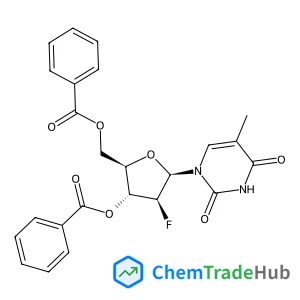
1-(3',5'-Di-O-benzoyl-2'-deoxy-2'-fluoro-b-D-arabinofuranosyl)thymine
CAS Number:
97614-47-6
Molecular Formula:
C24H21FN2O7
Recommended Suppliers






Disclaimer
This page provides academic journal information for reference and research purposes only. We are not affiliated with any journal publishers and do not handle publication submissions. For publication-related inquiries, please contact the respective journal publishers directly.
If you notice any inaccuracies in the information displayed, please contact us at support@chemtradehub.com. We will promptly review and address your concerns.