












PLP-independent racemization: mechanistic and mutational studies of O-ureidoserine racemase (DcsC)
Literature Information
Publication Date
2018-01-24
DOI
10.1039/C7OB03013D
Impact Factor
3.876
Authors
Yeong-Chan Ahn, Conrad Fischer, Marco J. van Belkum, John C. Vederas
View Original
Abstract
O-Ureidoserine racemase (DcsC) is a PLP-independent enzyme in the biosynthetic route to the antibiotic D-cycloserine. Here we present the recombinant expression and characterization of a significantly more active DcsC variant featuring an N-terminal SUMO-tag. Synthesis of enantiomeric pure inhibitors in combination with site-specific mutation of active site cysteines to serines of this enzyme offers closer insights into the mechanism of this transformation. Homology modelling with a close relative (diaminopimelate epimerase, DapF) inspired C- and N-terminal truncation of DcsC to produce a more compact yet still active enzyme variant.
Recommended Journals
Related Literature
The natural DNA bending angle in the lac repressor headpiece–O1 operator complex is determined by protein–DNA contacts and water release
Daniel Barr, Arjan van der Vaart
2011-12-09
Paper
DOI: 10.1039/C2CP23780F
Al2O3(110) surface as a template for the ordered growth of Ni and Co nanoclusters
Krithika Venkataramani, Thomas N. Jensen, Stig Helveg, Michael Reichling, Flemming Besenbacher, Jeppe V. Lauritsen
2012-01-09
Paper
DOI: 10.1039/C2CP22712F
Macromolecular architectures for organic photovoltaics
Bhooshan C. Popere, Andrea M. Della Pelle, Ambata Poe, S. Thayumanavan
2012-01-11
Perspective
DOI: 10.1039/C2CP23422J
The role of tropospheric ice surfaces in the elimination of the CFC substitute, trifluoroethanol
Elena Moreno, Alfonso Aranda, Yolanda Díaz-de-Mera, Ernesto Martínez, Iván Bravo, Ana Rodríguez
2012-02-07
Paper
DOI: 10.1039/C2CP23553F
Molecular dynamics calculation of molecular volumes and volumes of activation
J. Spooner, N. Boon, E. Deglint, E. Edwards, B. Yanciw, B. Patton, L. Thiele, P. Dance
2012-01-12
Paper
DOI: 10.1039/C2CP22949H
Losartan's affinity to fluid bilayers modulates lipid–cholesterol interactions
P. Zoumpoulakis, G. Pabst, T. Mavromoustakos, M. Rappolt
2012-02-17
Paper
DOI: 10.1039/C2CP40134G
Interrelated functionalities of hierarchically CNT/CeO2/Pt nanostructured layers: synthesis, characterization, and electroactivity
Amel Tabet-Aoul, Mohamed Mohamedi
2012-01-31
Paper
DOI: 10.1039/C2CP24069F
Tuning the band gaps and work functions via topology and carbon concentration: a first-principles investigation of Cx(BN)y compounds
Haitao Yu, Hongxing Zhang, Honggang Fu
2012-02-02
Paper
DOI: 10.1039/C2CP23964G
Nano-indentation of a room-temperature ionic liquid film on silica: a computational experiment
P. Ballone, M. G. Del Pópolo, N. Manini
2011-12-14
Paper
DOI: 10.1039/C2CP23459A
You might also like
Compound Q&A
What are the main uses of (3.beta.)-3-Hydroxy-N,N-dimethyl-chol-5-en-24-amide (CAS: 79066-03-8)?
(3.beta.)-3-Hydroxy-N,N-dimethyl-chol-5-en-24-amide (CAS: 79066-03-8) is primari...
79066-03-8(3.beta.)-3-Hydroxy-...
Compound Q&A
What regulatory guidelines apply to 5-(aminomethyl)-2-methoxyphenol (CAS: 89702-89-6)?
5-(Aminomethyl)-2-methoxyphenol (CAS: 89702-89-6) is classified under GHS as a s...
89702-89-65-(aminomethyl)-2-me...
Compound Q&A
What is Thieno[2,3-c]pyridin-7(6H)-one (CAS: 28981-13-7)?
Thieno[2,3-c]pyridin-7(6H)-one (CAS: 28981-13-7) is a heterocyclic organic compo...
28981-13-7Thieno[2,3-c]pyridin...
Compound Q&A
Is 1-[(6-Methoxy-3-pyridinyl)methyl]-4-piperidinamine dihydrochloride (CAS: 1185311-28-7) safe?
1-[(6-Methoxy-3-pyridinyl)methyl]-4-piperidinamine dihydrochloride is generally ...
1185311-28-71-[(6-Methoxy-3-pyri...
Compound Q&A
What regulatory guidelines apply to [(2E)-3-Phenyl-2-propen-1-yl]phosphonic acid (CAS: 146404-58-2)?
[(2E)-3-Phenyl-2-propen-1-yl]phosphonic acid (CAS: 146404-58-2) is regulated und...
146404-58-2[(2E)-3-Phenyl-2-pro...
Compound Q&A
What regulatory guidelines apply to 6-Bromo-7-methoxyquinoline (CAS: 1620515-86-7)?
6-Bromo-7-methoxyquinoline (CAS: 1620515-86-7) falls under the scope of the Glob...
1620515-86-76-Bromo-7-methoxyqui...
Compound Q&A
What industries use (2R)-1-(1-Benzofuran-2-yl)-N-propyl-2-pentanamine (CAS: 260550-89-8)?
This compound is primarily used in the pharmaceutical industry for the developme...
260550-89-8(2R)-1-(1-Benzofuran...
Compound Q&A
What are the main uses of 1-Ethyl-7-[2-methyl-6-(4H-1,2,4-triazol-3-yl)-3-pyridinyl]-3,5-dihydropyrazino[2,3-b]pyrazin-2(1H)-one (CAS: 1228013-15-7)?
1-Ethyl-7-[2-methyl-6-(4H-1,2,4-triazol-3-yl)-3-pyridinyl]-3,5-dihydropyrazino[2...
1228013-15-71-Ethyl-7-[2-methyl-...
Compound Q&A
Are there alternatives to {5-(Acryloylamino)-2-[(dimethylamino)methyl]phenyl}boronic acid (CAS: 1217500-78-1) in synthesis?
Alternative reagents such as 2-[(dimethylamino)methyl]phenylboronic acid or rela...
1217500-78-1{5-(Acryloylamino)-2...
Compound Q&A
What is 3-(Piperidin-4-yloxy)pyridine (CAS: 310881-48-2)?
3-(Piperidin-4-yloxy)pyridine (CAS: 310881-48-2) is an organic compound with the...
310881-48-23-(Piperidin-4-yloxy...
Source Journal
Organic & Biomolecular Chemistry

CiteScore:
3.4
Self-citation Rate:
10.3%
Articles per Year:
1041
Organic & Biomolecular Chemistry (OBC) publishes original and high impact research and reviews in organic chemistry. We welcome research that shows new or significantly improved protocols or methodologies in total synthesis, synthetic methodology or physical and theoretical organic chemistry as well as research that shows a significant advance in the organic chemistry or molecular design aspects of chemical biology, catalysis, supramolecular and macromolecular chemistry, theoretical chemistry, mechanism-oriented physical organic chemistry, medicinal chemistry or natural products. Articles published in the journal should report new work which makes a highly-significant impact in the field. Routine and incremental work is generally not suitable for publication in the journal. More details about key areas of our scope are below. In all cases authors should include in their article clear rationale for why their research has been carried out.
Recommended Compounds
![4-[(4-Bromophenyl)sulfonyl]thiomorpholine structure](https://static.chemtradehub.com/structs/223/223555-81-5-2d67.webp "4-[(4-Bromophenyl)sulfonyl]thiomorpholine structure")
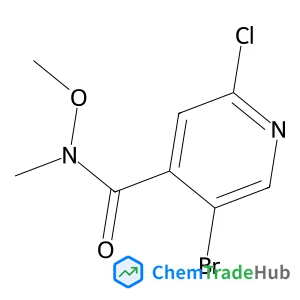
5-Bromo-2-chloro-N-methoxy-N-methylisonicotinamide
CAS Number:
1256790-08-5
Molecular Formula:
C8H8BrClN2O2
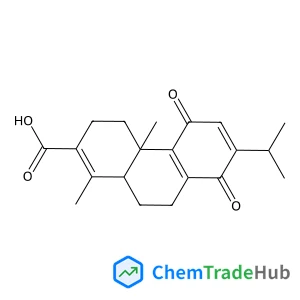
(4aS,10aS)-7-Isopropyl-1,4a-dimethyl-5,8-dioxo-3,4,4a,5,8,9,10,10a-octahydro-2-phenanthrenecarboxylic acid
CAS Number:
142950-86-5
Molecular Formula:
C20H24O4
Recommended Suppliers






Disclaimer
This page provides academic journal information for reference and research purposes only. We are not affiliated with any journal publishers and do not handle publication submissions. For publication-related inquiries, please contact the respective journal publishers directly.
If you notice any inaccuracies in the information displayed, please contact us at support@chemtradehub.com. We will promptly review and address your concerns.