












A comparison of copper(I) and silver(I) complexes of glycine, diglycine and triglycine
Literature Information
Publication Date
2001-02-07
DOI
10.1039/B008836F
Impact Factor
3.676
Authors
Tamer Shoeib, Christopher F. Rodriquez, K. W. Michael Siu, Alan C. Hopkinson
View Original
Abstract
Density functional calculations at B3LYP/DZVP were used to obtain structural information, relative free energies of different isomers and binding energies for the following reaction in the gas phase: M+ + (glycyl)nglycine → M–(glycyl)nglycine+, where M = Ag or Cu and n = 0–2. For the complexes with Cu+, optimizations were also performed at B3LYP/6–31++G(d,p) and single-point calculations at MP2(fc)/6–311++G(2df,2p)//B3LYP/DZVP. The calculated binding energies for the Cu+ complexes are all higher than those of the structurally similar Ag+ ions. These calculated binding energy differences become larger as the size of the ligand increases. For all the Cu+ complexes examined, the coordination number of the copper ion does not exceed two, whereas for the silver complexes tri- and tetracoordinate Ag+ structures are calculated to be at low energy minima. Significant structural and relative free energy differences occur between the lowest energy ‘zwitterionic ’ forms of the M–(glycyl)nglycine+ complexes.
Related Literature
3,6-Diamino-7,8-dihydroisoquinoline-4-carbonitrile derivatives: unexpected facile synthesis, full-color-tunable solid-state emissions and mechanofluorochromic activities
Xinyu Zhang, Dan Wang, Hao Shen, Shuxian Wang, Yunbing Zhou, Yunxiang Lei, Wenxia Gao, Miaochang Liu, Xiaobo Huang, Huayue Wu
2021-01-11
Research Article
DOI: 10.1039/D0QO01527J
Rh(iii)-Catalyzed sulfonylamination of α-indolyl alcohols via Csp2–Csp3 bond cleavage
Xinwei Hu, Zheng Tan, Zhipeng Liu, Fengjuan Chen, Huanfeng Jiang, Wei Zeng
2020-12-30
Research Article
DOI: 10.1039/D0QO01426E
Copper-catalyzed alkynylation/annulation cascades of N-allyl ynamides: regioselective access to medium-sized N-heterocycles
Xu-Heng Yang, Jian Huang, Fang Wang, Zhuoliang Liu, Yujiao Li, Cheng-an Tao, Jianfang Wang
2020-09-30
Research Article
DOI: 10.1039/D0QO00837K
The chemical synthesis of β-(1→4)-linked D-mannobiose and D-mannotriose
Gavin W. J. Twaddle, Dmitry V. Yashunsky, Andrei V. Nikolaev
2003-01-30
Paper
DOI: 10.1039/B210661M
Copper-catalyzed three-component oxycyanation of alkenes
Yuehua Zeng, Yajun Li, Daqi Lv
2020-12-25
Research Article
DOI: 10.1039/D0QO01437K
Rhodium-catalyzed annulation of pyrrole substituted BODIPYs with alkynes to access π-extended polycyclic heteroaromatic molecules and NIR absorption
Bixiang Zhou, Mengjie Guo, Qingjie Pan, Mingbo Zhou, Ling Xu, Yutao Rao, Kaisheng Wang, Bangshao Yin, Jie Zhou, Jianxin Song
2021-02-02
Research Article
DOI: 10.1039/D0QO01625J
Recent advances in cascade radical cyclization of radical acceptors for the synthesis of carbo- and heterocycles
Jianhua Liao, Xiao Yang, Lu Ouyang, Yinlong Lai, Jiuzhong Huang, Renshi Luo
2021-01-08
Review Article
DOI: 10.1039/D0QO01453B
Using combinatorial methods to arrive at a quantitative structure–stability relationship for a new class of one-armed cationic peptide receptors targeting the C-terminus of the amyloid β-peptide
Carsten Schmuck, Martin Heil
2003-01-27
Paper
DOI: 10.1039/B211425A
Metal-ion-assisted hydrolysis of dipeptides involving a serine residue in a neutral aqueous solution
Morio Yashiro, Yoko Sonobe, Ai Yamamura, Tohru Takarada, Makoto Komiyama, Yuki Fujii
2003-01-23
Paper
DOI: 10.1039/B209565C
You might also like
Compound Q&A
What is Ethyl 3-cyclohexylpropanoate (CAS: 10094-36-7)?
Ethyl 3-cyclohexylpropanoate is a clear, colorless to light yellow liquid with a...
10094-36-7Ethyl 3-cyclohexylpr...
Compound Q&A
How should waste containing 2-(Hydroxymethyl)-5-(methoxycarbonyl)-6-methyl-4-(2-nitrophenyl)nicotinic acid (CAS: 34783-31-8) be handled?
Waste containing 2-(Hydroxymethyl)-5-(methoxycarbonyl)-6-methyl-4-(2-nitrophenyl...
34783-31-82-(Hydroxymethyl)-5-...
Compound Q&A
How should waste containing 2,4,6-Tris(pentafluoroethyl)-1,3,5-triazine (CAS: 858-46-8) be handled?
Waste containing 2,4,6-Tris(pentafluoroethyl)-1,3,5-triazine (CAS: 858-46-8) sho...
858-46-82,4,6-Tris(pentafluo...
Compound Q&A
What precautions should be taken when handling Chloroac-nle-oh (CAS: 56787-36-1)?
When handling Chloroac-nle-oh (CAS: 56787-36-1), it is essential to wear appropr...
56787-36-1Chloroac-nle-oh
Compound Q&A
What industries use Ethyl 6-phenylimidazo[2,1-b][1,3]thiazole-3-carboxylate (CAS: 752244-05-6)?
Ethyl 6-phenylimidazo[2,1-b][1,3]thiazole-3-carboxylate is primarily used in the...
752244-05-6Ethyl 6-phenylimidaz...
Compound Q&A
Are there alternatives to alpha-(2-Bromophenyl)benzylamine (CAS: 55095-15-3) in synthesis?
Alternatives to alpha-(2-Bromophenyl)benzylamine (CAS: 55095-15-3) in synthesis ...
55095-15-3alpha-(2-Bromophenyl...
Compound Q&A
How should waste containing 2-Chloro-5-methoxypyridine (CAS: 139585-48-1) be handled?
Waste containing 2-Chloro-5-methoxypyridine (CAS: 139585-48-1) should be managed...
139585-48-12-Chloro-5-methoxypy...
Compound Q&A
What industries use 1-(4-Methoxyphenyl)-2,5-dimethyl-1H-pyrrole (CAS: 5044-27-9)?
1-(4-Methoxyphenyl)-2,5-dimethyl-1H-pyrrole (CAS: 5044-27-9) is used in various ...
5044-27-91-(4-Methoxyphenyl)-...
Compound Q&A
Are there alternatives to 3-Bromo-5-(N-Boc)aminomethylisoxazole (CAS: 903131-45-3) in synthesis?
There are alternative reagents and compounds that can be used in the synthesis o...
903131-45-33-Bromo-5-(N-Boc)ami...
Compound Q&A
What is Tungsten(IV) oxide (CAS: 12036-22-5)?
Tungsten(IV) oxide, also known as tungsten dioxide, is a chemical compound with ...
12036-22-5Tungsten(IV) oxide
Source Journal
Physical Chemistry Chemical Physics

CiteScore:
5.5
Self-citation Rate:
10.3%
Articles per Year:
3036
Physical Chemistry Chemical Physics (PCCP) is an international journal co-owned by 19 physical chemistry and physics societies from around the world. This journal publishes original, cutting-edge research in physical chemistry, chemical physics and biophysical chemistry. To be suitable for publication in PCCP, articles must include significant innovation and/or insight into physical chemistry; this is the most important criterion that reviewers and Editors will judge against when evaluating submissions. The journal has a broad scope and welcomes contributions spanning experiment, theory, computation and data science. Topical coverage includes spectroscopy, dynamics, kinetics, statistical mechanics, thermodynamics, electrochemistry, catalysis, surface science, quantum mechanics, quantum computing and machine learning. Interdisciplinary research areas such as polymers and soft matter, materials, nanoscience, energy, surfaces/interfaces, and biophysical chemistry are welcomed if they demonstrate significant innovation and/or insight into physical chemistry. Joined experimental/theoretical studies are particularly appreciated when complementary and based on up-to-date approaches.
Recommended Compounds
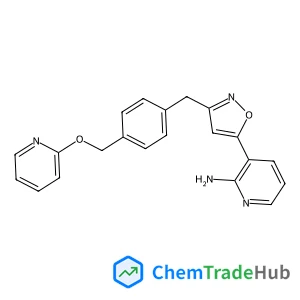
3-(3-(4-((Pyridin-2-yloxy)methyl)benzyl)isoxazol-5-yl)pyridin-2-amine
CAS Number:
936339-60-5
Molecular Formula:
C21H18N4O2
Recommended Suppliers






Disclaimer
This page provides academic journal information for reference and research purposes only. We are not affiliated with any journal publishers and do not handle publication submissions. For publication-related inquiries, please contact the respective journal publishers directly.
If you notice any inaccuracies in the information displayed, please contact us at support@chemtradehub.com. We will promptly review and address your concerns.