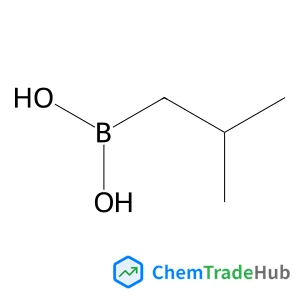
![1,1',1'',1'''-[Disulfanediylbis(carbonothioylnitrilo)]tetraethane structure](https://static.chemtradehub.com/structs/97-/97-77-8-f3e4.webp "1,1',1'',1'''-[Disulfanediylbis(carbonothioylnitrilo)]tetraethane structure")
1,1',1'',1'''-[Disulfanediylbis(carbonothioylnitrilo)]tetraethane
CAS Number:
97-77-8
Molecular Formula:
C10H20N2S4
Tamás Veszprémi, Minh Tho Nguyen
The molecular and electronic structures of XCCP molecules, with X = H, F, Cl, Br and I, were investigated using both unrestricted and restricted CCSD(T), CASSCF/CASPT2 and B3LYP methods, with basis sets up to 6-311++G(3df,2p) and cc-pVTZ. Our results indicate that these molecules possess two distinct types of electronic structure, namely phosphinidene and carbene. The triplet phosphinidene is clearly favoured over the singlet carbene. In the ethynyl-phosphinidene (X–CC–P) framework, both triplet and open-shell singlet states feature a linear geometry (3Σ−); the corresponding singlet–triplet energy gaps vary from 70 to 80 kJ mol−1. Except for the closed-shell singlet of HCCP which is also linear, the phosphaethynyl-halocarbenes (X–C–CP) are characterized by a bent form (1A′) with rather small barriers to linearity. The standard heats of formation (ΔfH° at 298.15 K) of the triplet phosphinidenes have been evaluated as follows (values in kJ mol−1): HCC–P, 421; FCC–P, 292; ClCC–P, 420; BrCC–P, 465; and ICC–P, 569.

NDT & E International

Critical Reviews in Solid State and Materials Sciences

Bioorganic & Medicinal Chemistry Letters

Herald of the Russian Academy of Sciences

Polycyclic Aromatic Compounds

Biocatalysis and Biotransformation

Bioorganic & Medicinal Chemistry

Heteroatom Chemistry

Journal of the Indian Institute of Science

Colloid Journal
DOI: 10.1039/C7CP01980G
Sergey M. Kozlov, Georgi N. Vayssilov
DOI: 10.1039/C7CP03516K
Joanne L. Woodhouse, Mariana Assmann, Michael A. Parkes, Helen Grounds, Steven J. Pacman, James C. Anderson, Graham A. Worth, Helen H. Fielding
DOI: 10.1039/C7CP04815G
Arka Bandyopadhyay, Atanu Nandy, Arunava Chakrabarti, Debnarayan Jana
DOI: 10.1039/C7CP03983B
Hujun Cao, Han Wang, Claudio Pistidda, Chiara Milanese, Weijin Zhang, Anna-Lisa Chaudhary, Antonio Santoru, Sebastiano Garroni, Jozef Bednarcik, Hanns-Peter Liermann, Ping Chen, Thomas Klassen, Martin Dornheim
DOI: 10.1039/C7CP00748E
Hannah Aitchison, Nikolaus Meyerbröker, Tien-Lin Lee, Jörg Zegenhagen, Thomas Potter, Herbert Früchtl, Izabela Cebula, Manfred Buck
DOI: 10.1039/C7CP04244B
A. Cayuela, M. L. Soriano, F. M. Gelardi, M. Cannas, M. Valcárcel, F. Messina
DOI: 10.1039/C7CP04548D
D. Rentsch, A. Remhof
DOI: 10.1039/C7CP00448F
Martin C. Wilding, Mark Wilson, Mauro C. C. Ribeiro, Chris J. Benmore, Anthony Tamalonis, J. B. Parise
DOI: 10.1039/C7CP03465B
Mark R. Antonio, Ross J. Ellis, Shanna L. Estes, Mrinal K. Bera
DOI: 10.1039/C7CP03350H
4-Nitrophenyl phosphate disodium salt hexahydrate is primarily used as a substra...
2-(Trifluoromethyl)-1,3-oxazole-4-carboxylic Acid (CAS: 1060816-01-4) is widely ...
2-Fluoro-4-biphenylcarboxylic acid should be stored in a cool, dry place at room...
Prednisolone-21-Carboxylic Acid is primarily used in the pharmaceutical industry...
4-(Hydrazinomethyl)-1,2,3-benzenetriol (CAS: 3614-72-0) should be stored in a co...
4-Amino-1-methyl-1H-pyrazole-5-carboxylic acid hydrochloride (CAS: 92534-70-8) i...
Dehydropachymic acid (CAS: 77012-31-8) is regulated by various agencies. It fall...
The market and research trends for 6-[(2,2-Dimethylpropanoyl)amino]nicotinic aci...
1,10-Phenanthroline-2,9-dicarbaldehyde should be stored in a cool, dry place awa...
5-Carbamoyl-11-oxo-10,11-dihydro-5H-dibenzo[b,f]azepin-10-yl acetate can be synt...

Physical Chemistry Chemical Physics (PCCP) is an international journal co-owned by 19 physical chemistry and physics societies from around the world. This journal publishes original, cutting-edge research in physical chemistry, chemical physics and biophysical chemistry. To be suitable for publication in PCCP, articles must include significant innovation and/or insight into physical chemistry; this is the most important criterion that reviewers and Editors will judge against when evaluating submissions. The journal has a broad scope and welcomes contributions spanning experiment, theory, computation and data science. Topical coverage includes spectroscopy, dynamics, kinetics, statistical mechanics, thermodynamics, electrochemistry, catalysis, surface science, quantum mechanics, quantum computing and machine learning. Interdisciplinary research areas such as polymers and soft matter, materials, nanoscience, energy, surfaces/interfaces, and biophysical chemistry are welcomed if they demonstrate significant innovation and/or insight into physical chemistry. Joined experimental/theoretical studies are particularly appreciated when complementary and based on up-to-date approaches.
![5-Bromo-1H-pyrrolo[2,3-b]pyridine structure](https://static.chemtradehub.com/structs/183/183208-35-7-2d72.webp "5-Bromo-1H-pyrrolo[2,3-b]pyridine structure")