












Yttrium alkyl complexes with a sterically demanding benzamidinate ligand: synthesis, structure and catalytic ethene polymerisation
Literature Information
Publication Date
2003-01-17
DOI
10.1039/B208502J
Impact Factor
6.222
Authors
Sergio Bambirra, Daan van Leusen, Auke Meetsma, Bart Hessen, Jan H. Teuben
View Original
Abstract
The benzamidinate yttrium dialkyl complexes [PhC(NAr)2]Y(CH2SiMe3)2(THF)n (Ar = 2,6-diisopropylphenyl; n = 1, 2) were prepared; when activated with [PhNMe2H][B(C6F5)4], the species with n = 1 polymerises ethene to polyethene with a narrow polydispersity.
Related Literature
Physics and engineering of peptide supramolecular nanostructures
Amir Handelman, Peter Beker, Nadav Amdursky, Gil Rosenman
2012-03-16
Perspective
DOI: 10.1039/C2CP40157F
Reynolds numbers exhibit dramatic influence on directionality of movement of self-propelled systems
Guanjia Zhao, Martin Pumera
2012-03-16
Paper
DOI: 10.1039/C2CP40331E
Realization of color hue tuning via efficient Tb3+–Mn2+ energy transfer in Sr3Tb(PO4)3:Mn2+, a potential near-UV excited phosphor for white LEDs
Wei Lü, Hongpeng You
2013-02-27
Paper
DOI: 10.1039/C3CP50363A
Probing hydrogen positions in hydrous compounds: information from parametric neutron powder diffraction studies
Valeska P. Ting, Paul F. Henry, Marc Schmidtmann, Chick C. Wilson, Mark T. Weller
2012-03-21
Paper
DOI: 10.1039/C2CP40366H
Photophysics of the galvinoxyl free radical revisited
Jakob Grilj, Cedric Zonca, Latevi Max Lawson Daku, Eric Vauthey
2012-01-06
Paper
DOI: 10.1039/C2CP23577C
Investigation of spin-flip reactions of Nb + CH3CN by relativistic density functional theory
Qiang Li, Yi-Xiang Qiu, Xian-Yang Chen
2012-03-22
Paper
DOI: 10.1039/C2CP23225A
Tuning the electronic and photophysical properties of heteroleptic iridium(iii) phosphorescent emitters through ancillary ligand substitution: a theoretical perspective
Huifang Li, Paul Winget, Chad Risko, John S. Sears, Jean-Luc Brédas
2013-02-26
Paper
DOI: 10.1039/C3CP50631B
First principles investigation of zinc-anode dissolution in zinc–air batteries
Vladimir Tripković, Keld T. Lundgaard, Kristian E. Jensen, Heine A. Hansen, Jens S. Hummelshøj, Tejs Vegge, Jan Rossmeisl
2013-02-25
Paper
DOI: 10.1039/C3CP50349F
Geometric phase and gauge connection in polyatomic molecules‡
Curt Wittig
2012-02-08
Perspective
DOI: 10.1039/C2CP22974A
You might also like
Compound Q&A
What precautions should be taken when handling 4-(2-Furylmethyl)thiomorpholine 1,1-dioxide (CAS: 79206-94-3)?
When handling 4-(2-Furylmethyl)thiomorpholine 1,1-dioxide (CAS: 79206-94-3), it ...
79206-94-34-(2-Furylmethyl)thi...
Compound Q&A
What precautions should be taken when handling 4-Chloro-N-[2-(4-morpholinyl)ethyl]benzamide (CAS: 71320-77-9)?
When handling 4-Chloro-N-[2-(4-morpholinyl)ethyl]benzamide (CAS: 71320-77-9), it...
71320-77-94-Chloro-N-[2-(4-mor...
Compound Q&A
How should waste containing 2-[2-(2-Methoxyethoxy)ethoxy]ethyl 4-methylbenzenesulfonate (CAS: 62921-74-8) be handled?
Waste containing this compound (CAS: 62921-74-8) should be handled according to ...
62921-74-82-[2-(2-Methoxyethox...
Compound Q&A
How should waste containing (S)-Methyl 2-amino-3-cyclohexylpropanoate be handled?
Waste containing (S)-Methyl 2-amino-3-cyclohexylpropanoate should be collected i...
40056-18-6(S)-Methyl 2-amino-3...
Compound Q&A
How is 5-({4-[(2S,4R)-4-Hydroxy-2-methyltetrahydro-2H-pyran-4-yl]-2-thienyl}sulfanyl)-1-methyl-1,3-dihydro-2H-indol-2-one (CAS: 166882-70-8) typically synthesized?
This compound can be synthesized using a multi-step process involving the conjug...
166882-70-85-({4-[(2S,4R)-4-Hyd...
Compound Q&A
Are there alternatives to (2E)-3-(3,4-Dichlorophenyl)acrylic acid (CAS: 7312-27-8) in synthesis?
There are several alternatives to (2E)-3-(3,4-Dichlorophenyl)acrylic acid in syn...
7312-27-8(2E)-3-(3,4-Dichloro...
Compound Q&A
How should Ethyl 6-(2-nitrophenyl)imidazo[2,1-b][1,3]thiazole-3-carboxylate (CAS: 925437-84-9) be stored?
Ethyl 6-(2-nitrophenyl)imidazo[2,1-b][1,3]thiazole-3-carboxylate (CAS: 925437-84...
925437-84-9Ethyl 6-(2-nitrophen...
Compound Q&A
How should waste containing 2-(1,3-Thiazol-2-yl)ethanamine (CAS: 18453-07-1) be handled?
Waste containing 2-(1,3-Thiazol-2-yl)ethanamine (CAS: 18453-07-1) should be coll...
18453-07-12-(1,3-Thiazol-2-yl)...
Compound Q&A
How is Methyl 5-iodo-2-methylbenzoate (CAS: 103440-54-6) typically synthesized?
Methyl 5-iodo-2-methylbenzoate can be synthesized through the iodination of meth...
103440-54-6Methyl 5-iodo-2-meth...
Compound Q&A
How is 5-Chloro[1,2,4]triazolo[1,5-a]pyridine (CAS: 1427399-34-5) typically synthesized?
5-Chloro[1,2,4]triazolo[1,5-a]pyridine is commonly synthesized via the condensat...
1427399-34-55-Chloro[1,2,4]triaz...
Source Journal
Chemical Communications

CiteScore:
8.6
Self-citation Rate:
4.7%
Articles per Year:
2458
ChemComm publishes urgent research which is of outstanding significance and interest to experts in the field, while also appealing to the journal’s broad chemistry readership. Our communication format is ideally suited to short, urgent studies that are of such importance that they require accelerated publication. Our scope covers all topics in chemistry, and research at the interface of chemistry and other disciplines (such as materials science, nanoscience, physics, engineering and biology) where there is a significant novelty in the chemistry aspects. Major topic areas covered include: Analytical Chemistry Catalysis Chemical Biology and medicinal chemistry Computational Chemistry and Machine Learning Energy and sustainable chemistry Environmental Chemistry Green Chemistry Inorganic Chemistry Materials Chemistry Nanoscience Organic Chemistry Physical Chemistry Polymer Chemistry Supramolecular Chemistry
Recommended Compounds

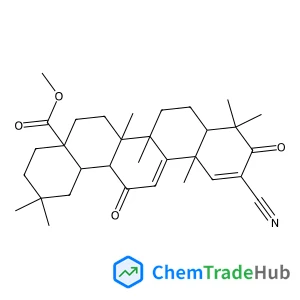
Methyl 2-cyano-3,12-dioxooleana-1,9(11)-dien-28-oate
CAS Number:
218600-53-4
Molecular Formula:
C32H43NO4
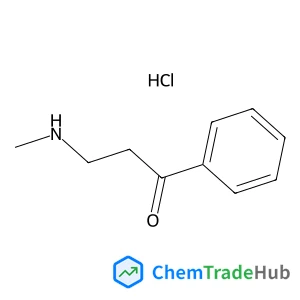
3-(Methylamino)-1-phenyl-1-propanone hydrochloride (1:1)
CAS Number:
2538-50-3
Molecular Formula:
C10H14ClNO
Recommended Suppliers





Disclaimer
This page provides academic journal information for reference and research purposes only. We are not affiliated with any journal publishers and do not handle publication submissions. For publication-related inquiries, please contact the respective journal publishers directly.
If you notice any inaccuracies in the information displayed, please contact us at support@chemtradehub.com. We will promptly review and address your concerns.