












Rapid hydride evolution-electrothermal atomisation atomic-absorption spectrophotometric method for determining arsenic and selenium in human kidney and liver
Literature Information
Publication Date
DOI
10.1039/AN9820700157
Impact Factor
4.616
Authors
View Original
Abstract
A rapid semi-automated electrothermal atomisation atomic-absorption spectrophotometric procedure has been developed for the determination of arsenic and selenium in human liver and kidney specimens. The sample is digested with a mixture of nitric and perchloric acids. The nearly dry residue is taken up in hydrochloric acid. The arsenic or selenium in the hydrochloric acid solution is converted into its hydride with sodium tetrahydroborate(III). The hydride is decomposed and atomised in an electrically heated silica furnace, and the atomic-absorption signal is measured at the appropriate resonance wavelengths of arsenic and selenium. Both of the elements can be determined in the biological samples in the range 50–500 ng per gram of wet sample. The method was applied to the determination of arsenic and selenium in about 40 autopsy samples of human kidney (cortex and medulla) and liver taken from Canadian adults living in the Great Lakes Region of Ontario. The arsenic levels in all of the samples analysed were found to be ⩽ 10 ng per gram of wet sample; the median selenium levels in the cortex, medulla and liver were found to be 0.84, 0.31 and 0.39 mg per kilogram of wet sample, respectively.
Related Literature
Mechanically and thermo-driven self-healing polyurethane elastomeric composites using inorganic–organic hybrid material as crosslinker
Shiwen Yang, Shuang Wang, Xiaosheng Du
2019-12-06
Paper
DOI: 10.1039/C9PY01531K
Thiol-reactive thiosulfonate group containing copolymers: facile entry to disulfide-mediated polymer conjugation and redox-responsive functionalizable networks
Mehmet Arslan
2020-01-20
Paper
DOI: 10.1039/C9PY01851D
Photopolymerization with AIE dyes for solid-state luminophores
Di Zhao, Jian You, Hongyuan Fu, Tanlong Xue, Tingting Hao, Xiaoning Wang
2020-01-13
Paper
DOI: 10.1039/C9PY01671F
Influence of the –CN substitution position on the performance of dicyanodistyrylbenzene-based polymer solar cells
Baitian He, Qingwu Yin, Boming Xie, Jie Zhang, Ruihao Xie, Zhicheng Hu, Xiaobin Peng, Fei Huang, Yong Cao
2020-01-17
Paper
DOI: 10.1039/C9PY01781J
Mesochiral phases from the self-assembly of chiral block copolymers
Kai-Chieh Yang, Po-Ting Chiu, Rong-Ming Ho
2020-01-22
Perspective
DOI: 10.1039/C9PY01797F
On the nitroxide mediated polymerization of methacrylates derived from bio-sourced terpenes in miniemulsion, a step towards sustainable products
Alexandre Simula, José M. Asua
2019-12-17
Paper
DOI: 10.1039/C9PY01667H
Triphenylamine-hexaarylbiimidazole derivatives as hydrogen-acceptor photoinitiators for free radical photopolymerization under UV and LED light
Yan-Heng Li
2020-01-02
Paper
DOI: 10.1039/C9PY01605H
Epoxidized 1,4-polymyrcene
Aleksandar Matic, Andreas Hess, Dirk Schanzenbach, Helmut Schlaad
2020-01-02
Paper
DOI: 10.1039/C9PY01783F
You might also like
Compound Q&A
Is 4-Benzyl-2,2-dimethylmorpholine (CAS: 84761-04-6) safe?
4-Benzyl-2,2-dimethylmorpholine is generally considered safe when handled under ...
84761-04-64-Benzyl-2,2-dimethy...
Compound Q&A
What is (5,6-Dimethoxy-3-pyridinyl)boronic acid (CAS: 1346526-61-1)?
(5,6-Dimethoxy-3-pyridinyl)boronic acid is a chemical compound with the molecula...
1346526-61-1(5,6-Dimethoxy-3-pyr...
Compound Q&A
How is 1,1,3,3-Tetramethyl-1,3-bis(2-methyl-2-propanyl)disiloxane (CAS: 67875-55-2) typically synthesized?
1,1,3,3-Tetramethyl-1,3-bis(2-methyl-2-propanyl)disiloxane is synthesized throug...
67875-55-21,1,3,3-Tetramethyl-...
Compound Q&A
What are the main uses of (2R,4S)-1-Boc-4-methylpyrrolidine-2-carboxylic acid (CAS: 1018818-04-6)?
(2R,4S)-1-Boc-4-methylpyrrolidine-2-carboxylic acid is primarily used as a build...
1018818-04-6(2R,4S)-1-Boc-4-meth...
Compound Q&A
What precautions should be taken when handling 2,3-Dichloroacrylonitrile (CAS: 22410-58-8)?
When handling 2,3-Dichloroacrylonitrile, it is crucial to wear appropriate perso...
22410-58-82,3-Dichloroacryloni...
Compound Q&A
How should (S)-1-(o-Tolyl)ethanamine hydrochloride (CAS: 1332832-16-2) be stored?
(S)-1-(o-Tolyl)ethanamine hydrochloride should be stored in a cool, dry place to...
1332832-16-2(S)-1-(o-Tolyl)ethan...
Compound Q&A
What are the physical and chemical properties of Benzyl [1-(hydroxyamino)-1-imino-2-methyl-2-propanyl]carbamate (CAS: 518047-98-8)?
Benzyl [1-(hydroxyamino)-1-imino-2-methyl-2-propanyl]carbamate (CAS: 518047-98-8...
518047-98-8Benzyl [1-(hydroxyam...
Compound Q&A
What industries use 2-Methyloxazole-5-carbaldehyde (CAS: 885273-42-7)?
2-Methyloxazole-5-carbaldehyde is used in the pharmaceutical industry for the sy...
885273-42-72-Methyloxazole-5-ca...
Compound Q&A
What is the market or research trend for 2-Methyl-2-propanyl 4-[(1S)-1-hydroxyethyl]-1-piperidinecarboxylate (CAS: 389889-82-1)?
The market for 2-Methyl-2-propanyl 4-[(1S)-1-hydroxyethyl]-1-piperidinecarboxyla...
389889-82-12-Methyl-2-propanyl ...
Compound Q&A
Is 1-Butyl-3-methylpyridinium bromide (CAS: 26576-85-2) safe?
1-Butyl-3-methylpyridinium bromide is generally considered safe for laboratory u...
26576-85-21-Butyl-3-methylpyri...
Source Journal
Analyst

CiteScore:
7.8
Self-citation Rate:
5.6%
Articles per Year:
653
Analyst publishes analytical and bioanalytical research that reports premier fundamental discoveries and inventions, and the applications of those discoveries, unconfined by traditional discipline barriers.
Recommended Compounds
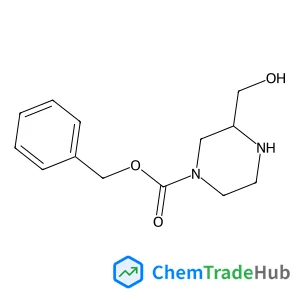
Benzyl 3-(hydroxymethyl)-1-piperazinecarboxylate
CAS Number:
191739-40-9
Molecular Formula:
C13H18N2O3

2-Bromo-1-(bromomethyl)-3-(trifluoromethyl)benzene
CAS Number:
1214372-35-6
Molecular Formula:
C8H5Br2F3
Recommended Suppliers







Disclaimer
This page provides academic journal information for reference and research purposes only. We are not affiliated with any journal publishers and do not handle publication submissions. For publication-related inquiries, please contact the respective journal publishers directly.
If you notice any inaccuracies in the information displayed, please contact us at support@chemtradehub.com. We will promptly review and address your concerns.