


![2-benzyl-2,6-diazaspiro[3.3]heptane structure](https://static.chemtradehub.com/structs/119/1194508-28-5-ef9e.webp "2-benzyl-2,6-diazaspiro[3.3]heptane structure")
On the nitroxide mediated polymerization of methacrylates derived from bio-sourced terpenes in miniemulsion, a step towards sustainable products
Literature Information
Publication Date
2019-12-17
DOI
10.1039/C9PY01667H
Impact Factor
5.582
Authors
Alexandre Simula, José M. Asua
View Original
Abstract
The incorporation of monomers derived from natural resources into industrially viable block copolymers is a long-standing problem that has not been appropriately solved yet due to a combination of issues that include the use of toxic solvents, relatively expensive control agents, and the need of intermediate purification steps. This study aims at overcoming these limitations. Nitroxide mediated polymerization of methacrylates synthesized from bio-resourced terpenes is carried out in miniemulsion using Dispolreg 007, an alkoxyamine that is produced through a cost effective and easily scalable synthetic route. Well-defined poly(tetrahydrogeraniol methacrylate)-b-poly(cyclademol methacrylate) diblock copolymers are obtained at high monomer conversions (>90%), without the need for intermediate purification steps. The resulting “soft”/”hard” diblock copolymers show good potential as waterborne pressure-sensitive adhesives.
Recommended Journals

Organic Process Research & Development

Chemistry Education Research and Practice

Drug Discovery Today

Journal of Peptide Science

New Journal of Chemistry

Current Opinion in Solid State & Materials Science

Current Opinion in Colloid & Interface Science

Russian Journal of Bioorganic Chemistry

Nature Medicine

Journal of Saudi Chemical Society
Related Literature
On the impossibility of determination of stepwise binding constants for the 1 ∶ 2 complex of (+)-camphor with α-cyclodextrin
Helena Dodziuk, Krzysztof S. Nowinski, Wiktor Kozminski, Grigory Dolgonos
2003-01-13
Paper
DOI: 10.1039/B209272G
Nitrophenyl derivatives of pyrrole 2,5-diamides: structural behaviour, anion binding and colour change signalled deprotonation
Salvatore Camiolo, Philip A. Gale, Michael B. Hursthouse, Mark E. Light
2003-01-28
Paper
DOI: 10.1039/B210848H
Synthesis of poly(ethylene glycol)-supported manganese porphyrins: efficient, recoverable and recyclable catalysts for epoxidation of alkenes
Maurizio Benaglia, Tamara Danelli, Gianluca Pozzi
2003-01-02
Communication
DOI: 10.1039/B210985A
Transition metal free decarboxylative fluoroalkylation of N-acrylamides with 3,3,3-trifluoro-2,2-dimethylpropanoic acid (TFDMPA)
Yingkun Shi, Hongqing Xiao, Xiu-Hua Xu, Yangen Huang
2018-10-22
Communication
DOI: 10.1039/C8OB02457J
A general microcantilever surface modification method using a multilayer for biospecific recognition
Xiaodong Yan, Yuri Lvov, Hai-Feng Ji, Alok Singh, Thomas Thundat
2002-12-23
Communication
DOI: 10.1039/B209944F
Kinetic barriers and ordering of non-covalently bound states
Simon W. O'Brien, Hideyuki Shiozawa, Rosa Zerella, Dominic P. O'Brien, Dudley H. Williams
2003-01-07
Paper
DOI: 10.1039/B209162N
Differential substituent effects of β-halogens in water-soluble porphyrins
Justin C. Biffinger, Haoran Sun, Andrew P. Nelson, Stephen G. DiMagno
2003-01-24
Paper
DOI: 10.1039/B209345F
A convenient stereoselective access to novel 1,2,4-triazepan-3-ones/thiones via reduction or reductive alkylation of 7-membered cyclic semicarbazones and thiosemicarbazones
Anastasia A. Fesenko, Mikhail S. Grigoriev, Anatoly D. Shutalev
2018-10-09
Paper
DOI: 10.1039/C8OB01766B
A tetraphenylmethane based dendritic tolan–anthracene dyad: synthesis and energy transfer properties
Saumitra Sengupta, Pradipta Purkayastha
2002-12-09
Paper
DOI: 10.1039/B209186K
Inherently chiral cone-calix[4]arenes via a subsequent upper rim ring-closing/opening methodology
José Augusto Berrocal, Matthew B. Baker, Laura Baldini, Alessandro Casnati, Stefano Di Stefano
2018-09-22
Paper
DOI: 10.1039/C8OB01813H
You might also like
Compound Q&A
Is 4-Benzyl-2,2-dimethylmorpholine (CAS: 84761-04-6) safe?
4-Benzyl-2,2-dimethylmorpholine is generally considered safe when handled under ...
84761-04-64-Benzyl-2,2-dimethy...
Compound Q&A
What is (5,6-Dimethoxy-3-pyridinyl)boronic acid (CAS: 1346526-61-1)?
(5,6-Dimethoxy-3-pyridinyl)boronic acid is a chemical compound with the molecula...
1346526-61-1(5,6-Dimethoxy-3-pyr...
Compound Q&A
How is 1,1,3,3-Tetramethyl-1,3-bis(2-methyl-2-propanyl)disiloxane (CAS: 67875-55-2) typically synthesized?
1,1,3,3-Tetramethyl-1,3-bis(2-methyl-2-propanyl)disiloxane is synthesized throug...
67875-55-21,1,3,3-Tetramethyl-...
Compound Q&A
What are the main uses of (2R,4S)-1-Boc-4-methylpyrrolidine-2-carboxylic acid (CAS: 1018818-04-6)?
(2R,4S)-1-Boc-4-methylpyrrolidine-2-carboxylic acid is primarily used as a build...
1018818-04-6(2R,4S)-1-Boc-4-meth...
Compound Q&A
What precautions should be taken when handling 2,3-Dichloroacrylonitrile (CAS: 22410-58-8)?
When handling 2,3-Dichloroacrylonitrile, it is crucial to wear appropriate perso...
22410-58-82,3-Dichloroacryloni...
Compound Q&A
How should (S)-1-(o-Tolyl)ethanamine hydrochloride (CAS: 1332832-16-2) be stored?
(S)-1-(o-Tolyl)ethanamine hydrochloride should be stored in a cool, dry place to...
1332832-16-2(S)-1-(o-Tolyl)ethan...
Compound Q&A
What are the physical and chemical properties of Benzyl [1-(hydroxyamino)-1-imino-2-methyl-2-propanyl]carbamate (CAS: 518047-98-8)?
Benzyl [1-(hydroxyamino)-1-imino-2-methyl-2-propanyl]carbamate (CAS: 518047-98-8...
518047-98-8Benzyl [1-(hydroxyam...
Compound Q&A
What industries use 2-Methyloxazole-5-carbaldehyde (CAS: 885273-42-7)?
2-Methyloxazole-5-carbaldehyde is used in the pharmaceutical industry for the sy...
885273-42-72-Methyloxazole-5-ca...
Compound Q&A
What is the market or research trend for 2-Methyl-2-propanyl 4-[(1S)-1-hydroxyethyl]-1-piperidinecarboxylate (CAS: 389889-82-1)?
The market for 2-Methyl-2-propanyl 4-[(1S)-1-hydroxyethyl]-1-piperidinecarboxyla...
389889-82-12-Methyl-2-propanyl ...
Compound Q&A
Is 1-Butyl-3-methylpyridinium bromide (CAS: 26576-85-2) safe?
1-Butyl-3-methylpyridinium bromide is generally considered safe for laboratory u...
26576-85-21-Butyl-3-methylpyri...
Source Journal
Polymer Chemistry

CiteScore:
8.6
Self-citation Rate:
7.3%
Articles per Year:
457
Polymer Chemistry welcomes submissions in all areas of polymer science that have a strong focus on macromolecular chemistry. Manuscripts may cover a broad range of fields, yet no direct application focus is required.
Recommended Compounds

![2-Methyl-2-propanyl 3-[2-(2-{[(4-methylphenyl)sulfonyl]oxy}ethoxy)ethoxy]propanoate structure](https://static.chemtradehub.com/structs/850/850090-13-0-26a7.webp "2-Methyl-2-propanyl 3-[2-(2-{[(4-methylphenyl)sulfonyl]oxy}ethoxy)ethoxy]propanoate structure")
2-Methyl-2-propanyl 3-[2-(2-{[(4-methylphenyl)sulfonyl]oxy}ethoxy)ethoxy]propanoate
CAS Number:
850090-13-0
Molecular Formula:
C18H28O7S
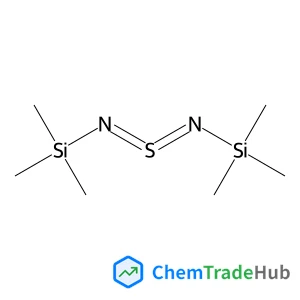
1,3-Bis(trimethylsilyl)-2lambda~4~-diazathia-1,2-diene
CAS Number:
18156-25-7
Molecular Formula:
C6H18N2SSi2
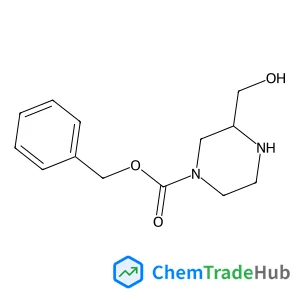
Benzyl 3-(hydroxymethyl)-1-piperazinecarboxylate
CAS Number:
191739-40-9
Molecular Formula:
C13H18N2O3
Recommended Suppliers






Disclaimer
This page provides academic journal information for reference and research purposes only. We are not affiliated with any journal publishers and do not handle publication submissions. For publication-related inquiries, please contact the respective journal publishers directly.
If you notice any inaccuracies in the information displayed, please contact us at support@chemtradehub.com. We will promptly review and address your concerns.