












Mechanically and thermo-driven self-healing polyurethane elastomeric composites using inorganic–organic hybrid material as crosslinker
Literature Information
Publication Date
2019-12-06
DOI
10.1039/C9PY01531K
Impact Factor
5.582
Authors
Shiwen Yang, Shuang Wang, Xiaosheng Du
View Original
Abstract
Intrinsic healing materials based on reversible bonds possessing the unique adaptive properties of self-healing and recyclability have attracted considerable attention. One of the major challenges in intrinsic healing materials that remains is how to reinforce the mechanical property without sacrificing healing efficiency. Here, furfuryl-modified silica particles (furan@SiO2) with high functional group grafting ratio and dispersibility, formed by sol–gel process, were introduced into the maleimide-terminated polyurethane (mPU) elastomer to establish a thermo-reversible organic–inorganic network based on Diels–Alder reaction between furan@SiO2 and mPU. The modulus and strength of the elastomeric composites were significantly enhanced compared to neat mPU. Due to the reversible crosslinking points and organic–inorganic network, the thermo-reversible polyurethane elastomeric composites maintained favourable mechanical properties with excellent thermo-driven self-healing efficiency. Moreover, the corresponding elastomeric composites retained high repair efficiency after multiple healing processes. Furthermore, the thermo-reversible polyurethane elastomeric composites could be recycled via solution casting and hot-pressing due to the thermally reversible cross-linking point. Such excellent combination of mechanical and self-healing performance reveals the potential of this new approach in designing self-healing hybrid materials with tunable structures and mechanical properties.
Related Literature
A tryptophan-containing fluorescent intramolecular complex as a designer peptidic proton sensor
V. Haridas, Anita Yadav, Sakshi Sharma, Siddharth Pandey
2016-05-04
Paper
DOI: 10.1039/C6CP01912A
The S1 ← S0 fluorescence excitation spectrum and structure of propanal in the S1 excited electronic state
I. A. Godunov, N. N. Yakovlev, R. V. Terentiev, D. V. Maslov, A. V. Abramenkov
2016-05-03
Paper
DOI: 10.1039/C6CP02138G
Halogenated earth abundant metalloporphyrins as photostable sensitizers for visible-light-driven water oxidation in a neutral phosphate buffer solution
Hung-Cheng Chen, Joost N. H. Reek, René M. Williams, Albert M. Brouwer
2016-05-10
Paper
DOI: 10.1039/C6CP01352J
Characterization of water dissociation on α-Al2O3(102): theory and experiment
Jonas Wirth, Harald Kirsch, Sebastian Wlosczyk, Yujin Tong, Peter Saalfrank, R. Kramer Campen
2016-04-18
Paper
DOI: 10.1039/C6CP01397J
Photoinduced charge-transfer dynamics simulations in noncovalently bonded molecular aggregates
Carlos R. Medrano, M. Belén Oviedo, Cristián G. Sánchez
2016-05-11
Paper
DOI: 10.1039/C6CP00231E
Thermally stable J-type phthalocyanine dimers as new non-linear absorbers for low-threshold optical limiters
Alexander Yu. Tolbin, Mikhail S. Savelyev, Alexander Yu. Gerasimenko
2016-05-19
Paper
DOI: 10.1039/C6CP01862A
Chemical vapor deposition of MoS2 layers from Mo–S–C–O–H system: thermodynamic modeling and validation
Sukanya Dhar, V. Kranthi Kumar, Tanushree H. Choudhury, S. A. Shivashankar, S. Raghavan
2016-05-05
Paper
DOI: 10.1039/C6CP01617K
D–A–D-type narrow-bandgap small-molecule photovoltaic donors: pre-synthesis virtual screening using density functional theory
Yeongrok Gim, Daekyeom Kim, Minkyu Kyeong, Seunghwan Byun, Yuri Park, Sooncheol Kwon, Heejoo Kim, Yves Lansac, Yun Hee Jang
2016-04-29
Paper
DOI: 10.1039/C5CP07536J
“XA6” octahedra influencing the arrangement of anionic groups and optical properties in inverse-perovskite [B6O10]XA3 (X = Cl, Br; A = alkali metal)
Zhihua Yang, Bin Yang, Shilie Pan
2016-05-09
Paper
DOI: 10.1039/C6CP01288D
You might also like
Compound Q&A
Is 4-Benzyl-2,2-dimethylmorpholine (CAS: 84761-04-6) safe?
4-Benzyl-2,2-dimethylmorpholine is generally considered safe when handled under ...
84761-04-64-Benzyl-2,2-dimethy...
Compound Q&A
What is (5,6-Dimethoxy-3-pyridinyl)boronic acid (CAS: 1346526-61-1)?
(5,6-Dimethoxy-3-pyridinyl)boronic acid is a chemical compound with the molecula...
1346526-61-1(5,6-Dimethoxy-3-pyr...
Compound Q&A
How is 1,1,3,3-Tetramethyl-1,3-bis(2-methyl-2-propanyl)disiloxane (CAS: 67875-55-2) typically synthesized?
1,1,3,3-Tetramethyl-1,3-bis(2-methyl-2-propanyl)disiloxane is synthesized throug...
67875-55-21,1,3,3-Tetramethyl-...
Compound Q&A
What are the main uses of (2R,4S)-1-Boc-4-methylpyrrolidine-2-carboxylic acid (CAS: 1018818-04-6)?
(2R,4S)-1-Boc-4-methylpyrrolidine-2-carboxylic acid is primarily used as a build...
1018818-04-6(2R,4S)-1-Boc-4-meth...
Compound Q&A
What precautions should be taken when handling 2,3-Dichloroacrylonitrile (CAS: 22410-58-8)?
When handling 2,3-Dichloroacrylonitrile, it is crucial to wear appropriate perso...
22410-58-82,3-Dichloroacryloni...
Compound Q&A
How should (S)-1-(o-Tolyl)ethanamine hydrochloride (CAS: 1332832-16-2) be stored?
(S)-1-(o-Tolyl)ethanamine hydrochloride should be stored in a cool, dry place to...
1332832-16-2(S)-1-(o-Tolyl)ethan...
Compound Q&A
What are the physical and chemical properties of Benzyl [1-(hydroxyamino)-1-imino-2-methyl-2-propanyl]carbamate (CAS: 518047-98-8)?
Benzyl [1-(hydroxyamino)-1-imino-2-methyl-2-propanyl]carbamate (CAS: 518047-98-8...
518047-98-8Benzyl [1-(hydroxyam...
Compound Q&A
What industries use 2-Methyloxazole-5-carbaldehyde (CAS: 885273-42-7)?
2-Methyloxazole-5-carbaldehyde is used in the pharmaceutical industry for the sy...
885273-42-72-Methyloxazole-5-ca...
Compound Q&A
What is the market or research trend for 2-Methyl-2-propanyl 4-[(1S)-1-hydroxyethyl]-1-piperidinecarboxylate (CAS: 389889-82-1)?
The market for 2-Methyl-2-propanyl 4-[(1S)-1-hydroxyethyl]-1-piperidinecarboxyla...
389889-82-12-Methyl-2-propanyl ...
Compound Q&A
Is 1-Butyl-3-methylpyridinium bromide (CAS: 26576-85-2) safe?
1-Butyl-3-methylpyridinium bromide is generally considered safe for laboratory u...
26576-85-21-Butyl-3-methylpyri...
Source Journal
Polymer Chemistry

CiteScore:
8.6
Self-citation Rate:
7.3%
Articles per Year:
457
Polymer Chemistry welcomes submissions in all areas of polymer science that have a strong focus on macromolecular chemistry. Manuscripts may cover a broad range of fields, yet no direct application focus is required.
Recommended Compounds
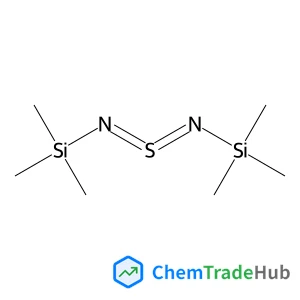
1,3-Bis(trimethylsilyl)-2lambda~4~-diazathia-1,2-diene
CAS Number:
18156-25-7
Molecular Formula:
C6H18N2SSi2
Recommended Suppliers




Disclaimer
This page provides academic journal information for reference and research purposes only. We are not affiliated with any journal publishers and do not handle publication submissions. For publication-related inquiries, please contact the respective journal publishers directly.
If you notice any inaccuracies in the information displayed, please contact us at support@chemtradehub.com. We will promptly review and address your concerns.