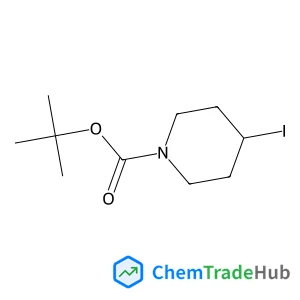
2-Methyl-2-propanyl 4-iodo-1-piperidinecarboxylate
CAS Number:
301673-14-3
Molecular Formula:
C10H18INO2
Measurements of trace gas concentrations and other quantities are a crucial tool for the investigation of the processes in the atmosphere. At the same time the determination of atmospheric trace gas concentrations constitutes a technological challenge, since extreme sensitivity (some species have to be detected at mixing ratios as low as 10-13) is desired simultaneously with high specificity, i.e. the molecule of interest usually must be detected in the presence of a large excess of other species. To date no single measurement technique can, even nearly, fulfil the above and other requirements for trace gas measurements in the atmosphere. Therefore a comprehensive arsenal of techniques has been developed. Besides a large number of special techniques (like the chemiluminescence-detection of NO) universal methods gain interest, due to their relative simplicity—a single instrument can register a large number of trace species. The different types of requirements and the various techniques are discussed, special emphasis is given to spectroscopic methods, which are a successful and promising variety, that plays a large and growing role in atmospheric chemistry research. For instance only spectroscopic methods allow remote sensing of trace gas concentrations, e.g. from satellite platforms. Today many varieties of spectroscopic methods are in use (e.g. tunable diode laser spectroscopy or Fourier transform spectroscopy), the basic properties and recent applications of this technique are presented by the example of differential optical absorption spectroscopy (DOAS). Future requirements and expected developments are discussed.
Reshma Sultana, Naser Reza, Helena Woodvine, Jonathan G. Terry, Anthony J. Walton, Charlotte L. Brady, Ilka Schmueser, Andrew R. Mount
DOI: 10.1039/C3CP50759A
Thomas K. Wallace, Ross H. Colman, Abbie C. Mclaughlin
DOI: 10.1039/C2CP43732E
Florian Löw, Katrin Amann-Winkel, Thomas Loerting, Franz Fujara, Burkhard Geil
DOI: 10.1039/C3CP50818H
Kiichi Fukuhara, Masaaki Kitano, Shigenobu Hayashi, Michikazu Hara
DOI: 10.1039/C3CP43853H
Xiangchao Ma, Ying Dai, Meng Guo, Yingtao Zhu, Baibiao Huang
DOI: 10.1039/C3CP44519D
Jonathon Duay, Eleanor Gillette, Junkai Hu
DOI: 10.1039/C3CP50724F
Ane K. di Gennaro, Leonid Gurevich, Esben Skovsen, Michael T. Overgaard, Peter Fojan
DOI: 10.1039/C3CP50742D
Ling Chen, Wan Guo, Yuxin Yang, Ang Zhang, Shengqu Zhang, Yihang Guo, Yingna Guo
DOI: 10.1039/C3CP00084B
Ying Dai, Baibiao Huang, Timo Jacob
DOI: 10.1039/C3CP51078F
Gabriel J. Cuello, Shinji Kohara, Chris J. Benmore, David L. Price, Eugene Bychkov
DOI: 10.1039/C3CP50536G
Waste containing (6-Bromo-2-naphthyl)oxy](dimethyl)(2-methyl-2-propanyl)silane (...
7-Fluoro-4-isoquinolinecarboxylic acid can be synthesized via a multi-step proce...
2,3,5,6-Tetrabromothieno[3,2-b]thiophene is a crystalline compound with a high m...
1-[4-(Benzylamino)-7,8-dihydro-5H-pyrano[4,3-d]pyrimidin-2-yl]-2-methyl-1H-indol...
The market for imidazo[5,1-d]-1,2,3,5-tetrazine-8-carboxylic acid, 3,4-dihydro-3...
3-(Triisopropylsilyl)propiolaldehyde is a synthetic organic compound with the CA...
6-Nitro-2H-1,4-benzoxazin-3(4H)-one (CAS: 81721-87-1) is subject to various regu...
Waste containing (3-Fluorophenyl)(4-{[(2-methyl-2-propanyl)oxy]carbonyl}-1-piper...
N,N'-4,4'-Biphenyldiyldiisonicotinamide is a white crystalline solid with a mole...
6-Bromo-8-fluoro-2-quinazolinol is primarily used in the pharmaceutical industry...

Physical Chemistry Chemical Physics (PCCP) is an international journal co-owned by 19 physical chemistry and physics societies from around the world. This journal publishes original, cutting-edge research in physical chemistry, chemical physics and biophysical chemistry. To be suitable for publication in PCCP, articles must include significant innovation and/or insight into physical chemistry; this is the most important criterion that reviewers and Editors will judge against when evaluating submissions. The journal has a broad scope and welcomes contributions spanning experiment, theory, computation and data science. Topical coverage includes spectroscopy, dynamics, kinetics, statistical mechanics, thermodynamics, electrochemistry, catalysis, surface science, quantum mechanics, quantum computing and machine learning. Interdisciplinary research areas such as polymers and soft matter, materials, nanoscience, energy, surfaces/interfaces, and biophysical chemistry are welcomed if they demonstrate significant innovation and/or insight into physical chemistry. Joined experimental/theoretical studies are particularly appreciated when complementary and based on up-to-date approaches.