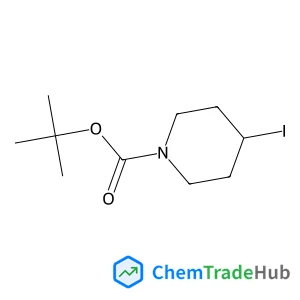
2-Methyl-2-propanyl 4-iodo-1-piperidinecarboxylate
CAS Number:
301673-14-3
Molecular Formula:
C10H18INO2
The heterogeneous hydrolysis of N2O5 was investigated on NaHSO4, Na2SO4, and NaNO3 aerosols. The experiments were performed in the large Aerosol Chamber at FZ Jülich at room temperature and ambient pressure for several relative humidities. These salts are components of aerosols in the marine and coastal boundary layer. For the sodium sulfate aerosols at relative humidities of 50–70% the reaction probabilities γN2O5 were in the range of 0.02–0.04. For NaNO3 aerosol at similar relative humidities we observed γN2O5 of 0.0018–0.0032. With increasing relative humidity, i.e. with increasing dilution of the nitrate concentration in the aerosol droplets, γN2O5 increases to 0.023 at 90% relative humidity. Our observation of decreasing γN2O5 with increasing nitrate concentration can be explained within the framework of an ionic mechanism for the hydrolysis of N2O5, if the recombination reaction of NO2+ with NO3- to N2O5 is considered. By a steady state analysis we derived analytical expressions of γN2O5 as a function of the nitrate concentration for a reaction either throughout the aerosol volume or in a thin surface shell. Accordingly, increasing nitrate concentration should enhance the lifetime of physically dissolved N2O5(aq) and as a consequence the heterogeneous hydrolysis of N2O5 should change from a near-surface to a volume reaction. The observation of such a specific nitrate effect can be regarded as further experimental evidence for the ionic reaction mechanism in the uptake of N2O5 on aqueous aerosols. A nitrate effect may gain (local) importance in the atmosphere if increasing NOX emissions translate in an increasing nitrate fraction in the secondary aerosol of anthropogenic origin.
Sergey Sirotin, Philippe Bazin, Françoise Maugé, Arnaud Travert
DOI: 10.1039/C3CP51146D
Vicky FitzGerald, Veijo Honkimaki, Mark A. Roberts, Tessa Brennan, Richard A. Martin, George A. Saunders, Robert J. Newport
DOI: 10.1039/C3CP44298E
Joseph Mason, Christopher Batchelor-McAuley, Richard G. Compton
DOI: 10.1039/C3CP50607J
Keith Refson
DOI: 10.1039/C3CP44520H
Gianluca Di Profio, Mika T. Reijonen, Rocco Caliandro, Antonietta Guagliardi, Efrem Curcio, Enrico Drioli
DOI: 10.1039/C3CP50664A
Sirous Asgari, Doretta Capsoni, Piercarlo Mustarelli
DOI: 10.1039/C3CP51481A
Oliver L. G. Alderman, Dinu Iuga, Andrew P. Howes, Diane Holland, Ray Dupree
DOI: 10.1039/C3CP50772F
Chuan Liu, Yun Li, Michael V. Lee, Akichika Kumatani, Kazuhito Tsukagoshi
DOI: 10.1039/C3CP44715D
Piotr Bernatowicz
DOI: 10.1039/C3CP50963J
Marjo C. Mittelmeijer-Hazeleger, Miguel Angelo Granato, Vanessa F. Duarte Martins, Alírio E. Rodrigues, Gadi Rothenberg
DOI: 10.1039/C3CP44381G
Waste containing (6-Bromo-2-naphthyl)oxy](dimethyl)(2-methyl-2-propanyl)silane (...
7-Fluoro-4-isoquinolinecarboxylic acid can be synthesized via a multi-step proce...
2,3,5,6-Tetrabromothieno[3,2-b]thiophene is a crystalline compound with a high m...
1-[4-(Benzylamino)-7,8-dihydro-5H-pyrano[4,3-d]pyrimidin-2-yl]-2-methyl-1H-indol...
The market for imidazo[5,1-d]-1,2,3,5-tetrazine-8-carboxylic acid, 3,4-dihydro-3...
3-(Triisopropylsilyl)propiolaldehyde is a synthetic organic compound with the CA...
6-Nitro-2H-1,4-benzoxazin-3(4H)-one (CAS: 81721-87-1) is subject to various regu...
Waste containing (3-Fluorophenyl)(4-{[(2-methyl-2-propanyl)oxy]carbonyl}-1-piper...
N,N'-4,4'-Biphenyldiyldiisonicotinamide is a white crystalline solid with a mole...
6-Bromo-8-fluoro-2-quinazolinol is primarily used in the pharmaceutical industry...

Physical Chemistry Chemical Physics (PCCP) is an international journal co-owned by 19 physical chemistry and physics societies from around the world. This journal publishes original, cutting-edge research in physical chemistry, chemical physics and biophysical chemistry. To be suitable for publication in PCCP, articles must include significant innovation and/or insight into physical chemistry; this is the most important criterion that reviewers and Editors will judge against when evaluating submissions. The journal has a broad scope and welcomes contributions spanning experiment, theory, computation and data science. Topical coverage includes spectroscopy, dynamics, kinetics, statistical mechanics, thermodynamics, electrochemistry, catalysis, surface science, quantum mechanics, quantum computing and machine learning. Interdisciplinary research areas such as polymers and soft matter, materials, nanoscience, energy, surfaces/interfaces, and biophysical chemistry are welcomed if they demonstrate significant innovation and/or insight into physical chemistry. Joined experimental/theoretical studies are particularly appreciated when complementary and based on up-to-date approaches.
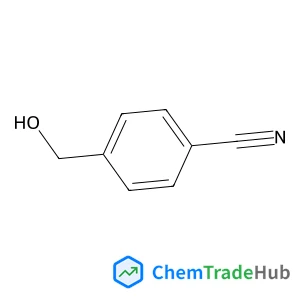

![N-[(E)-Phenylmethylene]benzenesulfonamide structure](https://static.chemtradehub.com/structs/139/13909-34-7-8167.webp "N-[(E)-Phenylmethylene]benzenesulfonamide structure")