


![[4-Amino-2-(methylsulfanyl)-5-pyrimidinyl]methanol structure](https://static.chemtradehub.com/structs/588/588-36-3-fc73.webp "[4-Amino-2-(methylsulfanyl)-5-pyrimidinyl]methanol structure")
Formal radical cyclization onto benzene rings—a general method proceeding via cross-conjugated dienones
Literature Information
Publication Date
2003-01-20
DOI
10.1039/B212223E
Impact Factor
6.222
Authors
Derrick L. J. Clive, Stephen P. Fletcher, (in part) Mingzhao Zhu
View Original
Abstract
Cross-conjugated dienones of type 5 (X = I), which are readily available from phenols, undergo radical cyclization (5 → 6 → 7), and the products are easily aromatized (7 → 8), giving substances that are formally derived by radical cyclization onto a benzene ring (cf.eqn. (1)).
Recommended Journals

Chinese Journal of Chemistry

Main Group Chemistry

Bioorganic & Medicinal Chemistry

Biocatalysis and Biotransformation

NDT & E International

Atomization and Sprays

Journal of Asian Natural Products Research

Topics in Catalysis

Journal of the Indian Institute of Science

Herald of the Russian Academy of Sciences
Related Literature
A theoretical study on photomagnetic fluorescent proteinchromophore coupled diradicals and their possible applications
Debojit Bhattacharya, Anirban Panda, Suranjan Shil, Tamal Goswami, Anirban Misra
2012-03-09
Paper
DOI: 10.1039/C2CP00053A
Specific counter-ion and co-ion effects revealed in mixing of aqueous solutions of 3,3 and 6,6-ionenes with solutions of low molecular weight salts
Mojca Seručnik, Matjaž Bončina, Miha Lukšič, Vojko Vlachy
2012-03-22
Paper
DOI: 10.1039/C2CP40571G
Vibrational dynamics of acetate in D2O studied by infrared pump–probe spectroscopy
Motohiro Banno, Keisuke Tominaga
2012-02-01
Paper
DOI: 10.1039/C2CP23647H
Two-dimensional 14N HYSCOREspectroscopy of the coordination geometry of ligands in dimanganese di-μ-oxo mimics of the oxygen evolving complex of photosystem II
Ruchira Chatterjee, Sergey Milikisiyants, K. V. Lakshmi
2012-03-20
Paper
DOI: 10.1039/C2CP40416H
Investigation of spin-flip reactions of Nb + CH3CN by relativistic density functional theory
Qiang Li, Yi-Xiang Qiu, Xian-Yang Chen
2012-03-22
Paper
DOI: 10.1039/C2CP23225A
Chemometric analysis of spectroscopic data on shape evolution of silver nanoparticles induced by hydrogen peroxide
Kanet Wongravee, Tewarak Parnklang, Prompong Pienpinijtham, Chutiparn Lertvachirapaiboon, Yukihiro Ozaki, Chuchaat Thammacharoen, Sanong Ekgasit
2012-11-27
Paper
DOI: 10.1039/C2CP42758C
Charged microcapsules for controlled release of hydrophobic actives. Part III: the effect of polyelectrolyte brush- and multilayers on sustained release
Markus Andersson Trojer, Helena Andersson, Ye Li, Jonatan Borg, Krister Holmberg, Lars Nordstierna
2013-03-08
Paper
DOI: 10.1039/C3CP50417D
Shape-controlled tunable homochromatic luminescence and inner photoelectric effect of hexagonal Na1.23Ca0.12Y1.28Er0.24F6 phosphors
Tao Wang, Yanyan Bu, Caixia Kan, Yuan Chen
2012-03-15
Paper
DOI: 10.1039/C2CP40523G
In situ identification of the adsorption of 4,4′-thiobisbenzenethiol on silver nanoparticles surface: a combined investigation of surface-enhanced Raman scattering and density functional theory study
Ting-ting You, Peng-gang Yin, Li Jiang, Xiu-feng Lang, Lin Guo
2012-03-26
Paper
DOI: 10.1039/C2CP24147A
You might also like
Compound Q&A
What precautions should be taken when handling 4-(2-Furylmethyl)thiomorpholine 1,1-dioxide (CAS: 79206-94-3)?
When handling 4-(2-Furylmethyl)thiomorpholine 1,1-dioxide (CAS: 79206-94-3), it ...
79206-94-34-(2-Furylmethyl)thi...
Compound Q&A
What precautions should be taken when handling 4-Chloro-N-[2-(4-morpholinyl)ethyl]benzamide (CAS: 71320-77-9)?
When handling 4-Chloro-N-[2-(4-morpholinyl)ethyl]benzamide (CAS: 71320-77-9), it...
71320-77-94-Chloro-N-[2-(4-mor...
Compound Q&A
How should waste containing 2-[2-(2-Methoxyethoxy)ethoxy]ethyl 4-methylbenzenesulfonate (CAS: 62921-74-8) be handled?
Waste containing this compound (CAS: 62921-74-8) should be handled according to ...
62921-74-82-[2-(2-Methoxyethox...
Compound Q&A
How should waste containing (S)-Methyl 2-amino-3-cyclohexylpropanoate be handled?
Waste containing (S)-Methyl 2-amino-3-cyclohexylpropanoate should be collected i...
40056-18-6(S)-Methyl 2-amino-3...
Compound Q&A
How is 5-({4-[(2S,4R)-4-Hydroxy-2-methyltetrahydro-2H-pyran-4-yl]-2-thienyl}sulfanyl)-1-methyl-1,3-dihydro-2H-indol-2-one (CAS: 166882-70-8) typically synthesized?
This compound can be synthesized using a multi-step process involving the conjug...
166882-70-85-({4-[(2S,4R)-4-Hyd...
Compound Q&A
Are there alternatives to (2E)-3-(3,4-Dichlorophenyl)acrylic acid (CAS: 7312-27-8) in synthesis?
There are several alternatives to (2E)-3-(3,4-Dichlorophenyl)acrylic acid in syn...
7312-27-8(2E)-3-(3,4-Dichloro...
Compound Q&A
How should Ethyl 6-(2-nitrophenyl)imidazo[2,1-b][1,3]thiazole-3-carboxylate (CAS: 925437-84-9) be stored?
Ethyl 6-(2-nitrophenyl)imidazo[2,1-b][1,3]thiazole-3-carboxylate (CAS: 925437-84...
925437-84-9Ethyl 6-(2-nitrophen...
Compound Q&A
How should waste containing 2-(1,3-Thiazol-2-yl)ethanamine (CAS: 18453-07-1) be handled?
Waste containing 2-(1,3-Thiazol-2-yl)ethanamine (CAS: 18453-07-1) should be coll...
18453-07-12-(1,3-Thiazol-2-yl)...
Compound Q&A
How is Methyl 5-iodo-2-methylbenzoate (CAS: 103440-54-6) typically synthesized?
Methyl 5-iodo-2-methylbenzoate can be synthesized through the iodination of meth...
103440-54-6Methyl 5-iodo-2-meth...
Compound Q&A
How is 5-Chloro[1,2,4]triazolo[1,5-a]pyridine (CAS: 1427399-34-5) typically synthesized?
5-Chloro[1,2,4]triazolo[1,5-a]pyridine is commonly synthesized via the condensat...
1427399-34-55-Chloro[1,2,4]triaz...
Source Journal
Chemical Communications

CiteScore:
8.6
Self-citation Rate:
4.7%
Articles per Year:
2458
ChemComm publishes urgent research which is of outstanding significance and interest to experts in the field, while also appealing to the journal’s broad chemistry readership. Our communication format is ideally suited to short, urgent studies that are of such importance that they require accelerated publication. Our scope covers all topics in chemistry, and research at the interface of chemistry and other disciplines (such as materials science, nanoscience, physics, engineering and biology) where there is a significant novelty in the chemistry aspects. Major topic areas covered include: Analytical Chemistry Catalysis Chemical Biology and medicinal chemistry Computational Chemistry and Machine Learning Energy and sustainable chemistry Environmental Chemistry Green Chemistry Inorganic Chemistry Materials Chemistry Nanoscience Organic Chemistry Physical Chemistry Polymer Chemistry Supramolecular Chemistry
Recommended Compounds
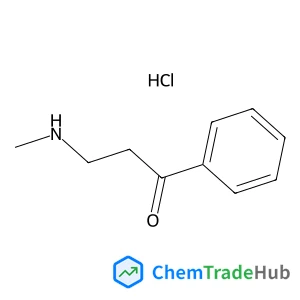
3-(Methylamino)-1-phenyl-1-propanone hydrochloride (1:1)
CAS Number:
2538-50-3
Molecular Formula:
C10H14ClNO

![N-[(Benzyloxy)carbonyl]serine structure](https://static.chemtradehub.com/structs/276/2768-56-1-77f7.webp "N-[(Benzyloxy)carbonyl]serine structure")
Recommended Suppliers






Disclaimer
This page provides academic journal information for reference and research purposes only. We are not affiliated with any journal publishers and do not handle publication submissions. For publication-related inquiries, please contact the respective journal publishers directly.
If you notice any inaccuracies in the information displayed, please contact us at support@chemtradehub.com. We will promptly review and address your concerns.