



AD
BA01-0008 6-(4-METHYLPIPERAZIN-1-YL)PYRIDINE-3-BORONIC ACID(CAS: 936353-84-3)
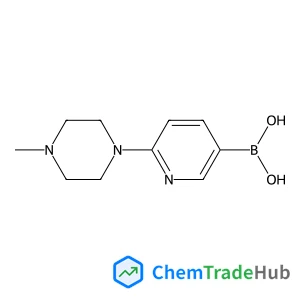
CAS Number
Related Products
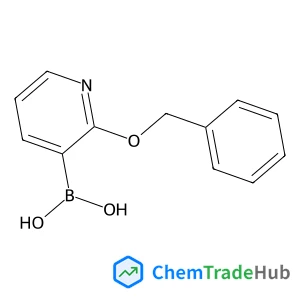
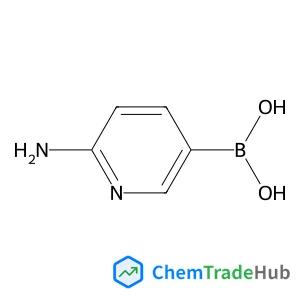
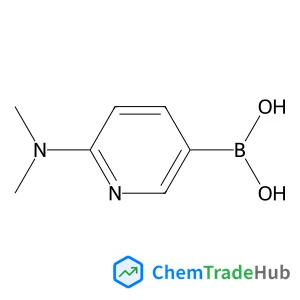
![BA01-0007 [6-(2,2,2-TRIFLUOROETHOXY) PYRIDIN-3-YL]BORONIC ACID](https://static.chemtradehub.com/structs/196/196083-20-2-6966.webp)
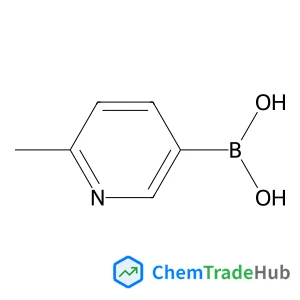

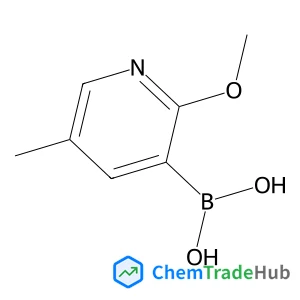
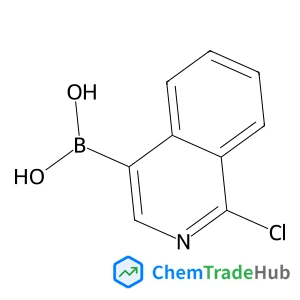
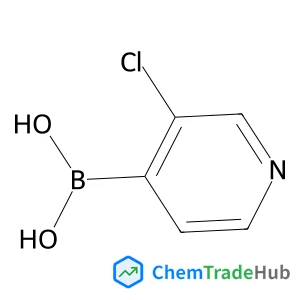
Other Suppliers for BA01-0008 6-(4-METHYLPIPERAZIN-1-YL)PYRIDINE-3-BORONIC ACID






Basic Information
Molecular Formula
C10H16BN3O2
Molecular Weight
221.07 g/mol
Chemical Identifiers
SMILES
B(C1=CN=C(C=C1)N2CCN(CC2)C)(O)O
InChIKey
YGZOCDXCJWHNQN-UHFFFAOYSA-N
Database References
MDL Number
MFCD09907981
FAQ
(6-(4-Methylpiperazin-1-yl)pyridin-3-yl)boronic acid is a white crystalline solid with a molecular weight of approximately 315.33 g/mol. It is slightly soluble in water but more soluble in organic solvents like ethanol and acetonitrile. This compound is reactive towards nucleophiles and can undergo boronate ester formation under mild conditions. It has good stability in neutral and slightly acidic conditions but should be handled in inert atmospheres to avoid oxidation.
(6-(4-Methylpiperazin-1-yl)pyridin-3-yl)boronic acid is typically synthesized via a multistep process involving the preparation of 4-methylpiperazin-1-yl derivative and subsequent coupling with 3-pyridylboronic acid. The synthesis usually requires the use of a palladium catalyst, such as Pd(PPh3)4, and a base like triethylamine. The yield is generally around 70-80%, with excellent selectivity towards the boronic ester formation.
(6-(4-Methylpiperazin-1-yl)pyridin-3-yl)boronic acid finds applications in pharmaceuticals, where it serves as a building block for drug synthesis. It is also used in the development of sensors due to its chemoresponsive properties. Additionally, it has potential in the synthesis of polymers and semiconductors, although its primary application is in pharmaceutical research and development.
When handling (6-(4-Methylpiperazin-1-yl)pyridin-3-yl)boronic acid, it is essential to wear appropriate personal protective equipment (PPE), including gloves and safety goggles. The compound should be used in fume hoods to minimize exposure. Spills should be cleaned up carefully, and the material safety data sheet (MSDS) should be consulted for specific spill procedures. Store the compound in a cool, dry place away from direct sunlight and moisture. It is also important to ensure proper ventilation in the laboratory to avoid inhaling dust or vapors.
Safety Notice
Please verify product specifications and safety data before use. Contact the supplier for detailed safety information.
Always follow proper handling procedures