



AD
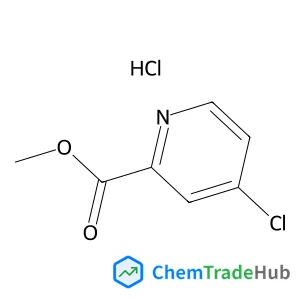
Methyl 4-chloro-2-pyridinecarboxylate hydrochloride (1:1)(CAS: 176977-85-8)
CAS Number
Related Products
![Methyl [1-(sulfanylmethyl)cyclopropyl]acetate](https://static.chemtradehub.com/structs/152/152922-73-1-c5f7.webp)
![1-[4-(Benzyloxy)-3-nitrophenyl]ethanone](https://static.chemtradehub.com/structs/143/14347-05-8-7fc5.webp)
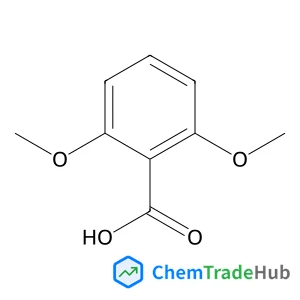
2,6-Dimethoxybenzoic acid
CAS Number: 1466-76-8
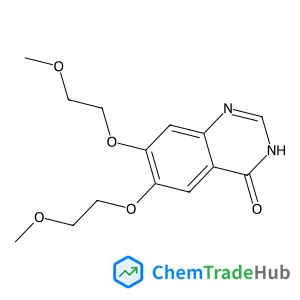
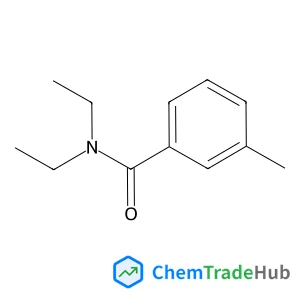
N,N-Diethyl-m-Toluamide
CAS Number: 134-62-3
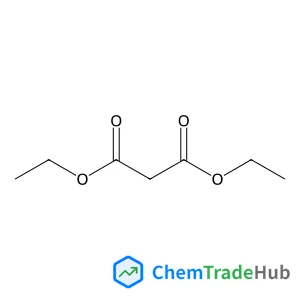
Diethyl malonate
CAS Number: 105-53-3
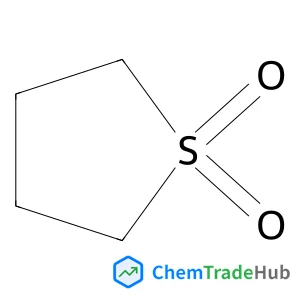
Tetrahydrothiophene 1,1-dioxide
CAS Number: 126-33-0
Other Suppliers for Methyl 4-chloro-2-pyridinecarboxylate hydrochloride (1:1)





Basic Information
Molecular Formula
C7H7Cl2NO2
Molecular Weight
208.04 g/mol
Physical Properties
Melting Point
136-138
Boiling Point
298℃ at 760 mmHg
Chemical Identifiers
SMILES
COC(=O)C1=NC=CC(=C1)Cl.Cl
InChIKey
PAGFSBPYVNFHAS-UHFFFAOYSA-N
Database References
MDL Number
MFCD05864729
FAQ
Methyl 4-chloro-2-pyridinecarboxylate hydrochloride (CAS: 176977-85-8) is a crystalline solid with a molecular weight of approximately 239.6 g/mol. It has a solubility of 0.2 g/L in water and is slightly soluble in ethanol. The compound is moderately reactive towards nucleophiles and can undergo substitution reactions. It is stable under normal conditions but should be stored in a dry place to avoid hydrolysis.
How is Methyl 4-chloro-2-pyridinecarboxylate hydrochloride (CAS: 176977-85-8) typically synthesized?
Methyl 4-chloro-2-pyridinecarboxylate hydrochloride (CAS: 176977-85-8) is typically synthesized by reacting methyl 4-chloro-2-pyridinecarboxylate with hydrochloric acid. The reaction is conducted in a solvent such as dichloromethane or ethyl acetate, and the yield is usually around 85%. The use of a phase transfer catalyst can improve selectivity and yield.
Methyl 4-chloro-2-pyridinecarboxylate hydrochloride (CAS: 176977-85-8) is used in the pharmaceutical industry for the synthesis of certain drugs. It also finds applications in the polymer industry for the modification of polymers, and in the sensor industry for the development of gas sensors. Additionally, it has potential uses in semiconductor manufacturing for etching processes.
When handling Methyl 4-chloro-2-pyridinecarboxylate hydrochloride (CAS: 176977-85-8), it is important to use appropriate personal protective equipment (PPE), such as gloves, goggles, and a lab coat. The compound should be handled in a well-ventilated area, preferably in a fume hood. Spills should be cleaned up using an appropriate absorbent material and the area should be flushed with water. Safety data sheets (SDS) should always be consulted for detailed safety information.
Safety Notice
Please verify product specifications and safety data before use. Contact the supplier for detailed safety information.
Always follow proper handling procedures
Contact Information
Contact Person
Zhu Fangran
847441157@qq.com