



AD
6-Bromo-2-chloroquinoline(CAS: 1810-71-5)
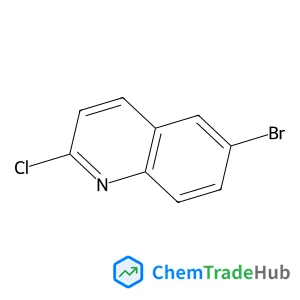
CAS Number
Related Products
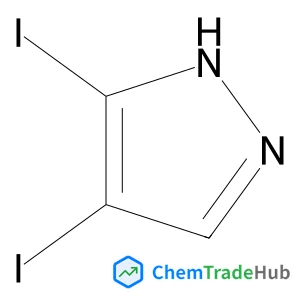
3,4-Diiodo-1H-pyrazole
CAS Number: 6645-70-1
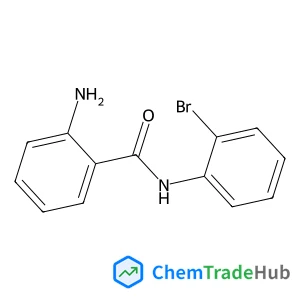
2-Amino-N-(2-bromophenyl)benzamide
CAS Number: 34489-85-5
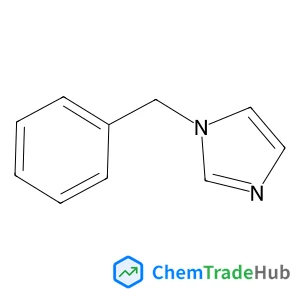
1-Benzyl-1H-imidazole
CAS Number: 4238-71-5
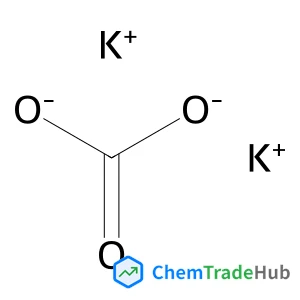
Dipotassium carbonate
CAS Number: 584-08-7
![1-[2-(Trifluoromethyl)benzyl]piperazine](https://static.chemtradehub.com/structs/940/94022-97-6-b9a0.webp)
Other Suppliers for 6-Bromo-2-chloroquinoline





Basic Information
Molecular Formula
C9H5BrClN
Molecular Weight
242.5 g/mol
Physical State
Pale-yellow to Yellow-brown Solid
Physical Properties
Melting Point
160.0 to 164.0 deg-C
Boiling Point
325.7°C at 760 mmHg
Density
1.673
Flash Point
150.8℃
Chemical Identifiers
SMILES
C1=CC2=C(C=CC(=N2)Cl)C=C1Br
InChIKey
YXRDWUJAJLDABJ-UHFFFAOYSA-N
Database References
MDL Number
MFCD04115272
FAQ
6-Bromo-2-chloroquinoline (CAS: 1810-71-5) is an organic compound with the molecular formula C10H6BrClN2. It is characterized by its aromatic structure with a bromine and chlorine substituent on the quinoline ring. This compound is primarily used in pharmaceutical research and development due to its potential as an intermediate in the synthesis of drugs and other bioactive molecules.
The main uses of 6-Bromo-2-chloroquinoline (CAS: 1810-71-5) include its role as a key intermediate in the synthesis of pharmaceuticals, particularly those targeting antiviral and anticancer properties. It is also utilized in the development of novel chemical compounds for research purposes.
6-Bromo-2-chloroquinoline (CAS: 1810-71-5) is generally considered safe when handled with appropriate protective measures. However, it is important to follow safety guidelines, including the use of gloves, goggles, and other personal protective equipment, to avoid skin contact and inhalation. Exposure to this compound may cause skin irritation and should be avoided. Ingestion is particularly dangerous, and immediate medical attention should be sought if ingestion occurs.
6-Bromo-2-chloroquinoline (CAS: 1810-71-5) should be stored in a cool, dry place to avoid degradation. It should be kept away from direct sunlight and heat sources to prevent photodegradation and thermal decomposition. The compound should be stored in a tightly sealed container to protect it from moisture and air. It is recommended to store it at room temperature (15-25°C) and in a well-ventilated area. Proper labeling and segregation from flammable and reactive materials are also essential for safe storage.
Safety Notice
Please verify product specifications and safety data before use. Contact the supplier for detailed safety information.
Always follow proper handling procedures