



AD
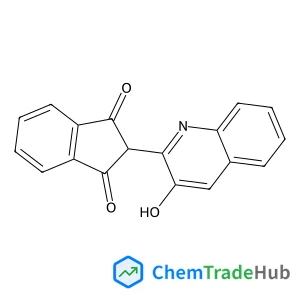
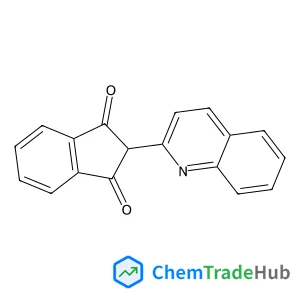
2-(3-Hydroxy-2-quinolinyl)-1H-indene-1,3(2H)-dione(CAS: 7576-65-0)
CAS Number
Related Products
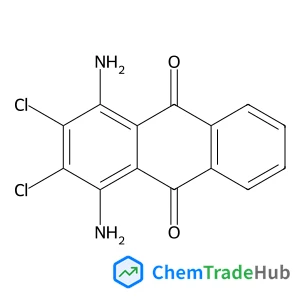
![6-(Cyclohexylamino)-3-methyl-3H-naphtho[1,2,3-de]quinoline-2,7-dione](https://static.chemtradehub.com/structs/719/71902-18-6-c71d.webp)
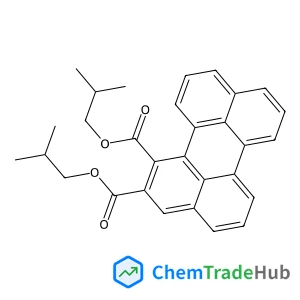
Diisobutyl 1,2-perylenedicarboxylate
CAS Number: 79869-59-3
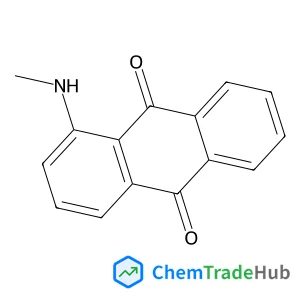
1-(Methylamino)-9,10-anthraquinone
CAS Number: 82-38-2
SolventRed179
CAS Number: 89106-94-5
![(1,2-Ethanediyldi-4,1-phenylene)bis[(4-methylphenyl)methanone]](https://static.chemtradehub.com/structs/719/71902-17-5-a21b.webp)
Other Suppliers for 2-(3-Hydroxy-2-quinolinyl)-1H-indene-1,3(2H)-dione





Basic Information
Molecular Formula
C18H11NO3
Molecular Weight
289.29 g/mol
Physical Properties
Melting Point
>360°C
Boiling Point
502ºC
Density
1.435
Chemical Identifiers
SMILES
Oc1cc2ccccc2nc1C1C(=O)c2c(C1=O)cccc2
InChIKey
FDTLQXNAPKJJAM-UHFFFAOYSA-N
Database References
MDL Number
MFCD00266981
FAQ
2-(3-Hydroxy-2-quinolinyl)-1H-indene-1,3(2H)-dione is a crystalline compound with a molecular weight of approximately 311.27 g/mol. It has a low solubility in water but is more soluble in organic solvents like dichloromethane and ethanol. This compound exhibits good stability under normal conditions but can degrade under strong acidic or basic conditions. It is also known to react readily with nucleophiles and electrophiles, making it useful in various chemical transformations.
2-(3-Hydroxy-2-quinolinyl)-1H-indene-1,3(2H)-dione is typically synthesized via a multi-step process that involves the reaction of 2-(3-hydroxy-2-quinolinyl)indene with a suitable reagent under mild conditions. Common methods include the use of acid or base catalysis, which can lead to high yields and good selectivity. The exact synthetic route can vary depending on the availability of starting materials and desired product purity.
2-(3-Hydroxy-2-quinolinyl)-1H-indene-1,3(2H)-dione is primarily used in the pharmaceutical and materials science industries. It serves as a key intermediate in the synthesis of various pharmaceuticals and is also explored for its potential applications in the development of advanced polymers, sensors, and semiconductors. Its unique chemical properties make it valuable for these applications.
When handling 2-(3-Hydroxy-2-quinolinyl)-1H-indene-1,3(2H)-dione, it is essential to wear appropriate personal protective equipment (PPE) such as gloves, goggles, and a lab coat. Work should be conducted in a well-ventilated area or fume hood to avoid inhalation of any vapors. Spills should be cleaned up using appropriate chemicals and tools, and the area should be properly decontaminated. Users should always consult the Safety Data Sheet (SDS) for detailed handling and emergency procedures.
Safety Notice
Please verify product specifications and safety data before use. Contact the supplier for detailed safety information.
Always follow proper handling procedures
Contact Information
info@yijiachemical.com