



AD
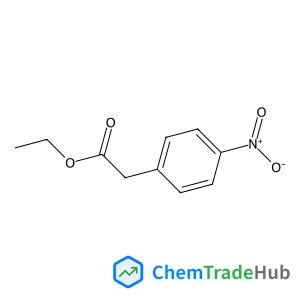
Ethyl (4-nitrophenyl)acetate(CAS: 5445-26-1)
CAS Number
Related Products
![3-Cyclopropyl-1-(2-fluoro-4-iodophenyl)-5-hydroxy-6,8-dimethylpyrido[2,3-d]pyrimidine-2,4,7(1H,3H,8H)-trione](https://static.chemtradehub.com/structs/871/871700-24-2-c5dd.webp)

5-Bromo-2,4(1H,3H)-pyrimidinedione
CAS Number: 51-20-7

![3-Iodo-1H-pyrrolo[2,3-b]pyridine-4-carbonitrile](https://static.chemtradehub.com/structs/956/956485-59-9-1f04.webp)
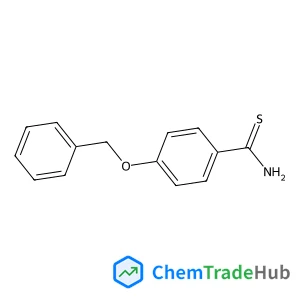
4-Benzyloxy-thiobenzamide
CAS Number: 161975-22-0

3-Chloro-N-cyclopentylbenzamide
CAS Number: 349128-33-2
Other Suppliers for Ethyl (4-nitrophenyl)acetate





Basic Information
Molecular Formula
C10H11NO4
Molecular Weight
209.2 g/mol
Physical Properties
Melting Point
62.0 to 66.0 deg-C
Boiling Point
196°C/20mmHg(lit.)
Flash Point
144.1℃
Chemical Identifiers
SMILES
CCOC(=O)CC1=CC=C(C=C1)[N+](=O)[O-]
InChIKey
DWDRNKYLWMKWTH-UHFFFAOYSA-N
Database References
MDL Number
MFCD00017046
Beilstein Registry Number
2053241
FAQ
Ethyl (4-nitrophenyl)acetate (CAS: 5445-26-1) is a crystalline solid with a molecular weight of approximately 228.13 g/mol. It has a high solubility in organic solvents like ethanol and acetone but is sparingly soluble in water. Chemically, it is a nitrophenyl ester and exhibits moderate reactivity, particularly in nucleophilic substitution reactions. It is used in various applications requiring specific functional groups for synthesis and derivatization.
Ethyl (4-nitrophenyl)acetate (CAS: 5445-26-1) is typically synthesized by the esterification of 4-nitrophenol with acetic anhydride in the presence of a strong acid catalyst like sulfuric acid. The reaction is carried out at elevated temperatures to achieve high yield and selectivity. This compound can also be prepared by other methods, such as direct nitration of ethyl phenylacetate, followed by purification.
Ethyl (4-nitrophenyl)acetate (CAS: 5445-26-1) is primarily used in the pharmaceutical industry for the synthesis of various drugs and intermediates. It is also utilized in the production of organic pigments, dyes, and other chemical intermediates. Additionally, this compound has applications in the research and development of new materials, such as polymers and semiconductors.
When handling Ethyl (4-nitrophenyl)acetate (CAS: 5445-26-1), it is crucial to wear appropriate personal protective equipment (PPE), including gloves, goggles, and a lab coat. This compound can irritate the skin and eyes, and fume hoods should be used to minimize inhalation risks. In the event of a spill, it should be handled carefully, and the area should be well-ventilated. Always refer to the Safety Data Sheet (SDS) for detailed emergency procedures and storage information.
Safety Notice
Please verify product specifications and safety data before use. Contact the supplier for detailed safety information.
Always follow proper handling procedures
Contact Information
Contact Person
Fang Rui
wangkang@jskchem.com
Mobile
15221441005
Telephone
15221441005
Visit Website
https://www.jskchem.comAddress
No chemical compound information was provided to translate. Please provide the relevant chemical information for translation.