



AD
2-Methyl-4-(4,4,5,5-tetramethyl-1,3,2-dioxaborolan-2-yl)pyridine(CAS: 660867-80-1)
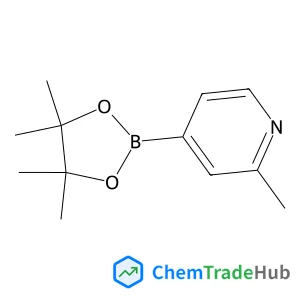
CAS Number
Related Products
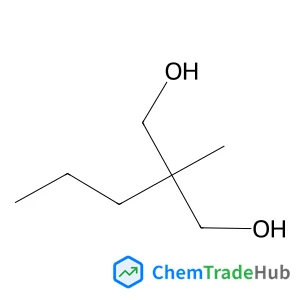
2-methyl-2-propylpropane-1,3-diol
CAS Number: 78-26-2
![Ethyl 3-(2-(((4-carbamimidoylphenyl)amino)methyl)-1-methyl-N-(pyridin-2-yl)-1H-benzo[d]imidazole-5-carboxamido)propanoate hydrochloride](https://static.chemtradehub.com/structs/211/211914-50-0-81b1.webp)
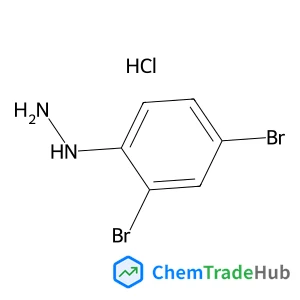
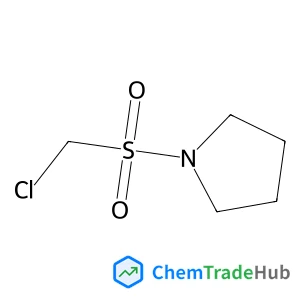
1-chloromethanesulfonylpyrrolidine
CAS Number: 98069-37-5
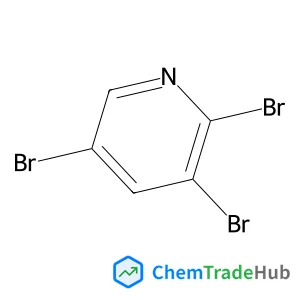
2,3,5-Tribromopyridine
CAS Number: 75806-85-8
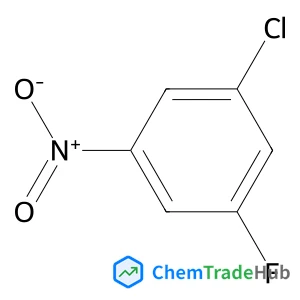
1-Chloro-3-fluoro-5-nitrobenzene
CAS Number: 4815-64-9
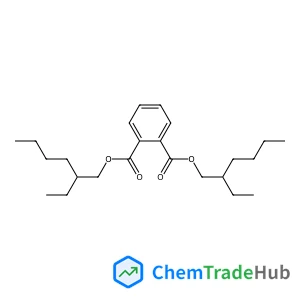
Bis(2-ethylhexyl) phthalate
CAS Number: 117-81-7
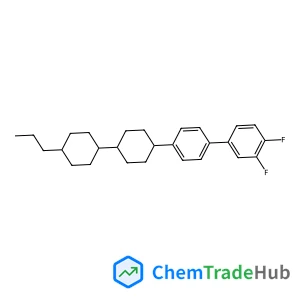
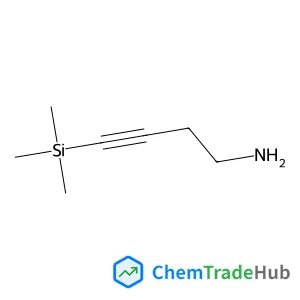
4-(Trimethylsilyl)-3-butyn-1-amine
CAS Number: 183208-71-1
Other Suppliers for 2-Methyl-4-(4,4,5,5-tetramethyl-1,3,2-dioxaborolan-2-yl)pyridine




Basic Information
Molecular Formula
C12H18BNO2
Molecular Weight
219.09 g/mol
Physical Properties
Melting Point
73.0 to 77.0 deg-C
Boiling Point
315.9℃ at 760 mmHg
Density
1.02
Flash Point
144.8℃
Chemical Identifiers
SMILES
B1(OC(C(O1)(C)C)(C)C)C2=CC(=NC=C2)C
InChIKey
MBTULFIFECUURA-UHFFFAOYSA-N
Database References
MDL Number
MFCD08061590
FAQ
2-Methyl-4-(4,4,5,5-tetramethyl-1,3,2-dioxaborolan-2-yl)pyridine is a crystalline compound with a molecular weight of approximately 332.4 g/mol. It has low solubility in water but is more soluble in organic solvents like DMF and DMSO. The compound is reactive towards nucleophiles and can participate in various organic transformations, such as Suzuki coupling reactions. It is stable under normal laboratory conditions but should be stored away from moisture and heat.
2-Methyl-4-(4,4,5,5-tetramethyl-1,3,2-dioxaborolan-2-yl)pyridine is typically synthesized via the reaction of 2-methylpyridine with 1,3,2-dioxaborine in the presence of a base such as potassium carbonate and a palladium catalyst, such as Pd(PPh3)4. The method provides good yield and selectivity, making it a common approach for the synthesis of this compound in academic and industrial settings.
2-Methyl-4-(4,4,5,5-tetramethyl-1,3,2-dioxaborolan-2-yl)pyridine is primarily used in the pharmaceutical and polymer industries. It serves as a key intermediate in the synthesis of various drugs and polymers due to its excellent reactivity in cross-coupling reactions. Additionally, it finds applications in the development of sensors and semiconductors, where its unique chemical properties are leveraged.
When handling 2-Methyl-4-(4,4,5,5-tetramethyl-1,3,2-dioxaborolan-2-yl)pyridine, it is essential to use proper personal protective equipment (PPE), including gloves, goggles, and a lab coat. Work should be conducted in a fume hood to minimize exposure. Spills should be cleaned up immediately using appropriate absorbent materials and rinsing with water. Always refer to the Safety Data Sheet (SDS) for detailed information on handling, storage, and disposal.
Safety Notice
Please verify product specifications and safety data before use. Contact the supplier for detailed safety information.
Always follow proper handling procedures

Contact Information
Contact Person
Mr. Zhai
xiangyang.zhai@jk-sci.com
Mobile
18210857532
Visit Website
https://www.jkchemical.comAddress
Beijing Chaoyang District, Building A, 5th Floor, Junfeng Huating, No. 69 Beichen West Road