



AD
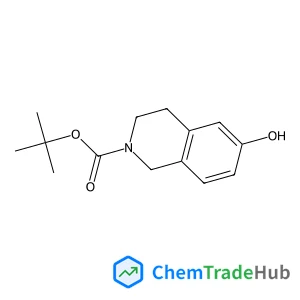
2-Methyl-2-propanyl 6-hydroxy-3,4-dihydro-2(1H)-isoquinolinecarboxylate(CAS: 158984-83-9)
CAS Number
Related Products
![[3-(2-Hydroxyethyl)phenyl]boronic acid](https://static.chemtradehub.com/structs/647/647853-32-5-c363.webp)
![N-(Butylsulfonyl)-O-[4-(4-piperidinyl)butyl]-L-tyrosine hydrochloride hydrate](https://static.chemtradehub.com/structs/150/150915-40-5-1679.webp)
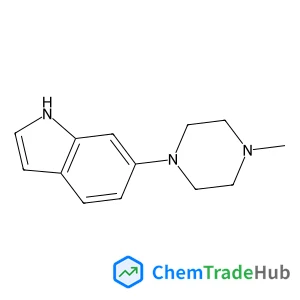
6-(4-methylpiperazin-1-yl)-1H-indole
CAS Number: 321745-04-4
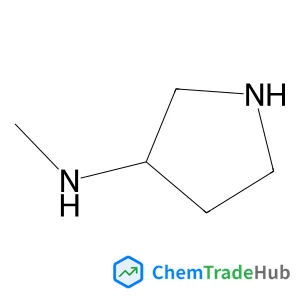
N-Methyl-3-pyrrolidinamine
CAS Number: 83030-08-4
![2-Chloro-N-[4-chloro-3-(2-pyridinyl)phenyl]-4-(methylsulfonyl)benzamide](https://static.chemtradehub.com/structs/879/879085-55-9-5abe.webp)
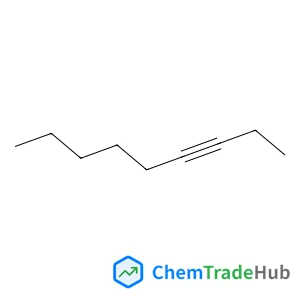
3-Nonyne
CAS Number: 20184-89-8
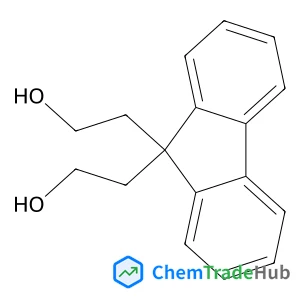
2,2'-(9H-fluorene-9,9-diyl)diethanol
CAS Number: 203070-78-4
![1,4-Dioxaspiro[4.5]dec-8-ylacetic acid](https://static.chemtradehub.com/structs/134/134136-04-2-8def.webp)
Other Suppliers for 2-Methyl-2-propanyl 6-hydroxy-3,4-dihydro-2(1H)-isoquinolinecarboxylate


Basic Information
Molecular Formula
C14H19NO3
Molecular Weight
249.31 g/mol
Physical State
White to Yellow Solid
Physical Properties
Boiling Point
391.4°C at 760 mmHg
Chemical Identifiers
SMILES
CC(C)(C)OC(=O)N1CCC2=C(C1)C=CC(=C2)O
InChIKey
IVHHZZKGSYGTKZ-UHFFFAOYSA-N
Database References
MDL Number
MFCD08275034
FAQ
2-Methyl-2-propanyl 6-hydroxy-3,4-dihydro-2(1H)-isoquinolinecarboxylate is a solid compound with a crystalline form. The molecular weight is approximately 258.34 g/mol. It has a low solubility in water but is more soluble in organic solvents like ethanol and acetone. Chemically, it is reactive towards nucleophiles and can undergo various transformations. It has a melting point of around 120-122°C and a boiling point of approximately 300°C.
2-Methyl-2-propanyl 6-hydroxy-3,4-dihydro-2(1H)-isoquinolinecarboxylate can be synthesized via a multi-step process involving the formation of a key intermediate, followed by a ring closure reaction. Common methods include the use of palladium catalysts and base in an organic solvent. The overall yield is typically around 75-80%, and the reaction is selective towards the desired product.
2-Methyl-2-propanyl 6-hydroxy-3,4-dihydro-2(1H)-isoquinolinecarboxylate is primarily used in the pharmaceutical industry as an intermediate in the synthesis of drugs. It also has applications in the production of certain polymers and in the development of new materials for sensors and semiconductors. Its use in these industries is growing due to its unique chemical properties and reactivity.
When handling 2-Methyl-2-propanyl 6-hydroxy-3,4-dihydro-2(1H)-isoquinolinecarboxylate, it is crucial to wear appropriate personal protective equipment (PPE) including gloves, goggles, and a lab coat. Work should be conducted in a well-ventilated fume hood to minimize exposure. Spills should be cleaned up immediately using an appropriate absorbent material and disposed of according to safety data sheet (SDS) guidelines. Proper disposal and storage in a secure, labeled container are also essential.
Safety Notice
Please verify product specifications and safety data before use. Contact the supplier for detailed safety information.
Always follow proper handling procedures

Contact Information
Contact Person
Miss Xu
1986399151@qq.com
Mobile
15221998634
Telephone
021-59178156
Visit Website
https://www.yingxinbio.com/Address
Yugang Town Yiling Road 258 Lane C Zone