



AD
2-Methyl-2-propanyl (3-aminophenyl)carbamate(CAS: 68621-88-5)
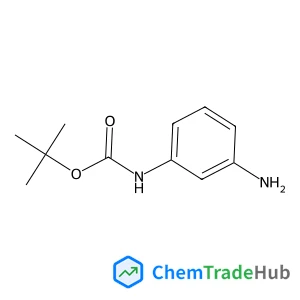
CAS Number
Related Products
![Benzonitrile, 3-[(1S,2S)-2-amino-1-[(4-chlorophenyl)methyl]propyl]-, hydrochloride (1](https://static.chemtradehub.com/structs/610/610791-48-5-fdbb.webp)
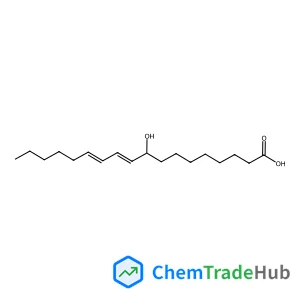
(+/-)9-HODE
CAS Number: 98524-19-7
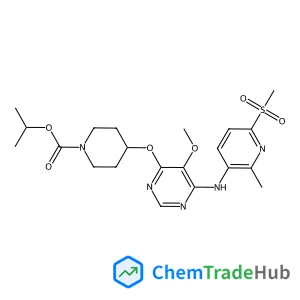
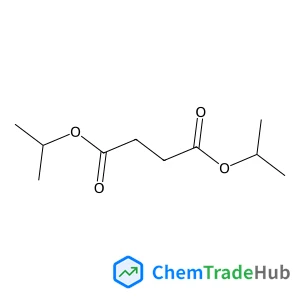
Diisopropyl succinate
CAS Number: 924-88-9
![(7R,8R,9S,13S,14S,17S)-7-(9-Bromononyl)-3-hydroxy-13-methyl-7,8,9,11,12,13,14,15,16,17-decahydro-6H-cyclopenta[a]phenanthren-17-yl acetate](https://static.chemtradehub.com/structs/875/875573-66-3-9e37.webp)
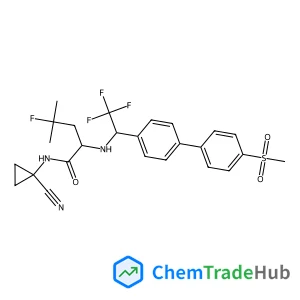
Odanacatib
CAS Number: 603139-19-1
Other Suppliers for 2-Methyl-2-propanyl (3-aminophenyl)carbamate

Basic Information
Molecular Formula
C11H16N2O2
Molecular Weight
208.26 g/mol
Physical Properties
Melting Point
109-110 ºC (dichloromethane )
Density
1.152±0.06 g/cm3 (20 ºC 760 Torr),
Chemical Identifiers
SMILES
CC(C)(C)OC(=O)NC1=CC=CC(=C1)N
InChIKey
IEUIEMIRUXSXCL-UHFFFAOYSA-N
Database References
MDL Number
MFCD06657915
Beilstein Registry Number
2101841
FAQ
2-Methyl-2-propanyl (3-aminophenyl)carbamate is a white crystalline solid with a molecular weight of approximately 208.26 g/mol. It is slightly soluble in water and has good solubility in organic solvents. This compound is known for its moderate reactivity, particularly in nucleophilic substitution reactions. It exhibits good stability under normal storage conditions but requires protection from moisture and air to prevent degradation.
2-Methyl-2-propanyl (3-aminophenyl)carbamate is commonly synthesized via a multi-step process involving the reaction of 3-aminophenyl isocyanate with 2-methylpropyl alcohol. This synthesis typically employs a mild base catalyst to promote the reaction, yielding a product with high selectivity and good yield. The process requires careful handling to avoid side reactions and ensure purity.
2-Methyl-2-propanyl (3-aminophenyl)carbamate finds application in various industries, including pharmaceuticals, where it is used as an intermediate in the synthesis of certain drugs. It is also utilized in the production of polymers and as a component in sensors due to its chemical stability and reactivity. Additionally, it has applications in the semiconductor industry for its role in specific chemical processes.
When handling 2-Methyl-2-propanyl (3-aminophenyl)carbamate, it is essential to wear appropriate personal protective equipment (PPE) including gloves, safety goggles, and a lab coat. Work should be conducted in a well-ventilated area or a fume hood to minimize inhalation risks. Spills should be handled with caution, using absorbent materials, and the area should be thoroughly cleaned. Always refer to the Safety Data Sheet (SDS) for specific guidelines and emergency procedures.
Safety Notice
Please verify product specifications and safety data before use. Contact the supplier for detailed safety information.
Always follow proper handling procedures
Contact Information
jnyaoyan@163.com