



AD
3-Chloro-5-(trifluoromethyl)-2-pyridinecarboxylic acid(CAS: 80194-68-9)
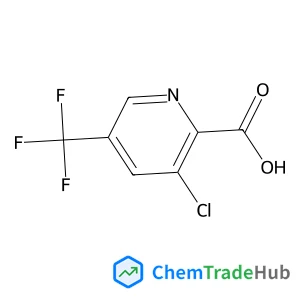
CAS Number
Related Products
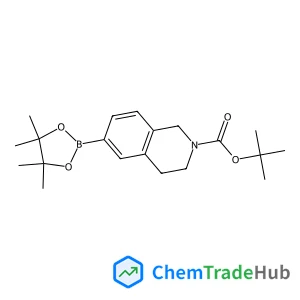
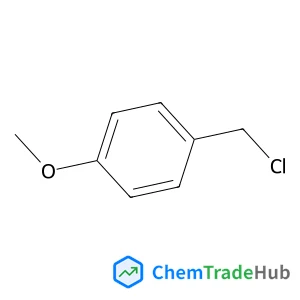
4-Methoxybenzyl Chloride
CAS Number: 824-94-2
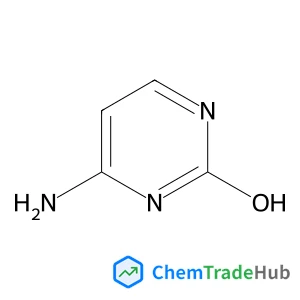
6-Amino-2(1H)-pyrimidinone
CAS Number: 71-30-7
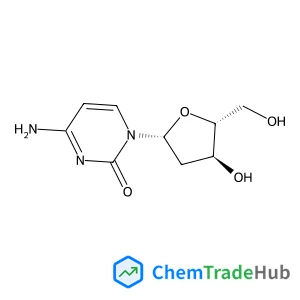
2'-Deoxycytidine
CAS Number: 951-77-9
![4,6-Dichloro-1-methyl-1H-pyrazolo[3,4-d]pyrimidine](https://static.chemtradehub.com/structs/981/98141-42-5-4ada.webp)
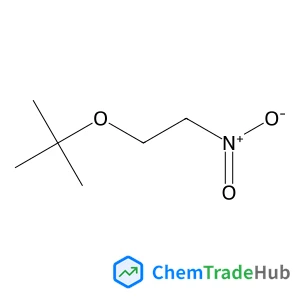
2-Methyl-2-(2-nitroethoxy)propane
CAS Number: 77791-00-5
![[(3aS,5aR,8aR,8bS)-2,2,7,7-Tetramethyltetrahydro-3aH-bis[1,3]dioxolo[4,5-b:4',5'-d]pyran-3a-yl]methyl sulfamate (non-preferred name)](https://static.chemtradehub.com/structs/972/97240-79-4-2f8d.webp)
Other Suppliers for 3-Chloro-5-(trifluoromethyl)-2-pyridinecarboxylic acid



Basic Information
Molecular Formula
C7H3ClF3NO2
Molecular Weight
225.55 g/mol
Physical Properties
Melting Point
130-143°C
Boiling Point
269.6±40.0 ºC (760 Torr),
Density
1.603±0.06 g/cm3 (20 ºC 760 Torr),
Flash Point
116.9±27.3 ºC,
Chemical Identifiers
SMILES
C1=C(C=NC(=C1Cl)C(=O)O)C(F)(F)F
InChIKey
HXRMCZBDTDCCOP-UHFFFAOYSA-N
Database References
MDL Number
MFCD00277482
FAQ
3-Chloro-5-(trifluoromethyl)-2-pyridinecarboxylic acid is a crystalline compound with a molecular weight of approximately 254.02 g/mol. It has low water solubility, with a solubility of about 0.038 g/L at 25°C. This compound is relatively stable under neutral and basic conditions but can react with strong bases to form the corresponding salt. It exhibits weak acidity and can undergo nucleophilic substitution reactions.
3-Chloro-5-(trifluoromethyl)-2-pyridinecarboxylic acid is typically synthesized through a multi-step process involving the reaction of 2-chloro-5-(trifluoromethyl)pyridine with carbon dioxide in the presence of a suitable catalyst. This process yields a high yield and good selectivity. The synthesized compound can be purified by recrystallization from an appropriate solvent.
3-Chloro-5-(trifluoromethyl)-2-pyridinecarboxylic acid is primarily used in the pharmaceutical industry for the synthesis of certain drug intermediates due to its unique chemical properties. It also finds applications in the polymer industry for the modification of polymers to enhance their mechanical and thermal properties. Additionally, it is used in the development of sensors and semiconductors, although on a smaller scale.
Proper personal protective equipment (PPE) such as gloves, goggles, and a lab coat should be worn when handling 3-Chloro-5-(trifluoromethyl)-2-pyridinecarboxylic acid. Work should be conducted in a fume hood to minimize exposure to vapors. In case of a spill, it should be carefully cleaned up using appropriate absorbent materials. Safety data sheets (SDS) should be consulted for detailed handling and emergency procedures. This compound is not particularly reactive, but care should be taken to avoid contact with strong bases.
Safety Notice
Please verify product specifications and safety data before use. Contact the supplier for detailed safety information.
Always follow proper handling procedures
Contact Information
xyfn@163.com