



AD
Triphenylsilane(CAS: 789-25-3)
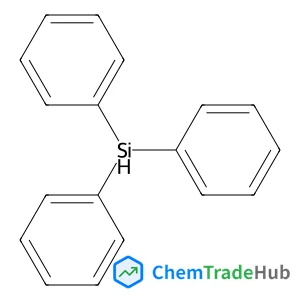
CAS Number
Related Products
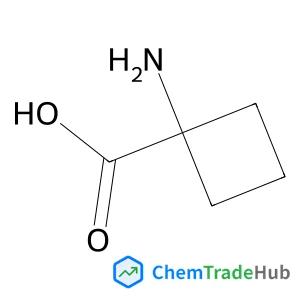
1-Aminocyclobutanecarboxylic acid
CAS Number: 22264-50-2
![Potassium 4-[(4-fluorobenzyl)carbamoyl]-1-methyl-2-(2-{[(5-methyl-1,3,4-oxadiazol-2-yl)carbonyl]amino}-2-propanyl)-5,6-dioxo-1,2,5,6-tetrahydropyrimidin-2-ide](https://static.chemtradehub.com/structs/871/871038-72-1-53e3.webp)
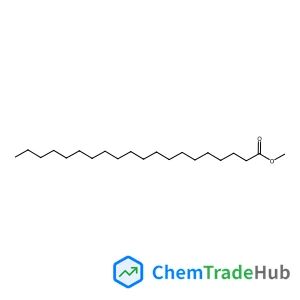
Methyl icosanoate
CAS Number: 1120-28-1
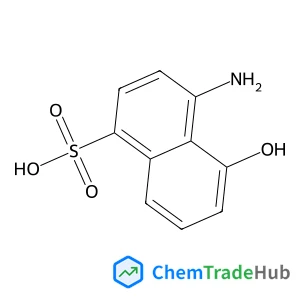
![Imidazo[1,5-a]pyridine](https://static.chemtradehub.com/structs/274/274-47-5-b458.webp)
Imidazo[1,5-a]pyridine
CAS Number: 274-47-5
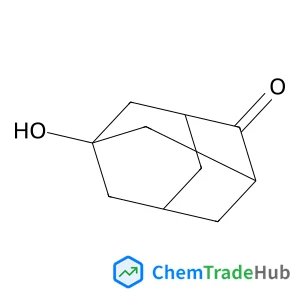
(1R,3S,5s,7s)-5-Hydroxy-2-adamantanone
CAS Number: 20098-14-0
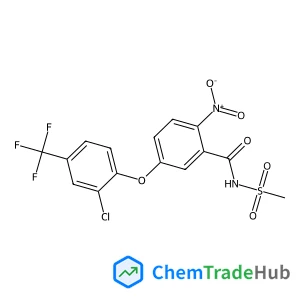
Fomesafen
CAS Number: 72178-02-0
Other Suppliers for Triphenylsilane




Basic Information
Molecular Formula
C18H16Si
Molecular Weight
260.41 g/mol
EINECS
212-333-0
Physical Properties
Melting Point
43-45 °C (lit.)
Boiling Point
152 °C/2 mmHg (lit.)
Density
160
Flash Point
169 °F
Water Solubility
REACTS
Chemical Identifiers
SMILES
c1ccc(cc1)[SiH](c2ccccc2)c3ccccc3
InChIKey
AKQNYQDSIDKVJZ-UHFFFAOYSA-N
Database References
MDL Number
MFCD00003003
Beilstein Registry Number
978182
FAQ
Triphenylsilane (CAS: 789-25-3) is a colorless to light yellow liquid with a molecular weight of approximately 278.32 g/mol. It has a low solubility in water but is highly soluble in organic solvents. Chemically, it is less reactive compared to other organosilanes, making it useful in various applications. It has a specific gravity of around 0.96 and a melting point of -40°C, boiling point of 110°C, and vapor pressure of 1 mmHg at 25°C.
Triphenylsilane (CAS: 789-25-3) is typically synthesized by the reaction of triphenyl germanium and hydrogen chloride in the presence of a base such as sodium hydroxide or potassium hydroxide. The reaction is carried out at room temperature and atmospheric pressure. The yield is usually around 85-90%, and the product is purified by distillation to remove any unreacted starting materials and impurities.
Triphenylsilane (CAS: 789-25-3) is widely used in industries such as pharmaceuticals, where it serves as a protecting group for silicon-containing compounds. It is also used in polymer synthesis, particularly in the preparation of organosilicon polymers. Additionally, it finds applications in semiconductor manufacturing for surface protection and in the production of chemical sensors for their dielectric properties.
When handling Triphenylsilane (CAS: 789-25-3), it is essential to wear appropriate personal protective equipment (PPE) such as gloves, safety goggles, and protective clothing. Fume hoods should be used during operations to minimize exposure to the volatile compound. Spills should be cleaned up carefully using appropriate absorbents, and the area should be ventilated. Safety data sheets (SDS) should be consulted for detailed handling and disposal information.
Safety Notice
Please verify product specifications and safety data before use. Contact the supplier for detailed safety information.
Always follow proper handling procedures
Contact Information
new_great@163.com