



AD
Cidofovir Dihydrate(CAS: 149394-66-1)

CAS Number
Related Products
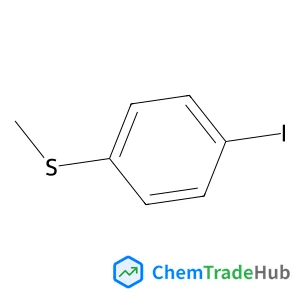
1-Iodo-4-(methylsulfanyl)benzene
CAS Number: 35371-03-0

Dichloro-lambda~2~-plumbane
CAS Number: 7758-95-4

PUMICE STONE
CAS Number: 1332-09-8


4-(1H-1,2,4-Triazol-1-yl)benzoic acid
CAS Number: 162848-16-0

2,3-Dibromobutane
CAS Number: 5408-86-6
SOYBEAN MEAL
CAS Number: 68308-36-1
![2-Chloro-N-[2-(2,6-dioxo-3-piperidinyl)-1,3-dioxo-2,3-dihydro-1H-isoindol-4-yl]acetamide](https://static.chemtradehub.com/structs/444/444287-84-7-fa4b.webp)
Other Suppliers for Cidofovir Dihydrate







Basic Information
Molecular Formula
C8H18N3O8P
Molecular Weight
315.22 g/mol
EINECS
814-987-8
Physical State
White
Physical Properties
Melting Point
>250°C (dec.)
Boiling Point
609.5±65.0 °C at 760 mmHg
Flash Point
322.4±34.3 °C
Chemical Identifiers
SMILES
C1=CN(C(=O)N=C1N)CC(CO)OCP(=O)(O)O.O.O
InChIKey
FPKARFMSZDBYQF-ILKKLZGPSA-N
Database References
MDL Number
MFCD16556167
FAQ
Cidofovir dihydrate is a white crystalline solid with a molecular weight of approximately 597.62 g/mol. It has a high solubility in water and is poorly soluble in organic solvents. Chemically, it is a nucleoside analog with antiviral activity. It is reactive towards nucleophilic attack and can form stable complexes with metal ions, making it useful in various pharmaceutical applications.
Cidofovir dihydrate is typically synthesized through a multistep process involving the condensation of 2'-deoxyguanosine with 2-hydroxy-5-nitroimidazole-1-ylidene, followed by reduction and hydration. The synthesis involves the use of reagents such as sodium hydride and acetic anhydride. The yield is moderate, around 50-60%, and the reaction conditions are optimized for selectivity and purity.
Cidofovir dihydrate is primarily used in the pharmaceutical industry for the treatment of viral infections, particularly CMV retinitis in AIDS patients. It is also explored for its potential in other applications such as topical treatments for viral infections in the skin and mucous membranes. Limited use is seen in research and development for its reactivity and complex chemistry in various industries.
When handling Cidofovir dihydrate, it is important to wear appropriate personal protective equipment (PPE) including gloves and safety goggles. Work should be conducted in a well-ventilated area or fume hood to avoid inhalation of dust. Spills should be cleaned up with appropriate absorbents and disposed of according to local regulations. Always refer to the Safety Data Sheet (SDS) for specific handling and disposal instructions to ensure safety and compliance.
Safety Notice
Please verify product specifications and safety data before use. Contact the supplier for detailed safety information.
Always follow proper handling procedures
Contact Information
Contact Person
Ludu
order@canspecsci.com