



AD
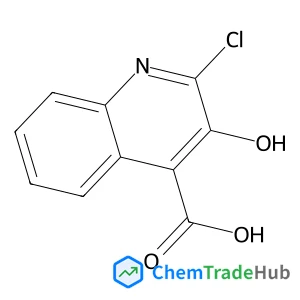
2-Chloro-3-hydroxy-4-quinolinecarboxylic acid(CAS: 847547-91-5)
CAS Number
Related Products
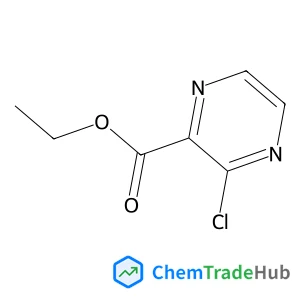
Ethyl 3-chloro-2-pyrazinecarboxylate
CAS Number: 655247-45-3
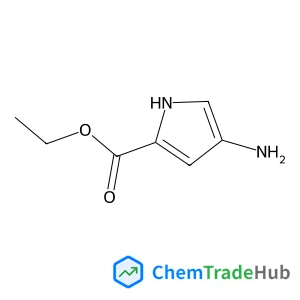
Ethyl 4-amino-1H-pyrrole-2-carboxylate
CAS Number: 67318-12-1
![(2R)-{[(4-Hydroxy-6-methyl-3-pyridinyl)carbonyl]amino}(4-hydroxyphenyl)acetic acid](https://static.chemtradehub.com/structs/707/70785-61-4-a48a.webp)
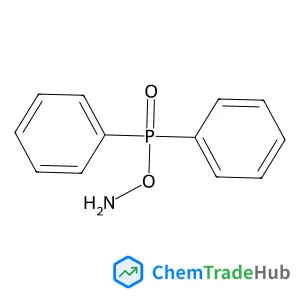
(Aminooxy)(diphenyl)phosphine oxide
CAS Number: 72804-96-7
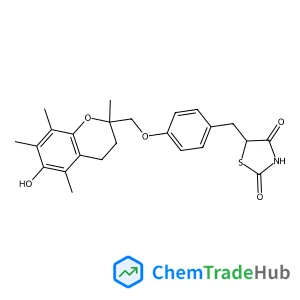
Troglitazone
CAS Number: 97322-87-7
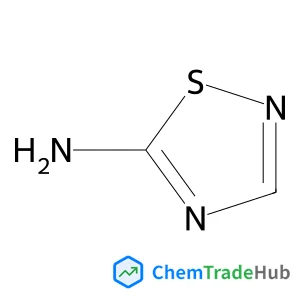
1,2,4-Thiadiazol-5-amine
CAS Number: 7552-07-0
Other Suppliers for 2-Chloro-3-hydroxy-4-quinolinecarboxylic acid






Basic Information
Molecular Formula
C10H6ClNO3
Molecular Weight
223.61 g/mol
Physical Properties
Boiling Point
377.6°C at 760 mmHg
Density
1.6
Flash Point
182.1°C
Chemical Identifiers
SMILES
c1ccc2c(c1)c(c(c(n2)Cl)O)C(=O)O
InChIKey
RPGQCGYSROBDNQ-UHFFFAOYSA-N
Database References
MDL Number
MFCD11706991
FAQ
2-Chloro-3-hydroxy-4-quinolinecarboxylic acid is a crystalline solid with a molecular weight of approximately 237.6 g/mol. It is slightly soluble in water and ethanol. The compound is known for its stability under normal conditions but can react with strong bases to form the corresponding salts. It has a pKa of about 5.5, indicating it is a weak acid.
2-Chloro-3-hydroxy-4-quinolinecarboxylic acid is typically synthesized through the chlorination of a hydroxyquinoline derivative followed by carboxylation. Commonly used reagents include phosphorous pentachloride for chlorination and chloroacetic anhydride for carboxylation. The yield is around 70-80%, and the reaction is conducted under anhydrous conditions to avoid hydrolysis.
2-Chloro-3-hydroxy-4-quinolinecarboxylic acid finds applications in the pharmaceutical industry as an intermediate in drug synthesis. It is also used in the development of sensors and as a precursor in the synthesis of other quinoline derivatives. Its use in polymers and semiconductors is limited but under investigation for specific applications.
When handling 2-Chloro-3-hydroxy-4-quinolinecarboxylic acid, it is important to wear appropriate personal protective equipment (PPE) such as gloves, goggles, and a lab coat. The compound should be handled in a well-ventilated area or under a fume hood to avoid inhalation. Spills should be cleaned up using an appropriate solvent, and the area should be thoroughly washed. Always consult the Safety Data Sheet (SDS) for detailed handling and disposal instructions.
Safety Notice
Please verify product specifications and safety data before use. Contact the supplier for detailed safety information.
Always follow proper handling procedures
Contact Information
sales@hirisunpharm.com