



AD
2,5-Dibromoterephthalaldehyde(CAS: 63525-48-4)

CAS Number
Related Products

methanol; trifluoro-methoxy-boron
CAS Number: 2802-68-8
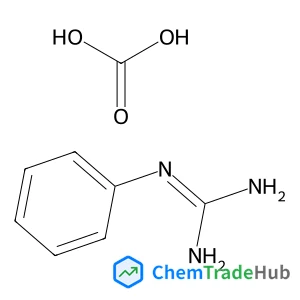
Carbonic acid - 1-phenylguanidine (1:1)
CAS Number: 6685-76-3
![1,7,7-Trimethylbicyclo[2.2.1]heptane-2,3-dione](https://static.chemtradehub.com/structs/103/10373-78-1-714c.webp)
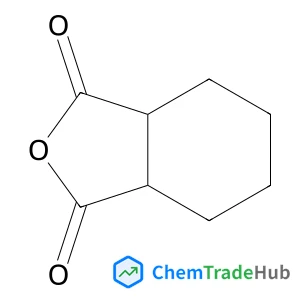
octahydro-2-benzofuran-1,3-dione
CAS Number: 85-42-7
![1-[(4xi)-beta-D-(~13~C_5_)-erythro-Pentofuranosyl]-1H-1,2,4-triazole-3-carboxamide](https://static.chemtradehub.com/structs/164/1646818-35-0-ea01.webp)

1-Propanamine hydrochloride (1:1)
CAS Number: 556-53-6
![1,1,2,2-Tetrafluoro-1-[2-(1,1,2,2-tetrafluoroethoxy)ethoxy]ethane](https://static.chemtradehub.com/structs/358/358-39-4-0089.webp)
Other Suppliers for 2,5-Dibromoterephthalaldehyde





Basic Information
Molecular Formula
C8H4Br2O2
Molecular Weight
291.93 g/mol
Physical Properties
Density
2.011
Chemical Identifiers
SMILES
BrC1=CC(C=O)=C(Br)C=C1C=O
InChIKey
VSUKSWCSOBXUFG-UHFFFAOYSA-N
Database References
MDL Number
MFCD11521314
FAQ
2,5-Dibromoterephthalaldehyde (CAS: 63525-48-4) is a crystalline compound with a molecular weight of approximately 318.04 g/mol. It is slightly soluble in water but readily soluble in organic solvents like ethanol and acetone. The compound shows moderate reactivity with nucleophiles and can undergo substitution reactions. It has a melting point of about 165°C and a boiling point of approximately 330°C. It is reactive towards halogenation and can undergo condensation reactions.
2,5-Dibromoterephthalaldehyde is typically synthesized via the bromination of terephthalaldehyde. This process can be carried out using bromine in the presence of a suitable base like sodium hydride. The reaction is conducted in an inert solvent such as dimethylformamide (DMF). The yield is generally around 70-80%, and the selectivity towards the desired product is high. The use of Lewis acids such as aluminum bromide can also enhance the reaction efficiency.
2,5-Dibromoterephthalaldehyde (CAS: 63525-48-4) is primarily used in the pharmaceutical industry for the synthesis of certain organic compounds. It also finds applications in the polymer industry, where it is used as a monomer for the production of special polymers. Additionally, it is utilized in the sensor industry for the development of chemical sensors and in the semiconductor industry for manufacturing processes involving organic materials.
When handling 2,5-Dibromoterephthalaldehyde (CAS: 63525-48-4), it is essential to use proper Personal Protective Equipment (PPE) such as gloves, goggles, and a lab coat. The compound should be stored in a cool, dry place, away from direct sunlight and heat sources. Fume hoods should be used during the handling and synthesis of this compound to minimize exposure to bromine vapor. In case of a spill, it should be cleaned up immediately using appropriate absorbent materials. Always refer to the Safety Data Sheet (SDS) for further handling and disposal instructions.
Safety Notice
Please verify product specifications and safety data before use. Contact the supplier for detailed safety information.
Always follow proper handling procedures