



AD
4-Amino-5-chloro-2,3-dihydro-1-benzofuran-7-carboxylic acid(CAS: 123654-26-2)
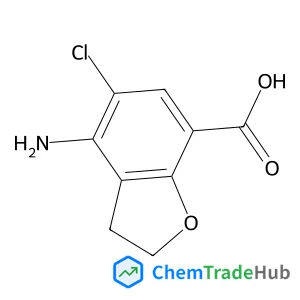
CAS Number
Related Products
![(3R)-3-(2,3-Dichlorophenyl)-3-({[(2-methyl-2-propanyl)oxy]carbonyl}amino)propanoic acid](https://static.chemtradehub.com/structs/500/500788-91-0-45b8.webp)
![Piperazine, 1-(3-phenylpropyl)-4-[2-[3-(trifluoromethyl)phenyl]ethyl]-, dihydrochloride](https://static.chemtradehub.com/structs/925/925884-84-0-df16.webp)
![3-Benzyl[1,2,4]triazolo[3,4-b][1,3,4]thiadiazole-6-thiol](https://static.chemtradehub.com/structs/790/79074-69-4-cb8e.webp)
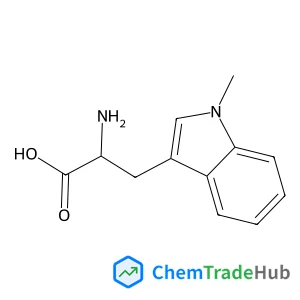
1-Methyl-L-tryptophan
CAS Number: 21339-55-9
![1-[2,6-Dimethyl-4-(2-methyl-2-propanyl)-3,5-dinitrophenyl]ethanone](https://static.chemtradehub.com/structs/81-/81-14-1-d158.webp)
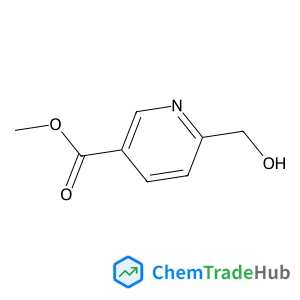
Methyl 6-(hydroxymethyl)nicotinate
CAS Number: 56026-36-9
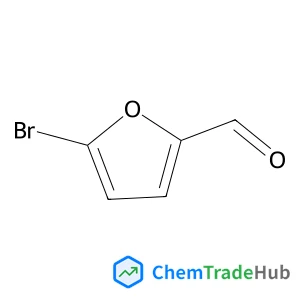
5-Bromo-2-furaldehyde
CAS Number: 1899-24-7

2-Bromo-4-pyridinamine
CAS Number: 7598-35-8
Other Suppliers for 4-Amino-5-chloro-2,3-dihydro-1-benzofuran-7-carboxylic acid





Basic Information
Molecular Formula
C9H8ClNO3
Molecular Weight
213.62 g/mol
Physical Properties
Boiling Point
406.5°C at 760 mmHg
Chemical Identifiers
SMILES
C1COC2=C1C(=C(C=C2C(=O)O)Cl)N
InChIKey
KRMUVKSAOVLXLF-UHFFFAOYSA-N
Database References
MDL Number
MFCD12923204
FAQ
4-Amino-5-chloro-2,3-dihydro-1-benzofuran-7-carboxylic acid is a white crystalline solid with a molecular weight of approximately 263.03 g/mol. It has a solubility of about 1.2 g/L in water and is more soluble in organic solvents like methanol and ethanol. The compound is moderately reactive, with potential for amine and carboxylic acid functionalities. It is stable under normal conditions but should be stored in a dry, shaded area away from moisture and heat.
4-Amino-5-chloro-2,3-dihydro-1-benzofuran-7-carboxylic acid is typically synthesized via a multi-step process. Common methods involve the initial synthesis of 5-chloro-2,3-dihydro-1-benzofuran followed by the introduction of the amine group. This can be achieved through aminomethylation or direct amination. The overall yield is around 75-85%, and the process requires careful control of reaction conditions to achieve high selectivity and purity.
4-Amino-5-chloro-2,3-dihydro-1-benzofuran-7-carboxylic acid is used in several industries. It is primarily applied in the pharmaceutical industry for the synthesis of biologically active compounds. It also finds use in the polymer industry as a crosslinking agent and in the development of sensors and semiconductors where its chemical properties are utilized.
When handling 4-Amino-5-chloro-2,3-dihydro-1-benzofuran-7-carboxylic acid, it is important to wear appropriate personal protective equipment (PPE), including gloves and safety goggles. The compound should be stored in a fume hood to minimize exposure. In case of a spill, it should be carefully cleaned up using appropriate absorbent materials, and the area should be well ventilated. Always refer to the Safety Data Sheet (SDS) for detailed handling and disposal instructions.
Safety Notice
Please verify product specifications and safety data before use. Contact the supplier for detailed safety information.
Always follow proper handling procedures
Contact Information
Contact Person
Manager Shi
info@synzest.com