












Editorial
Literature Information
Publication Date
DOI
10.1039/JA989040001A
Impact Factor
4.023
Authors
View Original
Abstract
The first page of this article is displayed as the abstract.
Related Literature
Interaction of organic compounds with chondritic silicate surfaces. Atomistic insights from quantum chemical periodic simulations
Albert Rimola, Josep M. Trigo-Rodríguez, Zita Martins
2017-06-30
Paper
DOI: 10.1039/C7CP03504G
Extremely permeable porous graphene with high H2/CO2 separation ability achieved by graphene surface rejection
K. Shimizu, T. Ohba
2017-07-04
Paper
DOI: 10.1039/C7CP03270F
Metallomicelle templated transition metal nanostructures: synthesis, characterization, DFT study and catalytic activity
Ravneet Kaur, S. K. Mehta
2017-06-26
Paper
DOI: 10.1039/C7CP02079A
Highly efficient hydrogen evolution reaction by strain and phase engineering in composites of Pt and MoS2 nano-scrolls
Da Young Hwang, Kyoung Hwan Choi, Jeong Eon Park, Dong Hack Suh
2017-06-26
Paper
DOI: 10.1039/C7CP03495D
Molecular dynamics study of solvated aniline and ethylene glycol monomers confined in calcium silicate nanochannels: a case study of tobermorite
Dongshuai Hou, Jinyang Jiang, Wei She, Jiaqi Li
2017-05-18
Paper
DOI: 10.1039/C7CP02928D
Self-assembly of melem on Au(111) and Ag(111): the origin of two different hydrogen bonding configurations
Meiling Bao, Xiaoqing Wei, Liangliang Cai, Qiang Sun, Zhengxin Liu, Wei Xu
2017-06-27
Paper
DOI: 10.1039/C7CP03862C
PbTiO3-based perovskite ferroelectric and multiferroic thin films
Yilin Wang, Hanqing Zhao, Linxing Zhang, Jun Chen, Xianran Xing
2017-06-19
Perspective
DOI: 10.1039/C7CP01347G
Gas phase hydration of halogenated benzene cations. Is it hydrogen or halogen bonding?
Kyle A. Mason, Adam C. Pearcy, Isaac K. Attah, Sean P. Platt, Saadullah G. Aziz, M. Samy El-Shall
2017-06-29
Paper
DOI: 10.1039/C7CP03778C
Tuning the solution organization of cationic polymers through interactions with bovine serum albumin
Aristeidis Papagiannopoulos, Eleni Vlassi, Stergios Pispas, Charl J. Jafta
2017-06-20
Paper
DOI: 10.1039/C7CP02704D
You might also like
Compound Q&A
How should waste containing (6-Bromo-2-naphthyl)oxy](dimethyl)(2-methyl-2-propanyl)silane be handled?
Waste containing (6-Bromo-2-naphthyl)oxy](dimethyl)(2-methyl-2-propanyl)silane (...
100751-65-3[(6-Bromo-2-naphthyl...
Compound Q&A
How is 7-Fluoro-4-isoquinolinecarboxylic acid (CAS: 1841081-40-0) typically synthesized?
7-Fluoro-4-isoquinolinecarboxylic acid can be synthesized via a multi-step proce...
1841081-40-07-Fluoro-4-isoquinol...
Compound Q&A
What are the physical and chemical properties of 2,3,5,6-Tetrabromothieno[3,2-b]thiophene (CAS: 124638-53-5)?
2,3,5,6-Tetrabromothieno[3,2-b]thiophene is a crystalline compound with a high m...
124638-53-52,3,5,6-Tetrabromoth...
Compound Q&A
Is 1-[4-(Benzylamino)-7,8-dihydro-5H-pyrano[4,3-d]pyrimidin-2-yl]-2-methyl-1H-indole-4-carboxamide (CAS: 1542705-92-9) safe?
1-[4-(Benzylamino)-7,8-dihydro-5H-pyrano[4,3-d]pyrimidin-2-yl]-2-methyl-1H-indol...
1542705-92-91-[4-(Benzylamino)-7...
Compound Q&A
What is the market or research trend for imidazo[5,1-d]-1,2,3,5-tetrazine-8-carboxylic acid, 3,4-dihydro-3-methyl-4-oxo- (CAS: 113942-30-6)?
The market for imidazo[5,1-d]-1,2,3,5-tetrazine-8-carboxylic acid, 3,4-dihydro-3...
113942-30-6Imidazo[5,1-d]-1,2,3...
Compound Q&A
What is 3-(Triisopropylsilyl)propiolaldehyde (CAS: 163271-80-5)?
3-(Triisopropylsilyl)propiolaldehyde is a synthetic organic compound with the CA...
163271-80-53-(Triisopropylsilyl...
Compound Q&A
What regulatory guidelines apply to 6-Nitro-2H-1,4-benzoxazin-3(4H)-one (CAS: 81721-87-1)?
6-Nitro-2H-1,4-benzoxazin-3(4H)-one (CAS: 81721-87-1) is subject to various regu...
81721-87-16-Nitro-2H-1,4-benzo...
Compound Q&A
How should waste containing (3-Fluorophenyl)(4-{[(2-methyl-2-propanyl)oxy]carbonyl}-1-piperazinyl)acetic acid (CAS: 885272-91-3) be handled?
Waste containing (3-Fluorophenyl)(4-{[(2-methyl-2-propanyl)oxy]carbonyl}-1-piper...
885272-91-3(3-Fluorophenyl)(4-{...
Compound Q&A
What are the physical and chemical properties of N,N'-4,4'-Biphenyldiyldiisonicotinamide (CAS: 55119-40-9)?
N,N'-4,4'-Biphenyldiyldiisonicotinamide is a white crystalline solid with a mole...
55119-40-9N,N'-4,4'-Biphenyldi...
Compound Q&A
What industries use 6-Bromo-8-fluoro-2-quinazolinol (CAS: 1036756-15-6)?
6-Bromo-8-fluoro-2-quinazolinol is primarily used in the pharmaceutical industry...
1036756-15-66-Bromo-8-fluoro-2-q...
Source Journal
Journal of Analytical Atomic Spectrometry

CiteScore:
6.2
Self-citation Rate:
25.8%
Articles per Year:
254
The Journal of Analytical Atomic Spectrometry (JAAS) is the central journal for publishing innovative research on fundamentals, instrumentation, and methods in the determination, speciation and isotopic analysis of (trace) elements within all fields of application. This includes, but is not restricted to, the most recent progress, developments and achievements in all forms of atomic and elemental detection, isotope ratio determination, molecular analysis, plasma-based analysis and X-ray techniques. The journal welcomes full papers, communications, technical notes, critical and tutorial review articles, editorials, and comments, in addition to the Atomic Spectrometry Updates (ASU) literature reviews that are prepared by an expert panel. Submissions are welcome in the following areas, but note this list reflects the current scope and authors are strongly encouraged to contact the Editorial team if they believe that their work offers potentially new and emerging research relevant to the journal remit: Fundamental studies in the following. New and existing sources for atomic emission, absorption, fluorescence and mass spectrometry and those that provide both atomic and molecular information Sample introduction techniques for solids, liquids, gases Improvements in sensitivity, selectivity, precision, accuracy and/or robustness Isotope ratio measurements, including techniques for improving precision and mass bias correction Single channel and multichannel simultaneous detection systems Chemometrics, statistics, calibration techniques and internal standardisation Theoretical and numerical modelling of fundamental processes related to all of the above methodologies Novel or improved methodologies in areas of application including, but not limited to the following. Biosciences, including elemental, speciation and isotopic analysis in biological systems, immunoassays based on metal-labeled antibodies, bio-imaging, and nanoparticle toxicology Geochemistry Environmental science Materials science, including engineered nanoparticles and quantum dots Metrology, including reference materials Forensic analysis Food and agricultural sciences Energy Archaeometry Molecular analysis. Molecular sources for elemental and isotopic analysis Atomic sources for molecular analysis Atomic and molecular techniques simultaneously used for complementary chemical information All contributions are judged on originality and quality of scientific content, and appropriateness of length to content of new science.
Recommended Compounds
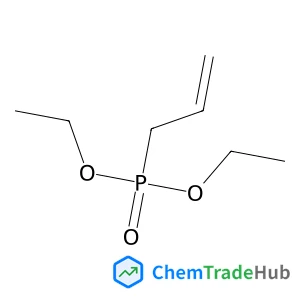
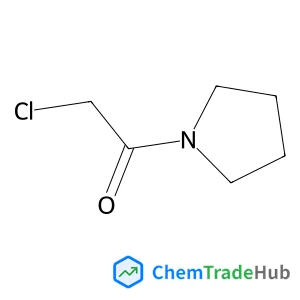
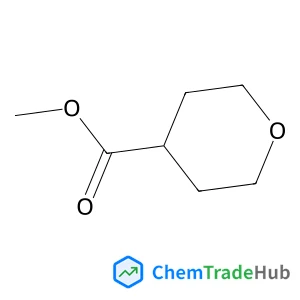
Recommended Suppliers






Disclaimer
This page provides academic journal information for reference and research purposes only. We are not affiliated with any journal publishers and do not handle publication submissions. For publication-related inquiries, please contact the respective journal publishers directly.
If you notice any inaccuracies in the information displayed, please contact us at support@chemtradehub.com. We will promptly review and address your concerns.