


Front cover
Literature Information
Publication Date
DOI
10.1039/JA98803FX025
Impact Factor
4.023
Authors
View Original
Abstract
The first page of this article is displayed as the abstract.
Recommended Journals

European Journal of Wood and Wood Products

Proceedings of the National Academy of Sciences of the United States of America

Nature

Science Progress

Planta Medica

Organic Preparations and Procedures International

Israel Journal of Chemistry

Science

Journal of Physics and Chemistry of Solids

Molecular Pharmacology
Related Literature
Trends in water-promoted oxygen dissociation on the transition metal surfaces from first principles
Ming Yan, Zheng-Qing Huang, Yu Zhang, Chun-Ran Chang
2016-12-20
Paper
DOI: 10.1039/C6CP06974F
Isolated alkali cation complexes of the antibiotic ionophore nonactin: correlation with crystalline structures
Juan Ramón Avilés-Moreno, Francisco Gámez, Giel Berden, Jos Oomens, Bruno Martínez-Haya
2017-05-17
Paper
DOI: 10.1039/C7CP02438J
Competition between the H- and D-atom transfer channels in the H2O+ + HD reaction: reduced-dimensional quantum and quasi-classical studies
Hongwei Song, Anyang Li, Minghui Yang, Hua Guo
2017-06-08
Paper
DOI: 10.1039/C7CP02889J
BAR-based optimum adaptive sampling regime for variance minimization in alchemical transformation
Zhao X. Sun, Xiao H. Wang
2017-05-15
Paper
DOI: 10.1039/C7CP01561E
Computing distance distributions from dipolar evolution data with overtones: RIDME spectroscopy with Gd(iii)-based spin labels
Katharina Keller, Valerie Mertens, Mian Qi, Anna I. Nalepa, Adelheid Godt, Anton Savitsky, Gunnar Jeschke, Maxim Yulikov
2017-06-21
Paper
DOI: 10.1039/C7CP01524K
Water–chromophore electron transfer determines the photochemistry of cytosine and cytidine
Holger Kruse, Jiří Šponer, Robert W. Góra
2017-06-21
Communication
DOI: 10.1039/C7CP02635H
Growth of germanium on Au(111): formation of germanene or intermixing of Au and Ge atoms?
Esteban D. Cantero, Lara M. Solis, Javier D. Fuhr, María Luz Martiarena, Oscar Grizzi, Esteban A. Sánchez
2017-06-27
Paper
DOI: 10.1039/C7CP02949G
Exciton dynamics in tungsten dichalcogenide monolayers
Hongwei Liu, Junpeng Lu
2017-06-19
Paper
DOI: 10.1039/C7CP02510F
Intricate kinetics: in situ FTIR-spectroscopy discloses a phase change during ionic liquid synthesis
A. Ohligschläger, M. A. Liauw
2017-06-16
Paper
DOI: 10.1039/C7CP03257A
You might also like
Compound Q&A
How should waste containing (6-Bromo-2-naphthyl)oxy](dimethyl)(2-methyl-2-propanyl)silane be handled?
Waste containing (6-Bromo-2-naphthyl)oxy](dimethyl)(2-methyl-2-propanyl)silane (...
100751-65-3[(6-Bromo-2-naphthyl...
Compound Q&A
How is 7-Fluoro-4-isoquinolinecarboxylic acid (CAS: 1841081-40-0) typically synthesized?
7-Fluoro-4-isoquinolinecarboxylic acid can be synthesized via a multi-step proce...
1841081-40-07-Fluoro-4-isoquinol...
Compound Q&A
What are the physical and chemical properties of 2,3,5,6-Tetrabromothieno[3,2-b]thiophene (CAS: 124638-53-5)?
2,3,5,6-Tetrabromothieno[3,2-b]thiophene is a crystalline compound with a high m...
124638-53-52,3,5,6-Tetrabromoth...
Compound Q&A
Is 1-[4-(Benzylamino)-7,8-dihydro-5H-pyrano[4,3-d]pyrimidin-2-yl]-2-methyl-1H-indole-4-carboxamide (CAS: 1542705-92-9) safe?
1-[4-(Benzylamino)-7,8-dihydro-5H-pyrano[4,3-d]pyrimidin-2-yl]-2-methyl-1H-indol...
1542705-92-91-[4-(Benzylamino)-7...
Compound Q&A
What is the market or research trend for imidazo[5,1-d]-1,2,3,5-tetrazine-8-carboxylic acid, 3,4-dihydro-3-methyl-4-oxo- (CAS: 113942-30-6)?
The market for imidazo[5,1-d]-1,2,3,5-tetrazine-8-carboxylic acid, 3,4-dihydro-3...
113942-30-6Imidazo[5,1-d]-1,2,3...
Compound Q&A
What is 3-(Triisopropylsilyl)propiolaldehyde (CAS: 163271-80-5)?
3-(Triisopropylsilyl)propiolaldehyde is a synthetic organic compound with the CA...
163271-80-53-(Triisopropylsilyl...
Compound Q&A
What regulatory guidelines apply to 6-Nitro-2H-1,4-benzoxazin-3(4H)-one (CAS: 81721-87-1)?
6-Nitro-2H-1,4-benzoxazin-3(4H)-one (CAS: 81721-87-1) is subject to various regu...
81721-87-16-Nitro-2H-1,4-benzo...
Compound Q&A
How should waste containing (3-Fluorophenyl)(4-{[(2-methyl-2-propanyl)oxy]carbonyl}-1-piperazinyl)acetic acid (CAS: 885272-91-3) be handled?
Waste containing (3-Fluorophenyl)(4-{[(2-methyl-2-propanyl)oxy]carbonyl}-1-piper...
885272-91-3(3-Fluorophenyl)(4-{...
Compound Q&A
What are the physical and chemical properties of N,N'-4,4'-Biphenyldiyldiisonicotinamide (CAS: 55119-40-9)?
N,N'-4,4'-Biphenyldiyldiisonicotinamide is a white crystalline solid with a mole...
55119-40-9N,N'-4,4'-Biphenyldi...
Compound Q&A
What industries use 6-Bromo-8-fluoro-2-quinazolinol (CAS: 1036756-15-6)?
6-Bromo-8-fluoro-2-quinazolinol is primarily used in the pharmaceutical industry...
1036756-15-66-Bromo-8-fluoro-2-q...
Source Journal
Journal of Analytical Atomic Spectrometry

CiteScore:
6.2
Self-citation Rate:
25.8%
Articles per Year:
254
The Journal of Analytical Atomic Spectrometry (JAAS) is the central journal for publishing innovative research on fundamentals, instrumentation, and methods in the determination, speciation and isotopic analysis of (trace) elements within all fields of application. This includes, but is not restricted to, the most recent progress, developments and achievements in all forms of atomic and elemental detection, isotope ratio determination, molecular analysis, plasma-based analysis and X-ray techniques. The journal welcomes full papers, communications, technical notes, critical and tutorial review articles, editorials, and comments, in addition to the Atomic Spectrometry Updates (ASU) literature reviews that are prepared by an expert panel. Submissions are welcome in the following areas, but note this list reflects the current scope and authors are strongly encouraged to contact the Editorial team if they believe that their work offers potentially new and emerging research relevant to the journal remit: Fundamental studies in the following. New and existing sources for atomic emission, absorption, fluorescence and mass spectrometry and those that provide both atomic and molecular information Sample introduction techniques for solids, liquids, gases Improvements in sensitivity, selectivity, precision, accuracy and/or robustness Isotope ratio measurements, including techniques for improving precision and mass bias correction Single channel and multichannel simultaneous detection systems Chemometrics, statistics, calibration techniques and internal standardisation Theoretical and numerical modelling of fundamental processes related to all of the above methodologies Novel or improved methodologies in areas of application including, but not limited to the following. Biosciences, including elemental, speciation and isotopic analysis in biological systems, immunoassays based on metal-labeled antibodies, bio-imaging, and nanoparticle toxicology Geochemistry Environmental science Materials science, including engineered nanoparticles and quantum dots Metrology, including reference materials Forensic analysis Food and agricultural sciences Energy Archaeometry Molecular analysis. Molecular sources for elemental and isotopic analysis Atomic sources for molecular analysis Atomic and molecular techniques simultaneously used for complementary chemical information All contributions are judged on originality and quality of scientific content, and appropriateness of length to content of new science.
Recommended Compounds
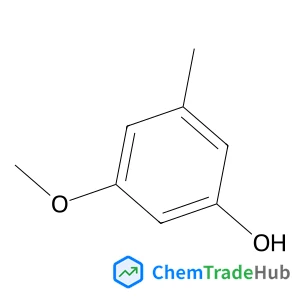
![N-[(E)-Phenylmethylene]benzenesulfonamide structure](https://static.chemtradehub.com/structs/139/13909-34-7-8167.webp "N-[(E)-Phenylmethylene]benzenesulfonamide structure")
![2,9-Dichloro-5,12-dihydroquinolino[2,3-b]acridine-7,14-dione structure](https://static.chemtradehub.com/structs/308/3089-17-6-750b.webp "2,9-Dichloro-5,12-dihydroquinolino[2,3-b]acridine-7,14-dione structure")
2,9-Dichloro-5,12-dihydroquinolino[2,3-b]acridine-7,14-dione
CAS Number:
3089-17-6
Molecular Formula:
C20H10Cl2N2O2
Recommended Suppliers






Disclaimer
This page provides academic journal information for reference and research purposes only. We are not affiliated with any journal publishers and do not handle publication submissions. For publication-related inquiries, please contact the respective journal publishers directly.
If you notice any inaccuracies in the information displayed, please contact us at support@chemtradehub.com. We will promptly review and address your concerns.