


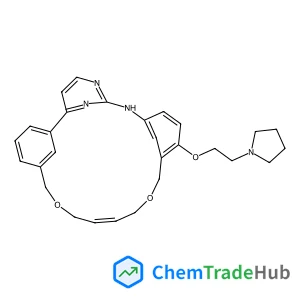
Front matter
Literature Information
Publication Date
DOI
10.1039/JA98803FP019
Impact Factor
4.023
Authors
View Original
Abstract
The first page of this article is displayed as the abstract.
Recommended Journals

Russian Chemical Reviews

Helvetica Chimica Acta

Journal of Catalysis

Proceedings of the National Academy of Sciences of the United States of America

Molecular Pharmacology

Journal of Heterocyclic Chemistry

Nature

Pharmacological Reviews

European Journal of Wood and Wood Products

Journal of Medicinal Chemistry
Related Literature
Broadband reflection in polymer stabilized cholesteric liquid crystal films with stepwise photo-polymerization
Man-yu Duan, Hui Cao, Yong Wu, Er-li Li, Hui-hui Wang, Dong Wang, Zhou Yang, Wan-li He, Huai Yang
2016-12-12
Paper
DOI: 10.1039/C6CP07066C
Role of ligands in the stability of BnXn and CBn−1Xn (n = 5–10; X = H, F, CN) and their potential as building blocks of electrolytes in lithium ion batteries
Jian Zhou, Hong Fang, Puru Jena
2017-06-16
Paper
DOI: 10.1039/C7CP02642K
Molecular conformation of DPPC phospholipid Langmuir and Langmuir–Blodgett monolayers studied by heterodyne-detected vibrational sum frequency generation spectroscopy
Naoki Takeshita, Masanari Okuno, Taka-aki Ishibashi
2017-01-03
Paper
DOI: 10.1039/C6CP07800A
Interaction of organic compounds with chondritic silicate surfaces. Atomistic insights from quantum chemical periodic simulations
Albert Rimola, Josep M. Trigo-Rodríguez, Zita Martins
2017-06-30
Paper
DOI: 10.1039/C7CP03504G
Collision-induced dissociation of sodiated glucose and identification of anomeric configuration
Jien-Lian Chen, Hock Seng Nguan, Po-Jen Hsu, Shang-Ting Tsai, Chia Yen Liew, Jer-Lai Kuo, Wei-Ping Hu
2017-05-30
Paper
DOI: 10.1039/C7CP02393F
Exciton dynamics in tungsten dichalcogenide monolayers
Hongwei Liu, Junpeng Lu
2017-06-19
Paper
DOI: 10.1039/C7CP02510F
Cation solvation with quantum chemical effects modeled by a size-consistent multi-partitioning quantum mechanics/molecular mechanics method
Maximilian Kubillus, Tomáš Kubař, Robert Stach, Boris Mizaikoff
2017-06-21
Paper
DOI: 10.1039/C7CP01708A
Azaporphyrin phosphorus(v) complexes: synthesis, structure, and modification of optical properties
2017-05-25
Perspective
DOI: 10.1039/C7CP02155K
Substrate influence on the interlayer electron–phonon couplings in fullerene films probed with doubly-resonant SFG spectroscopy
Dennis Elsenbeck, Sushanta K. Das, Luis Velarde
2017-06-30
Paper
DOI: 10.1039/C7CP03115G
Electronic and optical properties of nanostructured MoS2 materials: influence of reduced spatial dimensions and edge effects
2017-06-01
Paper
DOI: 10.1039/C7CP03229C
You might also like
Compound Q&A
How should waste containing (6-Bromo-2-naphthyl)oxy](dimethyl)(2-methyl-2-propanyl)silane be handled?
Waste containing (6-Bromo-2-naphthyl)oxy](dimethyl)(2-methyl-2-propanyl)silane (...
100751-65-3[(6-Bromo-2-naphthyl...
Compound Q&A
How is 7-Fluoro-4-isoquinolinecarboxylic acid (CAS: 1841081-40-0) typically synthesized?
7-Fluoro-4-isoquinolinecarboxylic acid can be synthesized via a multi-step proce...
1841081-40-07-Fluoro-4-isoquinol...
Compound Q&A
What are the physical and chemical properties of 2,3,5,6-Tetrabromothieno[3,2-b]thiophene (CAS: 124638-53-5)?
2,3,5,6-Tetrabromothieno[3,2-b]thiophene is a crystalline compound with a high m...
124638-53-52,3,5,6-Tetrabromoth...
Compound Q&A
Is 1-[4-(Benzylamino)-7,8-dihydro-5H-pyrano[4,3-d]pyrimidin-2-yl]-2-methyl-1H-indole-4-carboxamide (CAS: 1542705-92-9) safe?
1-[4-(Benzylamino)-7,8-dihydro-5H-pyrano[4,3-d]pyrimidin-2-yl]-2-methyl-1H-indol...
1542705-92-91-[4-(Benzylamino)-7...
Compound Q&A
What is the market or research trend for imidazo[5,1-d]-1,2,3,5-tetrazine-8-carboxylic acid, 3,4-dihydro-3-methyl-4-oxo- (CAS: 113942-30-6)?
The market for imidazo[5,1-d]-1,2,3,5-tetrazine-8-carboxylic acid, 3,4-dihydro-3...
113942-30-6Imidazo[5,1-d]-1,2,3...
Compound Q&A
What is 3-(Triisopropylsilyl)propiolaldehyde (CAS: 163271-80-5)?
3-(Triisopropylsilyl)propiolaldehyde is a synthetic organic compound with the CA...
163271-80-53-(Triisopropylsilyl...
Compound Q&A
What regulatory guidelines apply to 6-Nitro-2H-1,4-benzoxazin-3(4H)-one (CAS: 81721-87-1)?
6-Nitro-2H-1,4-benzoxazin-3(4H)-one (CAS: 81721-87-1) is subject to various regu...
81721-87-16-Nitro-2H-1,4-benzo...
Compound Q&A
How should waste containing (3-Fluorophenyl)(4-{[(2-methyl-2-propanyl)oxy]carbonyl}-1-piperazinyl)acetic acid (CAS: 885272-91-3) be handled?
Waste containing (3-Fluorophenyl)(4-{[(2-methyl-2-propanyl)oxy]carbonyl}-1-piper...
885272-91-3(3-Fluorophenyl)(4-{...
Compound Q&A
What are the physical and chemical properties of N,N'-4,4'-Biphenyldiyldiisonicotinamide (CAS: 55119-40-9)?
N,N'-4,4'-Biphenyldiyldiisonicotinamide is a white crystalline solid with a mole...
55119-40-9N,N'-4,4'-Biphenyldi...
Compound Q&A
What industries use 6-Bromo-8-fluoro-2-quinazolinol (CAS: 1036756-15-6)?
6-Bromo-8-fluoro-2-quinazolinol is primarily used in the pharmaceutical industry...
1036756-15-66-Bromo-8-fluoro-2-q...
Source Journal
Journal of Analytical Atomic Spectrometry

CiteScore:
6.2
Self-citation Rate:
25.8%
Articles per Year:
254
The Journal of Analytical Atomic Spectrometry (JAAS) is the central journal for publishing innovative research on fundamentals, instrumentation, and methods in the determination, speciation and isotopic analysis of (trace) elements within all fields of application. This includes, but is not restricted to, the most recent progress, developments and achievements in all forms of atomic and elemental detection, isotope ratio determination, molecular analysis, plasma-based analysis and X-ray techniques. The journal welcomes full papers, communications, technical notes, critical and tutorial review articles, editorials, and comments, in addition to the Atomic Spectrometry Updates (ASU) literature reviews that are prepared by an expert panel. Submissions are welcome in the following areas, but note this list reflects the current scope and authors are strongly encouraged to contact the Editorial team if they believe that their work offers potentially new and emerging research relevant to the journal remit: Fundamental studies in the following. New and existing sources for atomic emission, absorption, fluorescence and mass spectrometry and those that provide both atomic and molecular information Sample introduction techniques for solids, liquids, gases Improvements in sensitivity, selectivity, precision, accuracy and/or robustness Isotope ratio measurements, including techniques for improving precision and mass bias correction Single channel and multichannel simultaneous detection systems Chemometrics, statistics, calibration techniques and internal standardisation Theoretical and numerical modelling of fundamental processes related to all of the above methodologies Novel or improved methodologies in areas of application including, but not limited to the following. Biosciences, including elemental, speciation and isotopic analysis in biological systems, immunoassays based on metal-labeled antibodies, bio-imaging, and nanoparticle toxicology Geochemistry Environmental science Materials science, including engineered nanoparticles and quantum dots Metrology, including reference materials Forensic analysis Food and agricultural sciences Energy Archaeometry Molecular analysis. Molecular sources for elemental and isotopic analysis Atomic sources for molecular analysis Atomic and molecular techniques simultaneously used for complementary chemical information All contributions are judged on originality and quality of scientific content, and appropriateness of length to content of new science.
Recommended Compounds
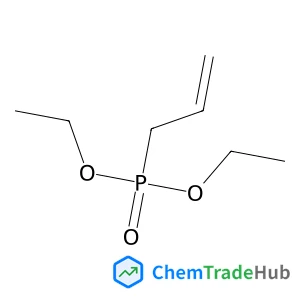
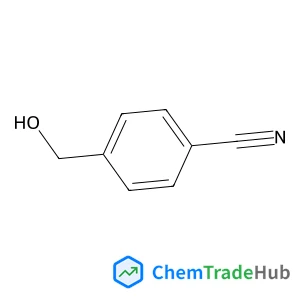
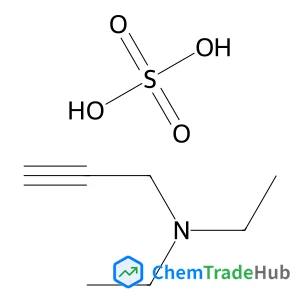
Recommended Suppliers





Disclaimer
This page provides academic journal information for reference and research purposes only. We are not affiliated with any journal publishers and do not handle publication submissions. For publication-related inquiries, please contact the respective journal publishers directly.
If you notice any inaccuracies in the information displayed, please contact us at support@chemtradehub.com. We will promptly review and address your concerns.