












Copper(ii)-infused porphyrin MOF: maximum scavenging GSH for enhanced photodynamic disruption of bacterial biofilm
Literature Information
Publication Date
2024-01-02
DOI
10.1039/D3TB02577B
Impact Factor
6.331
Authors
Yaoxin Zhang, Linpei Li, Hui Liu, Haixia Zhang, Menghao Wei, Yanwei Yang, Mengnan Wu, Zhaowei Chen, Faming Wang, Qiang Wu, Jiahua Shi
View Original
Abstract
Bacterial biofilm infection is a serious obstacle to clinical therapeutics. Photodynamic therapy (PDT) plays a dynamic role in combating biofilm infection by utilizing reactive oxygen species (ROS)-induced bacterial oxidation injury, showing advantages of mild side effects, spatiotemporal controllability and little drug resistance. However, superfluous glutathione (GSH) present in biofilm and bacteria corporately reduces ROS levels and seriously affects PDT efficiency. Herein, we have constructed a Cu2+-infused porphyrin metal–organic framework (MOF@Cu2+) for the enhanced photodynamic combating of biofilm infection by the maximum depletion of GSH. Our results show that the released Cu2+ from porphyrin MOF@Cu2+ could not only oxidize GSH in biofilm but also consume GSH leaked from ROS-destroyed bacteria, thus greatly weakening the antioxidant system in biofilm and bacteria and dramatically improving the ROS levels. As expected, our dual-enhanced PDT nanoplatform exhibits a strong biofilm eradication ability both in vitro and in an in vivo biofilm-infected mouse model. In addition, Cu2+ can promote biofilm-infected wound closing by provoking cell immigration, collagen sediment and angiogenesis. Besides, no apparent toxicity was detected after treatment with MOF@Cu2+. Overall, our design offers a new paradigm for photodynamic combating biofilm infection.
Related Literature
From a benzodiazaborole-based compound to donor–acceptor polymervia electropolymerization
Shotaro Hayashi, Toshio Koizumi
2012-01-16
Communication
DOI: 10.1039/C2PY00563H
Modular oxime functionalization of well-defined alkoxyamine-containing polymers
Soma Mukherjee, Philip J. Costanzo
2011-11-07
Paper
DOI: 10.1039/C1PY00451D
Constructing star polymersvia modular ligation strategies
Ozcan Altintas, Andrew P. Vogt, Christopher Barner-Kowollik, Umit Tunca
2011-08-10
Review Article
DOI: 10.1039/C1PY00249J
Terminal functional glycopolymersvia a combination of catalytic chain transfer polymerisation (CCTP) followed by three consecutive click reactions
Qiang Zhang, Stacy Slavin, Mathew W. Jones, Alice J. Haddleton, David M. Haddleton
2012-02-03
Paper
DOI: 10.1039/C2PY20013A
Novel soluble polyazomethines with pendant carbazole and triphenylamine derivatives: preparation, characterization, and optical, electrochemical and electrochromic properties
Jiwei Cai, Cheng Wang, Xuduo Bai, Wen Wang
2011-10-05
Paper
DOI: 10.1039/C1PY00237F
Two-dimensional copolymers with D–A type side chains for organic thin-film transistors: Synthesis and properties
Dugang Chen, Yan Zhao, Cheng Zhong, Gui Yu, Yunqi Liu, Jingui Qin
2011-10-07
Paper
DOI: 10.1039/C1PY00331C
Recent progress on phosphonate vinyl monomers and polymers therefore obtained by radical (co)polymerization
G. David, C. Negrell-Guirao, F. Iftene, B. Boutevin, K. Chougrani
2011-09-23
Review Article
DOI: 10.1039/C1PY00276G
Polysaccharide-stabilized core cross-linked polymer micelle analogues
Daniel J. Krasznai, Timothy F. L. McKenna, Michael F. Cunningham, Pascale Champagne, Niels M. B. Smeets
2012-02-03
Paper
DOI: 10.1039/C2PY00601D
You might also like
Compound Q&A
What industries use 4-(4-tert-Butylphenyl)-1H-pyrazol-3-amine (CAS: 1015845-73-4)?
4-(4-tert-Butylphenyl)-1H-pyrazol-3-amine finds applications in various industri...
1015845-73-44-(4-tert-Butylpheny...
Compound Q&A
What industries use H3TATAB (CAS: 63557-10-8)?
H3TATAB is used in the pharmaceutical industry for the synthesis of certain orga...
63557-10-8H3TATAB
Compound Q&A
What are the main uses of 1-Ethyl-3-fluorobenzene (CAS: 696-39-9)?
1-Ethyl-3-fluorobenzene (CAS: 696-39-9) is primarily used as a precursor in the ...
696-39-91-Ethyl-3-fluorobenz...
Compound Q&A
What are the main uses of 1-(tert-Butoxycarbonyl)-4-(4-methoxyphenyl)pyrrolidine-3-carboxylic acid (CAS: 851484-94-1)?
1-(tert-Butoxycarbonyl)-4-(4-methoxyphenyl)pyrrolidine-3-carboxylic acid is prim...
851484-94-11-(tert-Butoxycarbon...
Compound Q&A
What are the physical and chemical properties of 1-Cyclobutyl-4-piperidinone (CAS: 359880-05-0)?
1-Cyclobutyl-4-piperidinone (CAS: 359880-05-0) is a colorless or white crystalli...
359880-05-01-Cyclobutyl-4-piper...
Compound Q&A
What is Pyridine-2,6-dicarboxylic acid mono-tert-butyl ester (CAS: 575433-76-0)?
Pyridine-2,6-dicarboxylic acid mono-tert-butyl ester (CAS: 575433-76-0) is a che...
575433-76-0Pyridine-2,6-dicarbo...
Compound Q&A
What is the market or research trend for 2,3-Difluorophenylalanine (CAS: 236754-62-4)?
The market for 2,3-Difluorophenylalanine (CAS: 236754-62-4) is growing with incr...
236754-62-42,3-Difluorophenylal...
Compound Q&A
How is (2-Hydroxy-1-naphthyl)boronic acid (CAS: 898257-48-2) typically synthesized?
(2-Hydroxy-1-naphthyl)boronic acid can be synthesized through the reduction of 2...
898257-48-2(2-Hydroxy-1-naphthy...
Compound Q&A
What are the physical and chemical properties of tert-Butyl (5-bromo-6-methyl-3-(4,4,5,5-tetramethyl-1,3,2-dioxaborolan-2-yl)pyridin-2-yl)carbamate (CAS: 1315351-28-0)?
This compound is a crystalline solid with a molecular weight of approximately 52...
1315351-28-0tert-Butyl (5-bromo-...
Compound Q&A
Are there alternatives to 5,7-Dihydroxy-4-oxo-2-(3,4,5-trihydroxyphenyl)-4H-chromen-3-yl beta-D-glucopyranoside (CAS: 19833-12-6) in synthesis?
While 5,7-Dihydroxy-4-oxo-2-(3,4,5-trihydroxyphenyl)-4H-chromen-3-yl beta-D-gluc...
19833-12-65,7-Dihydroxy-4-oxo-...
Source Journal
Journal of Materials Chemistry B

CiteScore:
12
Self-citation Rate:
4.9%
Articles per Year:
831
Journal of Materials Chemistry A, B & C cover high quality studies across all fields of materials chemistry. The journals focus on those theoretical or experimental studies that report new understanding, applications, properties and synthesis of materials. The journals have a strong history of publishing quality reports of interest to interdisciplinary communities and providing an efficient and rigorous service through peer review and publication. The journals are led by an international team of Editors-in-Chief and Associate Editors who are all active researchers in their fields. Journal of Materials Chemistry A, B & C are separated by the intended application of the material studied. Broadly, applications in energy and sustainability are of interest to Journal of Materials Chemistry A, applications in biology and medicine are of interest to Journal of Materials Chemistry B, and applications in optical, magnetic and electronic devices are of interest to Journal of Materials Chemistry C. More than one Journal of Materials Chemistry journal may be suitable for certain fields and researchers are encouraged to submit their paper to the journal that they feel best fits for their particular article. Example topic areas within the scope of Journal of Materials Chemistry B are listed below. This list is neither exhaustive nor exclusive. Antifouling coatings Biocompatible materials Bioelectronics Bioimaging Biomimetics Biomineralisation Bionics Biosensors Diagnostics Drug delivery Gene delivery Immunobiology Nanomedicine Regenerative medicine & Tissue engineering Scaffolds Soft robotics Stem cells Therapeutic devices image block All articles published in Journal of Materials Chemistry B from 2019 onwards will be indexed in MEDLINE®. Articles that primarily focus on providing insight into the underlying science and performance of biomaterials within a biological environment are more suited to our companion journal, Biomaterials Science.
Recommended Compounds
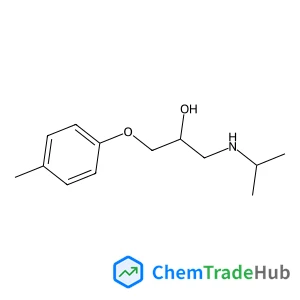
1-(4-Methylphenoxy)-3-(propan-2-ylamino)propan-2-ol
CAS Number:
5790-46-5
Molecular Formula:
C13H21NO2
![7-Amino-5-methyl-5,7-dihydro-6H-dibenzo[b,d]azepin-6-one hydrochloride (1:1) structure](https://static.chemtradehub.com/structs/209/209984-32-7-9912.webp "7-Amino-5-methyl-5,7-dihydro-6H-dibenzo[b,d]azepin-6-one hydrochloride (1:1) structure")
7-Amino-5-methyl-5,7-dihydro-6H-dibenzo[b,d]azepin-6-one hydrochloride (1:1)
CAS Number:
209984-32-7
Molecular Formula:
C15H15ClN2O
Recommended Suppliers








Disclaimer
This page provides academic journal information for reference and research purposes only. We are not affiliated with any journal publishers and do not handle publication submissions. For publication-related inquiries, please contact the respective journal publishers directly.
If you notice any inaccuracies in the information displayed, please contact us at support@chemtradehub.com. We will promptly review and address your concerns.