












Bio-conjugated carbon dots for the bimodal detection of prostate cancer biomarkers via sandwich fluorescence and electrochemical immunoassays
Literature Information
Publication Date
2023-12-11
DOI
10.1039/D3TB02090H
Impact Factor
6.331
Authors
Jyoti Korram, Amarnath Chellachamy Anbalagan, Anannya Banerjee
View Original
Abstract
Bimodal detection facilitates the accurate and reliable detection of cancer biomarkers, which can assist in the early diagnosis of cancer. Herein, S-doped carbon dots (OCDs) with a size of 3 nm and blue emission were synthesized by the hydrothermal treatment of onion extract. The S-doped carbon dots were bioconjugated with an antibody (OCDs@PSAAbHRP) to design a nanoprobe for the detection of prostate specific antigen (PSA), an important serum based prostate cancer biomarker. The detection probe enabled the biomodal assay of PSA via fluorescence immunoassay (FIA) and electrochemical immunoassay (ECIA). In both assays, polyethylenimine stabilized polyaniline nanoparticles (PNPs) were used as the immobilization matrix, which played a major role in widening the linear range of biosensors (0.1 to 100 ng ml−1 for ECIA and 5 to 120 ng ml−1 for FIA). Paper-based and smartphone-integrated fluorescence immuno-array developed using the OCDs@PSAAbHRP detection probe provided cost-effective and rapid detection, while the electrochemical immunoassay provided a high sensitivity (7.8 μA ng−1 ml−1 cm−2) and low detection limit (38 pg ml−1) for PSA detection. The role of OCDs in enhancing the sensor performance was deciphered by carrying out detailed electrochemical studies with HRP enzyme-loaded OCDs. The biosensor was used to detect PSA in human blood serum samples and the results were consistent with conventional techniques. Owing to its analytical properties coupled with simplicity, cost-effectiveness, and portability, the bimodal sensor system has potential for application in clinical analysis.
Related Literature
Photocatalytic reduction of nitrate ions over tantalate photocatalysts
Hideki Kato, Akihiko Kudo
2002-05-10
Paper
DOI: 10.1039/B110511F
Triaziridine and tetrazetidinevs. cyclic water trimer and tetramer: A computational approach to the relationship between molecular and supramolecular conformational analysis
Manuel Alcamí, Otilia Mó, Manuel Yáñez, Ibon Alkorta, José Elguero
2002-04-30
Paper
DOI: 10.1039/B108270C
Laser spectroscopy of 1,2,3,4-tetrahydro-1-naphthol·ROH (R = H, CH3) clusters
A. Paladini, M. Satta, D. Catone, A. Filippi, S. Piccirillo, M. Speranza
2002-05-16
Paper
DOI: 10.1039/B201347A
Implementation of RI-CC2 triplet excitation energies with an application to trans-azobenzene
Kasper Hald
2002-05-02
Paper
DOI: 10.1039/B110847F
Structure and mobility of cyclohexane as a solvent for trans-polyisoprene
2002-05-01
Paper
DOI: 10.1039/B111437A
Oscillations in the primary charge separation in bacterial photosynthesis
2002-04-30
Paper
DOI: 10.1039/B102700J
Study of the nanoparticle/matrix interactions in Y2O3–SiO2 samples
2002-04-25
Paper
DOI: 10.1039/B110996K
DFT calculations of HRgX (Rg = rare gas; X = halogen) molecules
Jarosław Panek, Zdzisław Latajka, Jan Lundell
2002-05-09
Paper
DOI: 10.1039/B109578A
Exciplex emission from the mixed dimer of naphthalene and 2-cyanonaphthalene in a supersonic jet
Aloke Das, K. K. Mahato, Chayan K. Nandi, Tapas Chakraborty, Shridhar R. Gadre, Nikhil A. Gokhale
2002-04-30
Paper
DOI: 10.1039/B200124C
You might also like
Compound Q&A
How should waste containing (6-Bromo-2-naphthyl)oxy](dimethyl)(2-methyl-2-propanyl)silane be handled?
Waste containing (6-Bromo-2-naphthyl)oxy](dimethyl)(2-methyl-2-propanyl)silane (...
100751-65-3[(6-Bromo-2-naphthyl...
Compound Q&A
How is 7-Fluoro-4-isoquinolinecarboxylic acid (CAS: 1841081-40-0) typically synthesized?
7-Fluoro-4-isoquinolinecarboxylic acid can be synthesized via a multi-step proce...
1841081-40-07-Fluoro-4-isoquinol...
Compound Q&A
What are the physical and chemical properties of 2,3,5,6-Tetrabromothieno[3,2-b]thiophene (CAS: 124638-53-5)?
2,3,5,6-Tetrabromothieno[3,2-b]thiophene is a crystalline compound with a high m...
124638-53-52,3,5,6-Tetrabromoth...
Compound Q&A
Is 1-[4-(Benzylamino)-7,8-dihydro-5H-pyrano[4,3-d]pyrimidin-2-yl]-2-methyl-1H-indole-4-carboxamide (CAS: 1542705-92-9) safe?
1-[4-(Benzylamino)-7,8-dihydro-5H-pyrano[4,3-d]pyrimidin-2-yl]-2-methyl-1H-indol...
1542705-92-91-[4-(Benzylamino)-7...
Compound Q&A
What is the market or research trend for imidazo[5,1-d]-1,2,3,5-tetrazine-8-carboxylic acid, 3,4-dihydro-3-methyl-4-oxo- (CAS: 113942-30-6)?
The market for imidazo[5,1-d]-1,2,3,5-tetrazine-8-carboxylic acid, 3,4-dihydro-3...
113942-30-6Imidazo[5,1-d]-1,2,3...
Compound Q&A
What is 3-(Triisopropylsilyl)propiolaldehyde (CAS: 163271-80-5)?
3-(Triisopropylsilyl)propiolaldehyde is a synthetic organic compound with the CA...
163271-80-53-(Triisopropylsilyl...
Compound Q&A
What regulatory guidelines apply to 6-Nitro-2H-1,4-benzoxazin-3(4H)-one (CAS: 81721-87-1)?
6-Nitro-2H-1,4-benzoxazin-3(4H)-one (CAS: 81721-87-1) is subject to various regu...
81721-87-16-Nitro-2H-1,4-benzo...
Compound Q&A
How should waste containing (3-Fluorophenyl)(4-{[(2-methyl-2-propanyl)oxy]carbonyl}-1-piperazinyl)acetic acid (CAS: 885272-91-3) be handled?
Waste containing (3-Fluorophenyl)(4-{[(2-methyl-2-propanyl)oxy]carbonyl}-1-piper...
885272-91-3(3-Fluorophenyl)(4-{...
Compound Q&A
What are the physical and chemical properties of N,N'-4,4'-Biphenyldiyldiisonicotinamide (CAS: 55119-40-9)?
N,N'-4,4'-Biphenyldiyldiisonicotinamide is a white crystalline solid with a mole...
55119-40-9N,N'-4,4'-Biphenyldi...
Compound Q&A
What industries use 6-Bromo-8-fluoro-2-quinazolinol (CAS: 1036756-15-6)?
6-Bromo-8-fluoro-2-quinazolinol is primarily used in the pharmaceutical industry...
1036756-15-66-Bromo-8-fluoro-2-q...
Source Journal
Journal of Materials Chemistry B

CiteScore:
12
Self-citation Rate:
4.9%
Articles per Year:
831
Journal of Materials Chemistry A, B & C cover high quality studies across all fields of materials chemistry. The journals focus on those theoretical or experimental studies that report new understanding, applications, properties and synthesis of materials. The journals have a strong history of publishing quality reports of interest to interdisciplinary communities and providing an efficient and rigorous service through peer review and publication. The journals are led by an international team of Editors-in-Chief and Associate Editors who are all active researchers in their fields. Journal of Materials Chemistry A, B & C are separated by the intended application of the material studied. Broadly, applications in energy and sustainability are of interest to Journal of Materials Chemistry A, applications in biology and medicine are of interest to Journal of Materials Chemistry B, and applications in optical, magnetic and electronic devices are of interest to Journal of Materials Chemistry C. More than one Journal of Materials Chemistry journal may be suitable for certain fields and researchers are encouraged to submit their paper to the journal that they feel best fits for their particular article. Example topic areas within the scope of Journal of Materials Chemistry B are listed below. This list is neither exhaustive nor exclusive. Antifouling coatings Biocompatible materials Bioelectronics Bioimaging Biomimetics Biomineralisation Bionics Biosensors Diagnostics Drug delivery Gene delivery Immunobiology Nanomedicine Regenerative medicine & Tissue engineering Scaffolds Soft robotics Stem cells Therapeutic devices image block All articles published in Journal of Materials Chemistry B from 2019 onwards will be indexed in MEDLINE®. Articles that primarily focus on providing insight into the underlying science and performance of biomaterials within a biological environment are more suited to our companion journal, Biomaterials Science.
Recommended Compounds
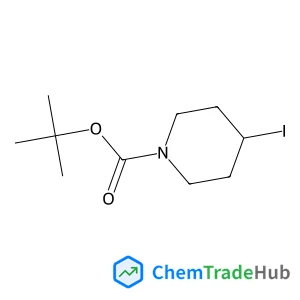
2-Methyl-2-propanyl 4-iodo-1-piperidinecarboxylate
CAS Number:
301673-14-3
Molecular Formula:
C10H18INO2
Recommended Suppliers





Disclaimer
This page provides academic journal information for reference and research purposes only. We are not affiliated with any journal publishers and do not handle publication submissions. For publication-related inquiries, please contact the respective journal publishers directly.
If you notice any inaccuracies in the information displayed, please contact us at support@chemtradehub.com. We will promptly review and address your concerns.